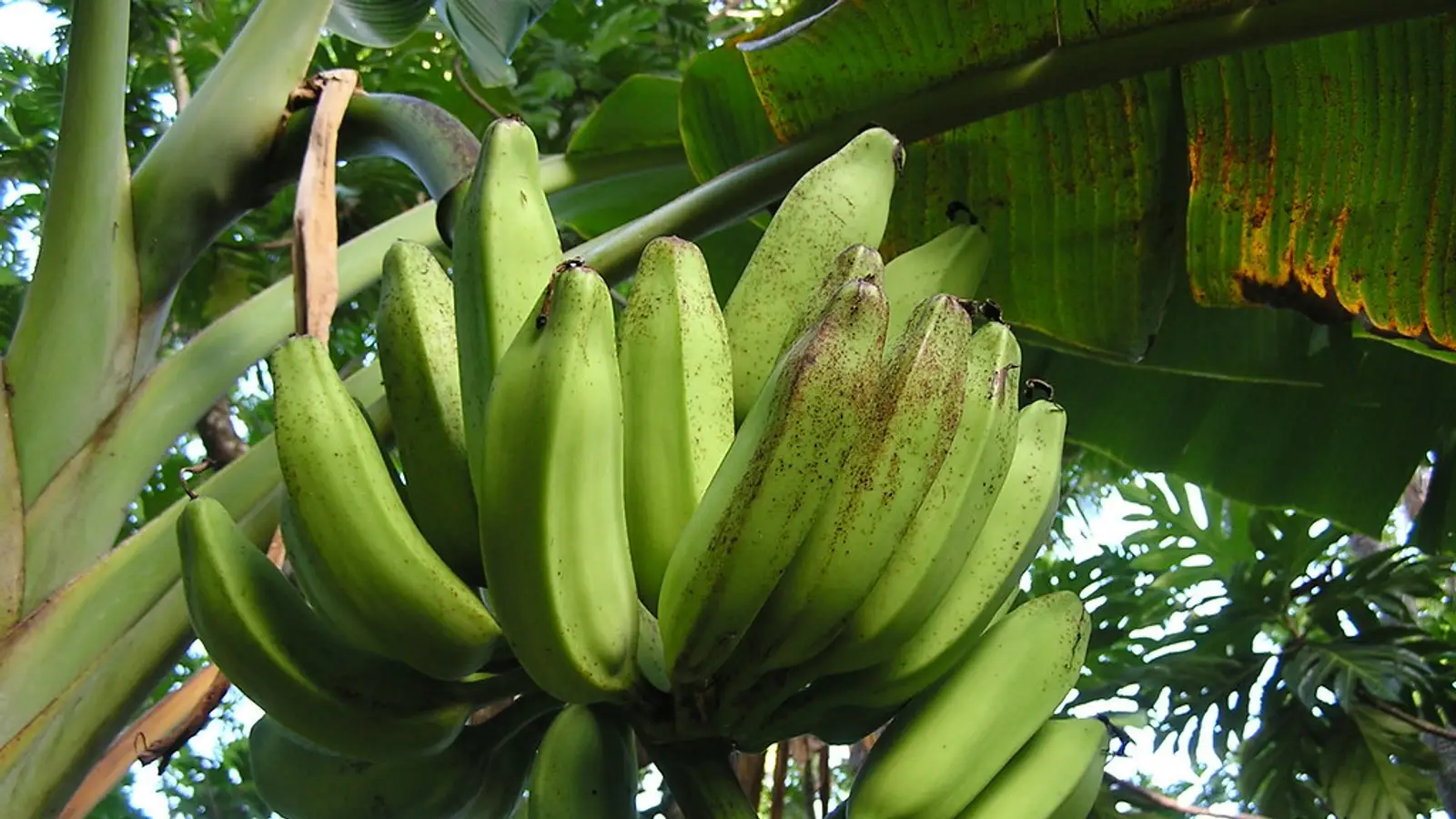
Where banana actually stands
Banana is on the list. NC State's veterinary hospital includes it among acceptable occasional fruits: Safe occasional fruits include papaya, melon, watermelon, banana, figs, apples, mango, dates, peaches, apricots (NCSU), strawberries and blueberries (PetMD), and apple, apricot, banana, dates, figs, grapes, guava, kiwi, mango, melon, peach, pear, raspberry, star fruit, strawberry, tomato (VCA)
So the short answer is yes. The longer answer is that among the fruits on that list, banana is the one most keepers pull back on first, and the reason is mineral balance rather than any toxin.
The calcium equation, and why banana sits awkwardly in it
Every food a bearded dragon eats gets judged on one relationship. The calcium:phosphorus ratio of the diet should be at least 1:1, with 2:1 preferred (Merck); WSU and Illinois WEL state the ideal Ca:P ratio is 2:1.
That target is not a nutrition-label nicety. Calcium and phosphorus compete, and a diet running phosphorus-heavy leaves calcium unavailable no matter how much is technically present. Bananas are widely known in reptile keeping as a fruit whose phosphorus content dominates its calcium content, which is precisely the direction you do not want a food to push.
We are careful here about what our sources actually support. The veterinary sources we cite name banana as an acceptable occasional fruit and set the overall fruit ceiling; they do not publish a banana-specific mineral ratio for reptile feeding. So we state the principle they do publish, and let it govern the portion: fruit stays at about 5 percent of the diet at most, and within fruit, banana is not the one to lean on.
The calcium the diet does need comes from elsewhere entirely: Calcium-rich staple greens include collard greens, mustard greens, turnip greens, and dandelion greens.
Why the ratio matters so much becomes obvious on the insect side of the diet, where the arithmetic is stark: Feeder insects naturally contain extremely low calcium (about 0.03-0.3%) with 0.8-0.9% phosphorus; a 3-day 12% calcium gut-load raises insect calcium to roughly 0.8-0.9%, giving a Ca:P ratio of approximately 1.2:1.
A dragon eating calcium-poor insects, calcium-poor fruit, and not much in the way of staple greens is on the road to metabolic bone disease, and dusting alone does not rescue a diet built that way. The calcium guide explains the supplementation side properly.
The sources do not agree on the fruit ceiling
Anyone comparing care sheets runs into a discrepancy worth understanding, because it changes how strict you need to be.
Fruit should be limited to at most about 5% of the total diet (NCSU/WSU/PetMD) because it is high in sugar; VCA allows fruit as 10-20% of the plant portion only, 'as a treat only'.
Read that carefully: one figure is a share of the total diet, the other is a share of the plant portion. They are measuring different things, which is why they look further apart than they are. A dragon whose plant portion is most of its intake and whose fruit is 10 percent of that plant portion lands not far from the 5 percent of total that the stricter sources name.
The practical resolution is simple. Use the strict reading, keep fruit at about 5 percent of the diet at most, and you satisfy every source at once. Where authorities differ, the conservative number costs a dragon nothing and protects it from the looser interpretation being wrong.
This is also a useful lens for the rest of the diet. The plant portion has a documented internal structure: 80-90% of the plant material fed should be leafy green vegetables; fruit plus yellow/red/orange vegetables should be only 10-20% of the plant portion. Fruit and bright vegetables share one slice of that; leafy greens hold the rest.
Serving a banana correctly
Banana is soft, sticky, and easy to overserve because it holds together in a way a slice of melon does not.
- A thin slice, not a chunk. Cut a round no thicker than a finger, then quarter it. Apply the standard rule: Never feed an insect whose length is greater/wider than the width of the dragon's head; RSPCA: live food greater than the width of the dragon's head should not be offered.
- Mashed is fine. Some keepers mash a small amount into the salad so it coats greens rather than being picked out. This works well.
- Peel goes in the bin. The skin is tough, holds pesticide residue, and offers nothing.
- Ripe, not overripe. Brown, fermenting banana is a sugar bomb and attracts flies.
- Remove leftovers the same day. Soft fruit spoils quickly, and the enclosure should hold 30 to 40 percent.
Banana against the other fruits on the list
| Fruit | Practical role |
|---|---|
| Papaya, figs | Better regarded among the sourced fruits |
| Melon, watermelon | High water content, mild, easy to portion |
| Apple, pear | Firm texture, simple to cut to size |
| Banana | Soft and sweet; the one to serve least often |
| Citrus | Avoid feeding citrus fruits, as the acidity can cause gastrointestinal upset. |
Source note: fruit list from NC State's veterinary hospital, with sugar and share guidance from WSU and PetMD, cited below.
What a realistic banana schedule looks like
For an adult on a normal diet, a thin slice once or twice a month is plenty. Not once a week, and not as a standing item. Juveniles do not need it at all, since their intake belongs to growth: Live insects should make up about 70% of a juvenile bearded dragon's diet, with vegetables about 20-30% and only small amounts of fruit.
There is a behavioral reason to keep it rare beyond the nutrition. Dragons develop strong preferences for sweet food and will refuse salad while holding out for it. That pattern is common enough that it colors how the whole hobby feeds: A Tufts-affiliated survey of 405 bearded dragon owners found approximately half were feeding a diet with less than 50% plant material and more than 50% insects, and researchers noted a need for clear evidence-based nutritional guidelines on food type, quantity, and frequency.
A dragon that eats its greens reliably is worth more than a dragon that has tasted banana.
If your dragon ate too much
A single overserving is not an emergency. Expect loose droppings, and compare against the normal baseline in the droppings guide. Return to plain salads for several days.
Persistent diarrhea, refusal of food afterward, or lethargy moves this out of diet territory. Contact a veterinarian if a bearded dragon is lethargic, isn't eating well, or isn't growing normally (WSU); RSPCA advises watching weight and contacting a vet if a dragon loses weight during seasonal slowdown.