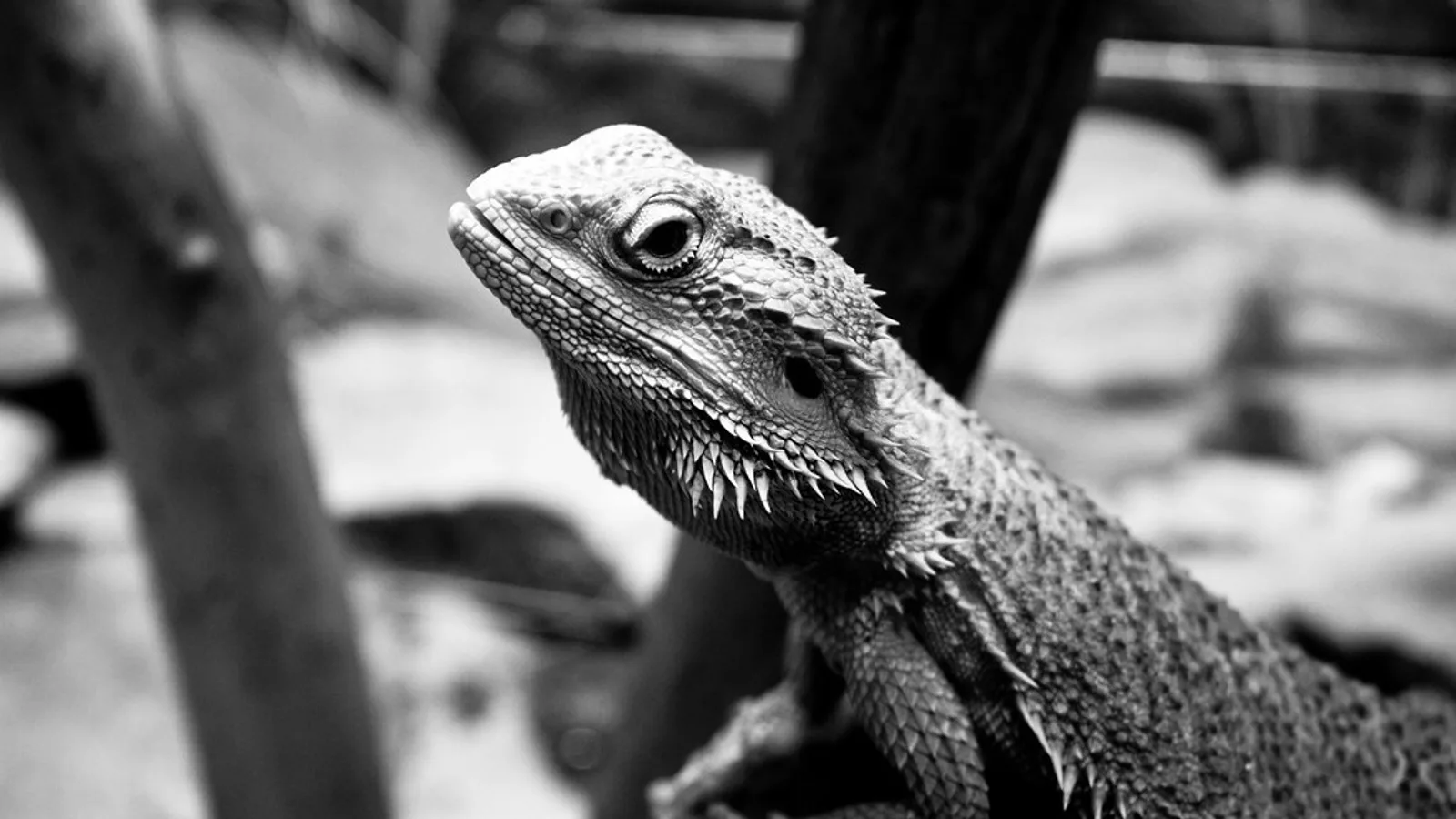
The baby menu: insects first
A hatchling's diet starts small in every sense. Dragons under 1 month old: flightless fruit flies, gut-loaded pinhead crickets, and mashed vegetables, fed 2-3 times daily. Flightless fruit flies and pinhead crickets sound like fussy choices until you see how small a fresh hatchling is: 39-42 at hatching.
Insects dominate for a reason. Hatchlings and young juveniles (under 4 months) eat about 70% animal matter and 30% vegetable matter. Growth is the most protein-hungry project a dragon ever runs, and the first months are its peak.
As the dragon grows, the feeder list widens with it. Juveniles 1-4 months old should be fed twice daily (crickets, veggies, occasional super/mealworm) Crickets and appropriately sized dubia roaches carry most of the load through this stage; the full rankings are in our feeder insect guide.
Feeding schedule through the first year
| Age | Meals per day |
|---|---|
| Hatchling, under 1 to 2 months | 2 to 3 times a day |
| Juvenile, 1 to 4 months | twice a day |
| Older juvenile, 4 to 12 months | once a day |
Source note: age bands from NC State University's veterinary hospital and RSPCA Australia feeding guidance; see Sources below.
The balance shifts underneath that schedule. Older juveniles (4-12 months) eat approximately 50% vegetable and 50% animal matter. By the first birthday the plant share should already be winning, which sets up the adult pattern described in our full feeding schedule guide.
Prey size: the rule that prevents injuries
Baby feeding has one hard safety rule, and it is worth taping to the enclosure. Never feed an insect whose length is greater/wider than the width of the dragon's head; RSPCA: live food greater than the width of the dragon's head should not be offered.
The stakes are higher than a wasted feeding. Small prey must be fed to baby bearded dragons to avoid health problems such as impaction; start with pinhead crickets and tiny, freshly molted worms and move gradually to larger sizes. Impaction in a hatchling is a veterinary emergency in an animal with very little reserve; our impaction guide covers the warning signs.
When in doubt, size down. A baby fed slightly small prey eats a few extra insects per session and loses nothing.
Vegetables and water from day one
The vegetable habit starts at hatching, not at adulthood. Mashed and finely chopped vegetables belong in the enclosure from the first weeks, built around the same staples adults get: collard greens, mustard greens, turnip greens, and dandelion greens. A dragon that meets greens early accepts them later, and the later matters: the adult diet is mostly plants. Keep the baby salad low in problem greens from the start, too. Swiss chard, spinach, and beet greens should be fed sparingly because they contain oxalates, which can bind calcium and other trace minerals and prevent their absorption.
Water is simple at this age. Provide a shallow dish of fresh water the dragon can step into, changed/cleaned daily; fresh clean water should always be available. Keep the dish shallow enough for a small lizard to step in and out without any swimming, and see do bearded dragons drink water for the other ways dragons take in moisture.
Supplements for growing dragons
Calcium is where baby feeding is least forgiving. Dust food with plain calcium powder about 4-5 times weekly for juveniles (WSU); VCA recommends calcium powder daily for growing dragons. Alongside the plain calcium, vitamin D3 supplementation runs once a week to 2 to 3 times a week, depending on the source, and a reptile multivitamin goes on feeders 1 to 2 times per week.
The dusting exists because the risk is real and age-weighted. Juvenile bearded dragons are particularly vulnerable to metabolic bone disease; young and reproducing animals face higher risk. Most feeder insects are low in calcium; without supplementation (gut loading, dusting) and adequate UVB, dragons are at risk for metabolic bone disease.
NC State adds a technique warning worth taking seriously: Lightly coating insects with calcium powder (shaking in a bag) can supplement calcium but 'is not a substitute for appropriate gut loading'.
Supplements only finish the job that lighting starts. Bearded dragons rely on UVB light to synthesize vitamin D3 in the skin; D3 is essential for calcium metabolism, and without adequate UVB they can develop metabolic bone disease (nutritional secondary hyperparathyroidism), weak bones and fractures. Full schedules for every age, plus the gut-loading routine, are in the bearded dragon calcium guide.
Baby feeding mistakes to avoid
Four mistakes cover most of the baby feeding problems reptile vets see.
Prey too large. The head-width rule above gets broken once for an impressive superworm, and once is enough. Size down whenever you are unsure.
Uneaten insects left in the enclosure. Spot-clean waste daily (or immediately when seen); remove uneaten insects from the enclosure. RSPCA South Australia is blunt about the stakes: Uneaten live insects left in the enclosure can seriously harm the dragon.. What is not eaten in a session comes back out.
Wild-caught insects. never Free protein from the garden is how parasites and plant toxins reach a captive baby.
Skipping the dust because the baby looks fine. Deficiency builds silently through the growth window and shows up as disease later. Keep the calcium schedule running whatever the dragon looks like today.
The growth window: why the first year decides adult health
Experienced keepers know the first year is not just a scaled-down adult routine; it is the period when skeletal health is won or lost.
Bearded dragons reach sexual maturity at 1 to 2 years. Bearded dragons finish their growth spurt around 10-12 months of age and often slow their food consumption at that point; brumation behavior is associated with maturity rather than young juveniles. Calcium shortfalls inside that growth window feed straight into metabolic bone disease risk, which is why the juvenile dusting schedule runs at 4 to 5 times a week while adult dusting drops to 1 to 2 times a week.
Gut loading is the second lever, and it has a clock on it. Feeder insects should be gut-loaded (fed a high-calcium, nutrient-fortified diet) before feeding: NCSU recommends 24-72 hours prior; PetMD says 6-12 hours before; Merck describes a 3-day gut-load with a 12% calcium (calcium carbonate) diet. Gut-loaded feeder insects need to be eaten by the lizard within an hour of the insects being fed (gut-loaded) A baby fed store-fresh, unloaded crickets gets the same meal count with a fraction of the mineral content.
The endpoint of the whole process is a diet flip. Diet shifts with age: hatchlings/young juveniles eat roughly 70% insects / 30% vegetation, flipping in adulthood to mostly vegetation (RSPCA Australia: adults ~90% vegetation / 10% animal matter; PetMD: adults 70-80% plants) Owners who plan for that transition from the start, by keeping greens in front of the dragon daily, get an adult that eats its salad. Owners who run an insects-only first year usually get a picky adult and an obesity problem. The wider first-year picture, housing included, is in our baby bearded dragon care guide.