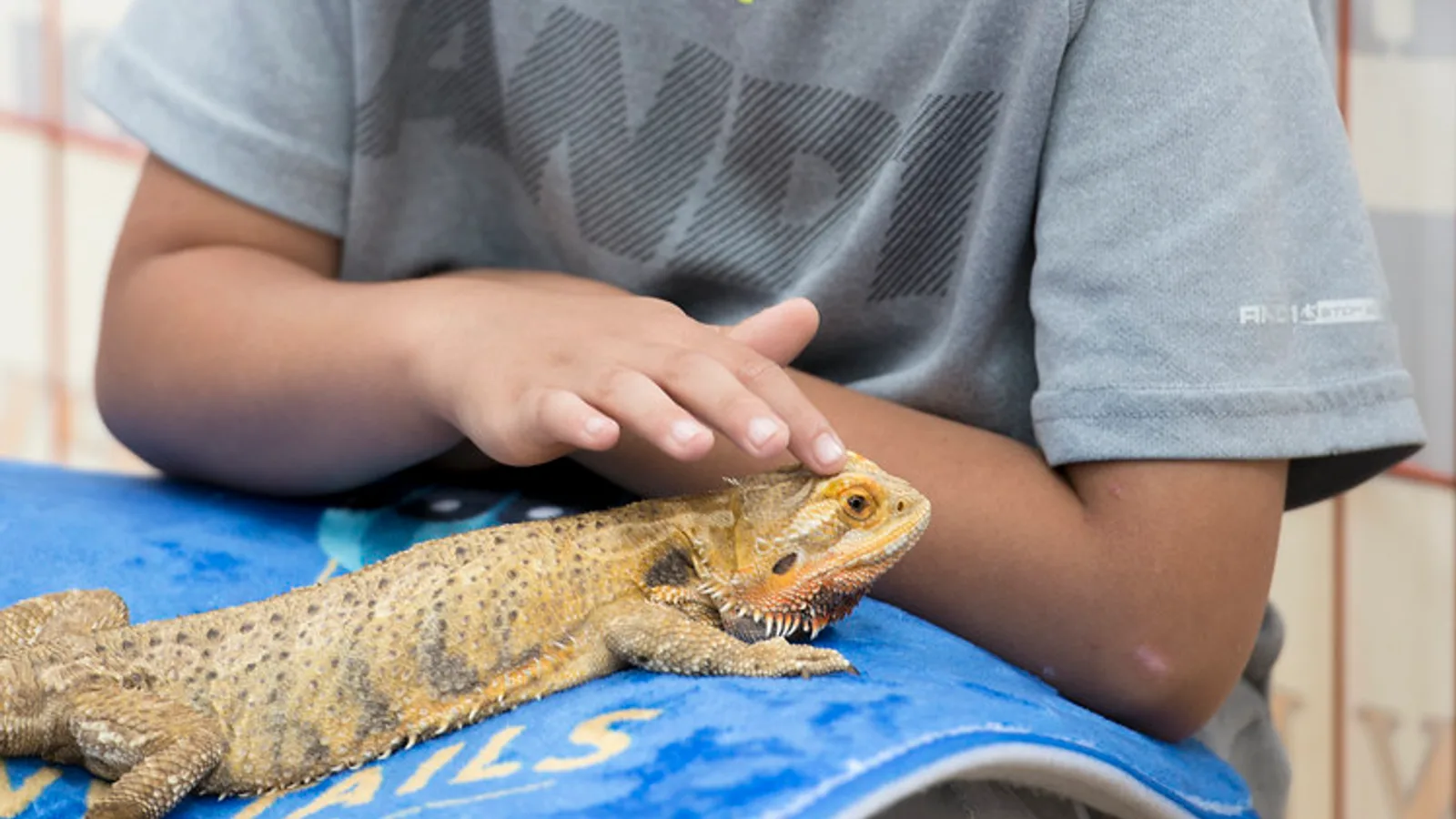
The average bearded dragon lifespan in captivity
Veterinary sources agree on the broad picture and differ slightly on the numbers. Roughly 7-15 years with proper care; sources vary: VCA cites about 7-12 years, PetMD about 8-10 years (life expectancy around 10), RSPCA cites 10 to 15 years or more, NC State Veterinary Hospital cites 7-10 years.
| Source | Expected lifespan with proper care |
|---|---|
| VCA Animal Hospitals | about 7 to 12 years |
| PetMD | about 8 to 10 years |
| RSPCA (UK) | 10 to 15 years or more |
Source note: figures from each organization's bearded dragon care material, listed in the Sources section below.
The spread tells you something useful. A dragon that only reaches the bottom of the range usually got there through husbandry gaps in its early years, not bad luck. The RSPCA asks owners to budget for 10 to 15 or more years of care, and that is the honest planning number for a healthy animal.
Wild versus captive lifespans
Wild bearded dragons live only a fraction of the captive lifespan due to predation and limited access to food, water, and veterinary care. Predators, drought, and food scarcity in arid Australia cut most wild lives short. Your enclosure removes every one of those threats, which is why a captive dragon with correct lighting and diet can double a wild dragon's years.
The species is built for harsh country. Wide range of arid to semi-arid habitats: deserts, dry forests, scrublands, low open woodland and low shrubland; semiarboreal.
The record holders
Two dragons hold the headline numbers. Oldest bearded dragon ever (Guinness World Records): 'Sebastian' (UK), 18 years 237 days - born 1 June 1997, died 24 January 2016; owned by Lee-Anne Burgess of Middlesex, UK. Oldest living bearded dragon in captivity (Guinness World Records): 'Barti' (Austria, born 2003), 20 years 155 days when verified in Vienna on 3 March 2024; cared for by Cornelia Hausler his whole life.
Records like these sit far outside the normal curve. They come from decades of stable temperatures, correct UVB, lean diets, and yearly veterinary checks. Treat them as proof of what careful husbandry makes possible, not as a promise.
What shortens a bearded dragon's life
Factors that shorten lifespan include inbreeding/genetic issues (e.g., silkback morphs with compromised skin), poor husbandry, metabolic bone disease, kidney disease, dental disease, obesity, retained eggs, and lack of veterinary care.
Most early deaths trace back to the enclosure, not to genetics. Most common bearded dragon health problems are husbandry-linked: metabolic bone disease, impaction, dysecdysis (abnormal shedding), parasites, gout, fatty liver and trauma appear on RSPCA SA's list of common conditions; incorrect diet, lighting and temperature are root causes cited by vet sources.
The main culprits, in the order a reptile vet usually finds them:
Metabolic bone disease. Metabolic bone disease (MBD) is one of the most common and preventable diseases of pet bearded dragons. MBD is caused by insufficient dietary calcium, lack of vitamin D3, inadequate UV-B exposure, and an imbalanced calcium-to-phosphorus ratio (diets high in phosphorus and low in calcium); without proper UV-B lighting dragons cannot absorb calcium effectively. Our guide to metabolic bone disease covers the warning signs in detail.
Wrong temperatures. A dragon that cannot reach a basking zone of 95 to 110 F (35 to 43 C) cannot digest food properly or run its immune system at full strength. The cool side belongs at 75 to 80 F (24 to 27 C), and nights should stay no colder than 65 to 70 F (18 to 21 C).
Poor diet. Adult dragons overfed on insects and underfed on greens develop obesity, gout, and organ problems. The feeding schedule guide breaks down the right insect to vegetable balance for every age.
Genetics in some morphs. Silkbacks lose evaporative water at roughly twice the rate of wild-type bearded dragons, and leatherbacks are intermediate (closer to silkbacks); the morphs do not adjust their thermal preferences to compensate Buyers who want a long-lived pet should weigh that welfare cost before choosing a silkback.
How to help your bearded dragon live longer
Every item below is preventable husbandry, and each one is backed by the veterinary sources at the end of this article.
- Run UVB correctly. Bearded dragons rely on UVB light to synthesize vitamin D3 in the skin; D3 is essential for calcium metabolism, and without adequate UVB they can develop metabolic bone disease (nutritional secondary hyperparathyroidism), weak bones and fractures. Replace bulbs every 6 to 12 months, even when they still glow, because UVB output fades long before visible light does. Full setup details are in the UVB lighting guide.
- Dust with calcium on schedule. Juveniles need calcium powder 4 to 5 times a week; adults need it 1 to 2 times a week.
- Hold the temperature gradient. A hot-to-cool temperature gradient is mandatory so the dragon can thermoregulate within its preferred optimal temperature zone (POTZ)
- Feed age-appropriate ratios. Diet shifts with age: hatchlings/young juveniles eat roughly 70% insects / 30% vegetation, flipping in adulthood to mostly vegetation (RSPCA Australia: adults ~90% vegetation / 10% animal matter; PetMD: adults 70-80% plants)
- Book a yearly vet exam. Healthy bearded dragons should have a veterinary wellness examination once every year, ideally bringing a fresh fecal sample for parasite screening; regular annual checkups plus proper environment help catch and prevent illness early. Reptiles typically do not show signs of illness until disease has significantly progressed, so subtle changes matter and owners should not wait to see if the lizard recovers on its own.
- Respect brumation. During cooler seasons bearded dragons slow down, sleep more and eat less (brumation) A vet check before a planned brumation rules out illness hiding behind normal seasonal sluggishness. See the brumation guide for the full signs list.
The physiology behind the numbers
Experienced keepers can go a level deeper here. Lifespan in Pogona vitticeps is a husbandry equation with three biological inputs.
First, vitamin D3 synthesis. UVB exposure, rather than dietary vitamin D alone, may be critically important for producing active vitamin D in lizard skin and preventing bone disease; reptiles needing UVB should get 30-120 minutes of UVB light daily with older (non-mercury-vapor) bulbs. The UVB band that matters is narrow: UVB is the 290-320 nm band (VCA); Merck cites UVB 290-300 nm as essential for vitamin D3 synthesis in diurnal lizards. A bulb outside that output, or one blocked by glass, leaves the dragon unable to metabolize dietary calcium no matter how well you dust.
Second, calcium to phosphorus balance. The calcium:phosphorus ratio of the diet should be at least 1:1, with 2:1 preferred (Merck); WSU and Illinois WEL state the ideal Ca:P ratio is 2:1. Feeder insects on their own fail that test badly: Feeder insects naturally contain extremely low calcium (about 0.03-0.3%) with 0.8-0.9% phosphorus; a 3-day 12% calcium gut-load raises insect calcium to roughly 0.8-0.9%, giving a Ca:P ratio of approximately 1.2:1. Gut loading and dusting exist to correct that ratio, which is why skipping them for a few months in a juvenile's growth window can shave years off the back end.
Third, thermoregulation. Preferred body temperature in the high thirties to low forties Celsius; thermal gradient of 27-45 C recommended in captivity. Digestion, immune response, and UVB-driven D3 synthesis all run on that body temperature. A chronically cool dragon eats less, absorbs less, and fights infection worse, which compounds quietly for years before it shows as disease.
Sexual maturity arrives at 1 to 2 years, and the growth phase before it is when MBD does permanent skeletal damage. Juvenile bearded dragons are particularly vulnerable to metabolic bone disease; young and reproducing animals face higher risk. Get the first two years right and the odds shift heavily toward the long end of the lifespan range.