The third eye is real
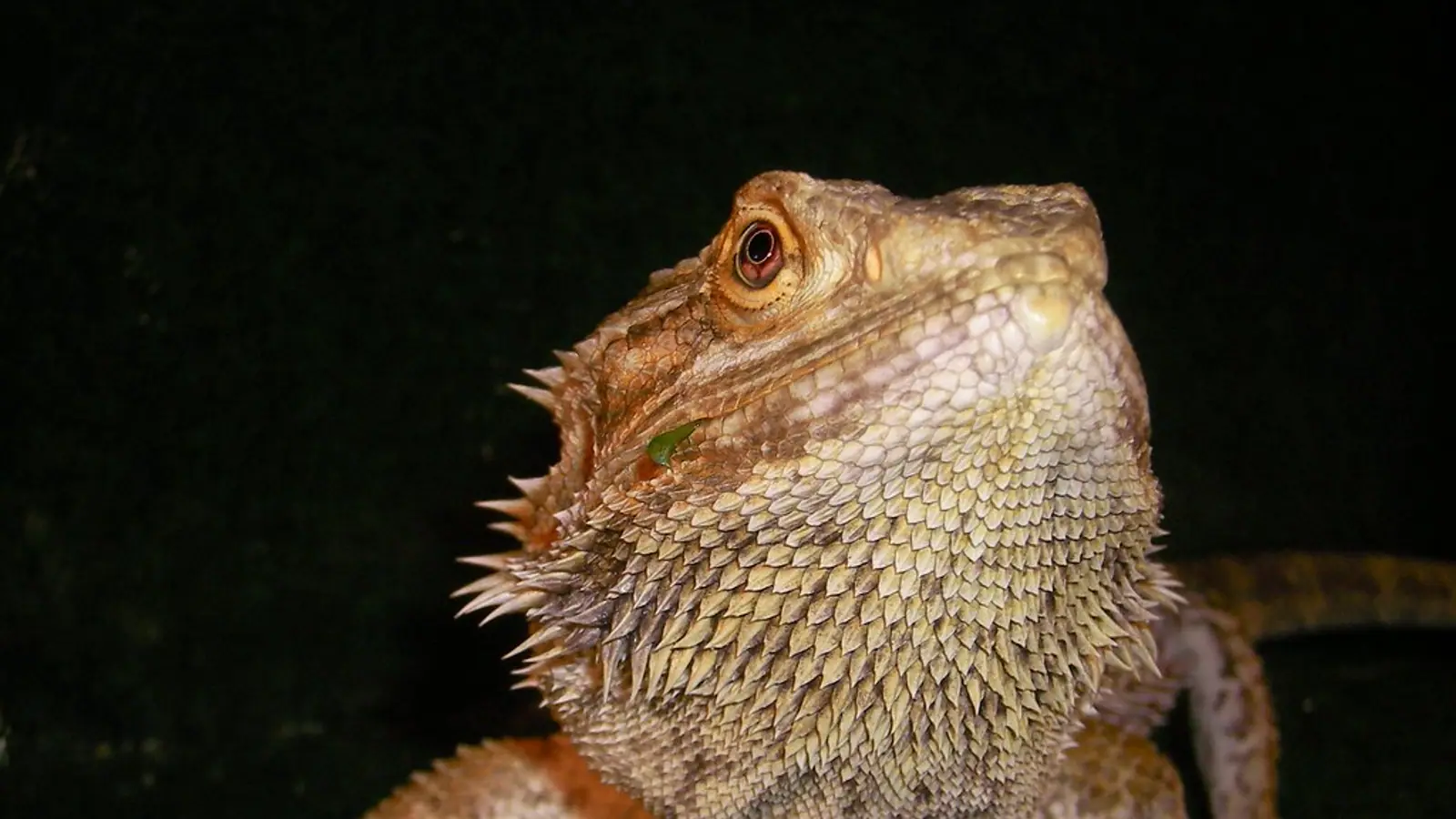
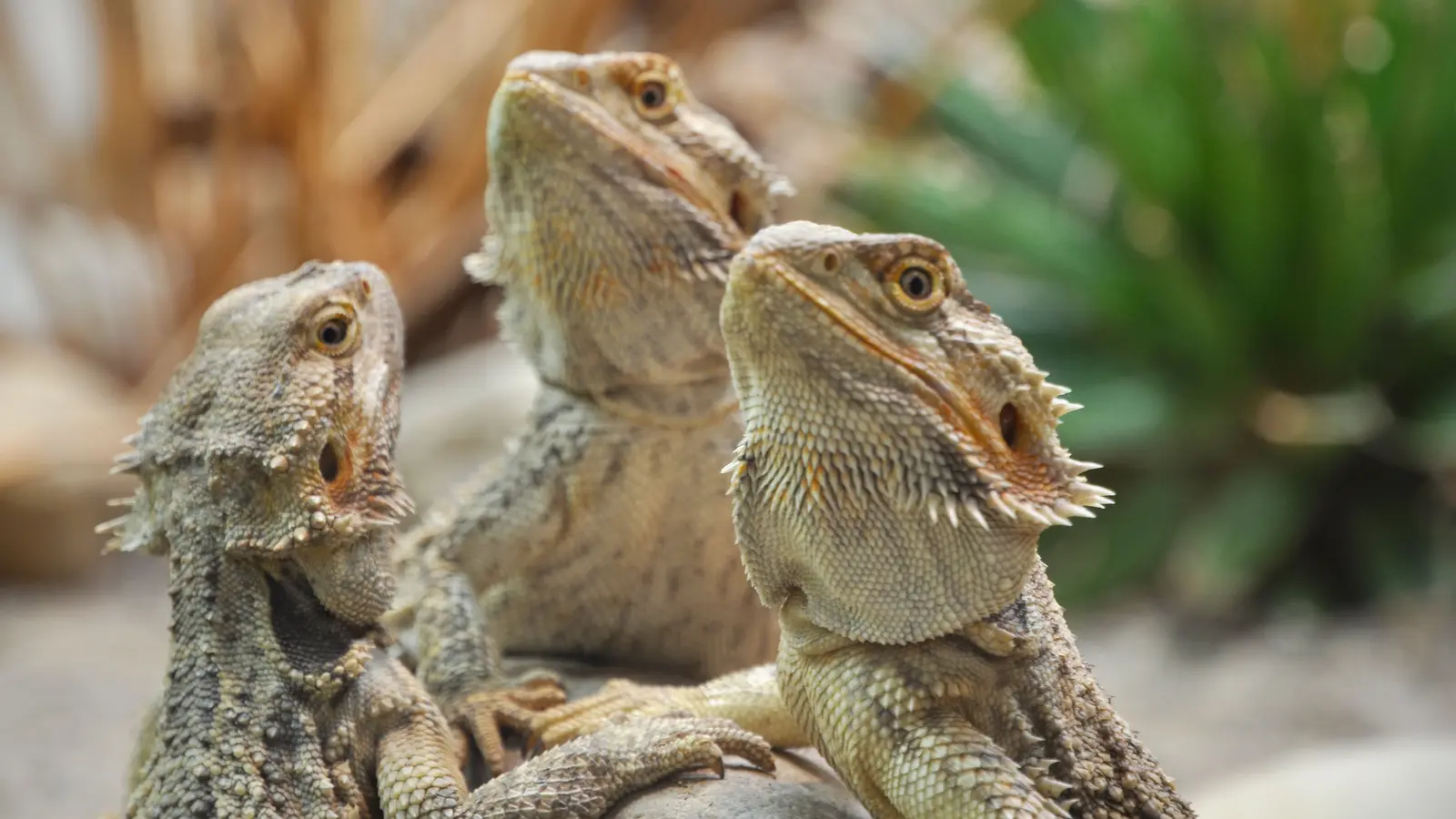
The most surprising fact about this animal is visible if you look at the top of its head. Lizards have a parietal 'third eye' atop the head with a primitive retina and photoreceptor cells; it detects changes in light and dark and helps regulate hormone production (circadian/thermoregulatory function)
It is not a spare eye for seeing. The parietal eye detects light and shadow, which helps with circadian timing and with noticing a shape passing overhead. Our third eye guide covers what it does and what research says about how it evolved.
They are mildly venomous, and it does not matter
This one reliably surprises people, and it needs framing carefully so it does not alarm anyone. Bearded dragons are mildly venomous: Fry et al. (Nature 439:584-588, 2006) found Pogona barbata retains an ancestral venom system with serial, lobular non-compound venom-secreting glands on both upper and lower jaws.
The study behind it: Fry BG et al., 'Early evolution of the venom system in lizards and snakes', Nature 439(7076):584-588, 2 Feb 2006 - showed venom systems evolved once in a common ancestor of lizards and snakes and identified venom toxins in Iguania (which includes bearded dragons); nine toxin types are shared between lizards and snakes.
The finding reshaped how scientists think about venom evolution across lizards and snakes. For an owner it changes nothing at all. Bearded dragons are not dangerous to people, and a bite is a minor mechanical injury rather than an envenomation event. The biting guide covers the practical side.
Teeth fused to the jaw
Bearded dragons have an unusual dental arrangement with a real clinical consequence: Bearded dragons have acrodont dentition: teeth directly ankylosed (fused) to the mandibles and maxilla, are permanent and are not replaced throughout life.
Because those teeth do not replace themselves: The acrodont anatomy makes captive bearded dragons highly susceptible to dental/periodontal disease; advanced cases can progress to bone involvement.
That is a genuinely useful fact rather than trivia, and it is one more reason the fruit cap in the food section exists. The teeth guide covers the anatomy and what owners can do about dental health.
The tail never grows back
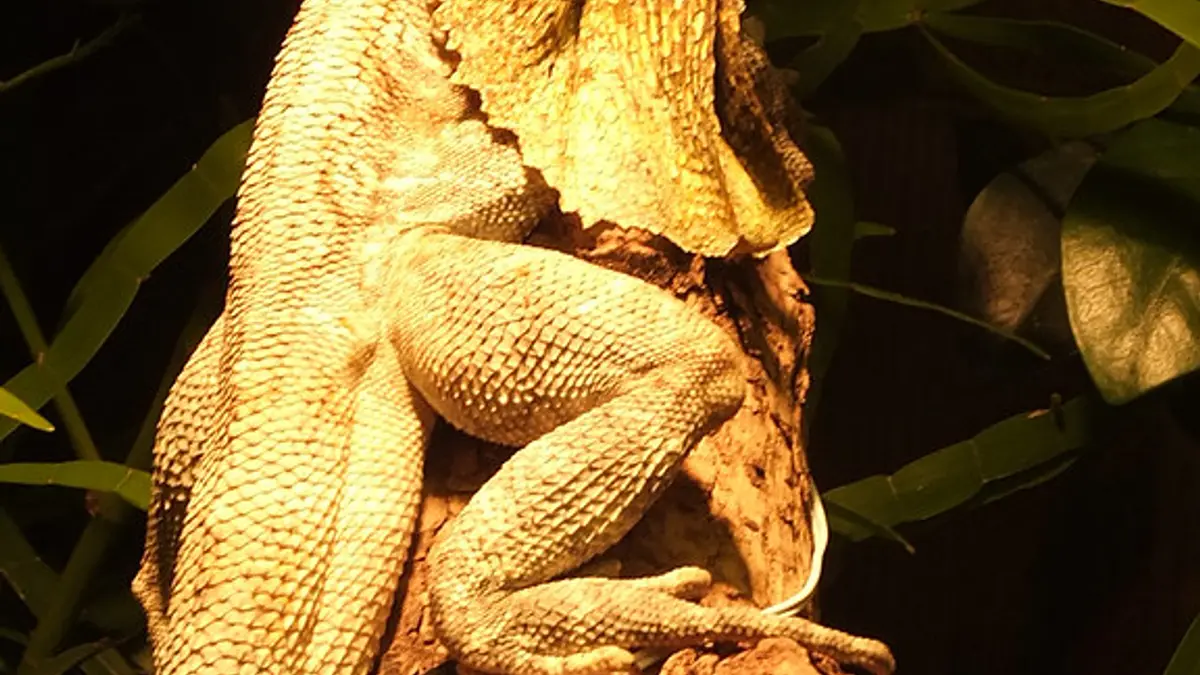
A myth worth killing: many people assume all lizards drop and regrow tails. Bearded dragons do not. Bearded dragons (Pogona) lack tail autotomy: in a peer-reviewed review of agamid autotomy, all examined specimens of P. barbata and P. vitticeps had intact tails and no literature documents pseudoautotomy in these species; a lost or amputated tail is permanent.
We flag this one specifically because a major pet publisher gets it wrong, and the error circulates widely. A peer-reviewed review of agamid lizards is the better authority, and it says the opposite.
Sleep that rewrote the textbooks
Bearded dragons are daytime animals: Diurnal - active during the day
What they do at night turned out to matter for neuroscience: Bearded dragons show both REM and slow-wave sleep (first demonstrated in a reptile; Shein-Idelson et al., Science 352:590, 2016). Sleep cycle is ~80 seconds at 27 C (vs ~30 min in cats, 60-90 min in humans), with the two phases of roughly equal duration.
The implication is substantial: The bearded dragon sleep findings suggest brain sleep (REM + slow-wave) originated at least 320 million years ago in the common ancestor of amniotes (reptiles, birds, mammals)
The sleep guide covers the research and the practical side of light cycles.
Where they come from
Every pet bearded dragon descends from Australian stock, and none has arrived from there recently: P. vitticeps occurs from the eastern half of southern Australia to the southeastern Northern Territory; a band across the semi-arid interior of eastern Australia including western NSW, western Queensland and the Riverina.
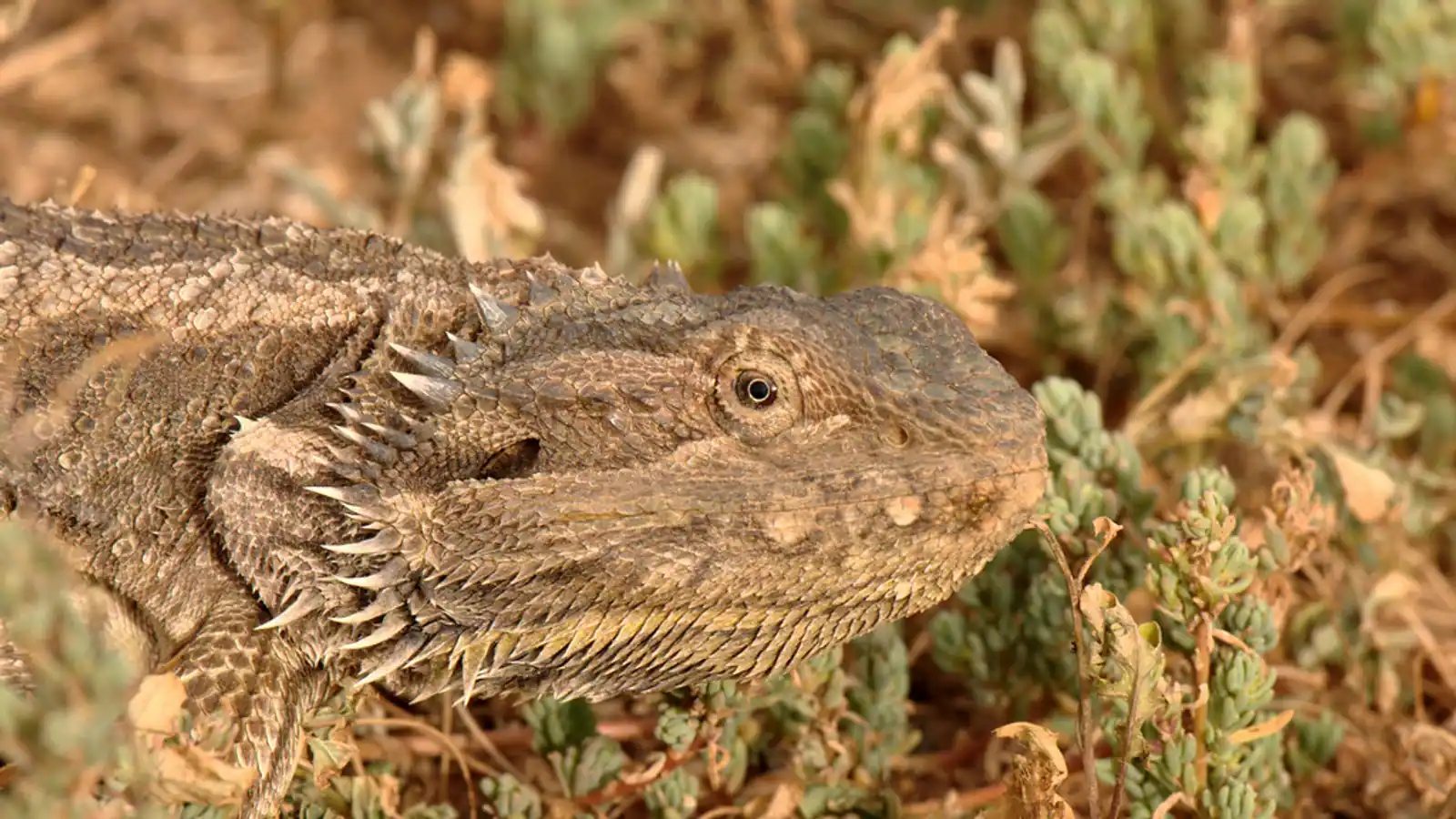
The habitat explains the husbandry: Wide range of arid to semi-arid habitats: deserts, dry forests, scrublands, low open woodland and low shrubland; semiarboreal.
And the reason the pet trade is entirely captive-bred: Australia banned the commercial export of all live native animals in 1982; pet-trade bearded dragons outside Australia today are supplied by overseas captive breeding.
The origins guide covers the wild animal and how it became a household pet.
Records and longevity
Two dragons hold the headline numbers. Oldest bearded dragon ever (Guinness World Records): 'Sebastian' (UK), 18 years 237 days - born 1 June 1997, died 24 January 2016; owned by Lee-Anne Burgess of Middlesex, UK.
And currently: Oldest living bearded dragon in captivity (Guinness World Records): 'Barti' (Austria, born 2003), 20 years 155 days when verified in Vienna on 3 March 2024; cared for by Cornelia Hausler his whole life.
Typical pet lifespan is more modest at 7 to 15 years, which the lifespan guide covers alongside what actually extends it.
Reproduction facts
The numbers here surprise people: Females lay up to 24 eggs per clutch and up to 9 clutches per year (ADW); Australian Museum gives clutch sizes of 11-30 eggs; PetMD gives clutches of up to 20 eggs, multiple per year.
Incubation: In captivity eggs hatch in 55-75 days at 28.9 C (ADW); Australian Museum reports 78-85 days at approximately 26 C - incubation length varies with temperature.
And a fact every owner of a female should know: Females can lay unfertilized eggs regardless of whether a male is present.
That last one matters practically, because egg-laying carries risk. The health section covers the warning signs.
Senses
Vision is well developed: Diurnal lizards share a highly conserved ancestral pattern of four spectrally distinct cone classes (UV-, short-, medium- and long-wavelength sensitive), suggesting tetrachromatic colour vision extending into ultraviolet.
Their hearing works differently from a mammal's: Lizards have external ears (visible ear openings rather than protruding ears) and appear to hear better than snakes.
And colour has a job beyond appearance: Bearded dragons regulate body temperature partly by changing shades of skin colour.
What that adds up to for recognition is a harder question, and the owner recognition guide answers it honestly rather than sentimentally.
Naming your dragon
The least scientific page in this section is also one of the most used. Our name guide collects over 250 ideas grouped by theme, from Australian place names to mythology to the deliberately ridiculous.
Quick reference: the surprising ones
| Fact | Detail |
|---|---|
| Third eye | A parietal eye with a primitive retina, on top of the head |
| Venom | Mild venom identified in 2006, harmless to humans |
| Teeth | Fused to the jawbone, never replaced |
| Tail | Cannot be shed or regrown, unlike many lizards |
| Sleep | First reptile shown to have REM and slow-wave sleep |
| Sex determination | High incubation temperatures can reverse genetic sex |
Source note: findings from Nature, the Journal of Experimental Biology, Max Planck Institute research, Guinness World Records, and Animal Diversity Web, cited in each linked guide.