Species first, morphs second
Two different questions get confused constantly. Species are natural populations; morphs are traits selected inside a species by breeders.
On the species side: Six naturally occurring species in genus Pogona, plus one viable captive-bred hybrid (Pogona vittikens, Rankin's dragon x central bearded dragon)
The full set: Pogona barbata (eastern), P. henrylawsoni (Rankin's), P. microlepidota (Kimberley), P. nullarbor (Nullarbor), P. vitticeps (central), P. minor (western)
One of them is what nearly everyone keeps: The inland/central bearded dragon (Pogona vitticeps) is the most popular pet species; commonly bred in captivity in the US and Canada.
All of them come from one continent: The genus Pogona is native to the Australian region, with ranges across most of the continent excluding the central north and some southeastern coastal areas.
And none arrive from there today: Australia banned the commercial export of all live native animals in 1982; pet-trade bearded dragons outside Australia today are supplied by overseas captive breeding.
Our types guide covers the species properly, including a discrepancy worth knowing about between sources on the species count.
What a morph actually is
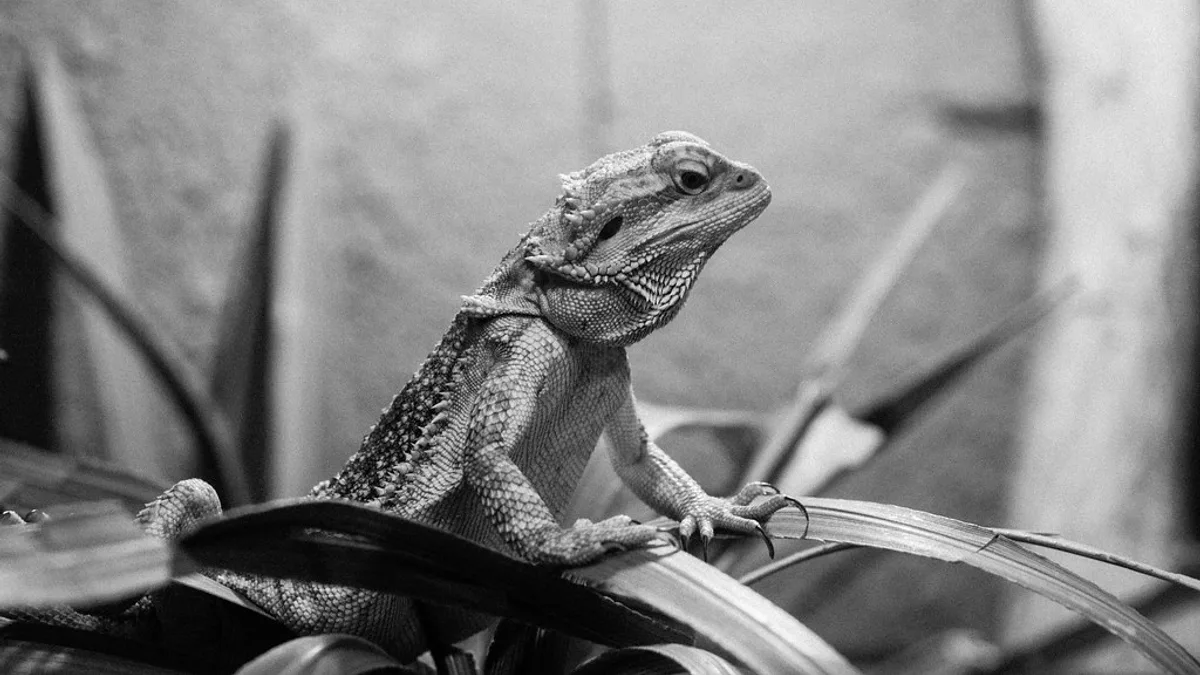
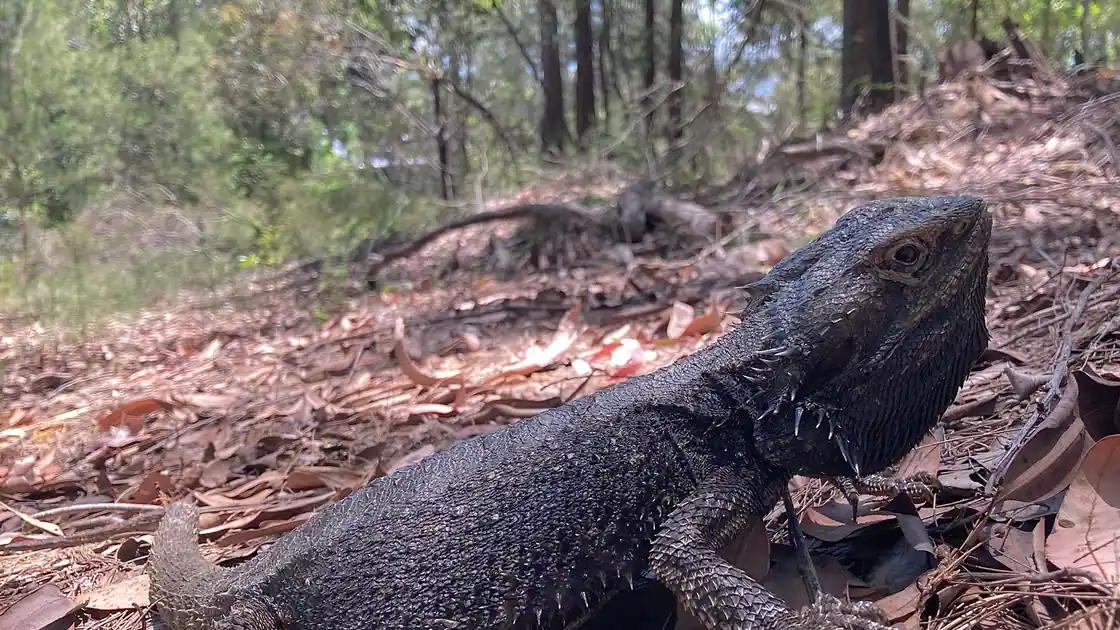
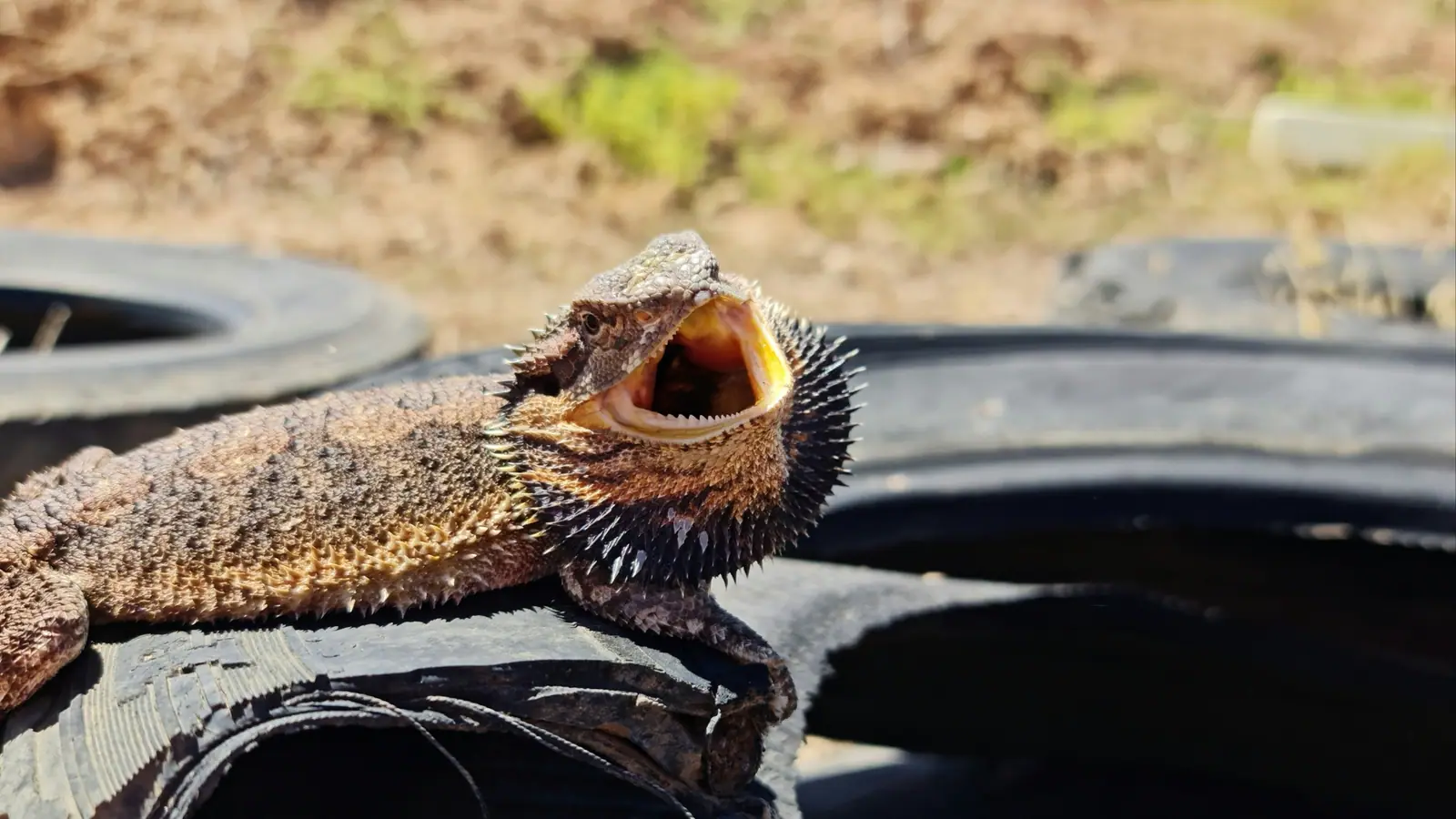
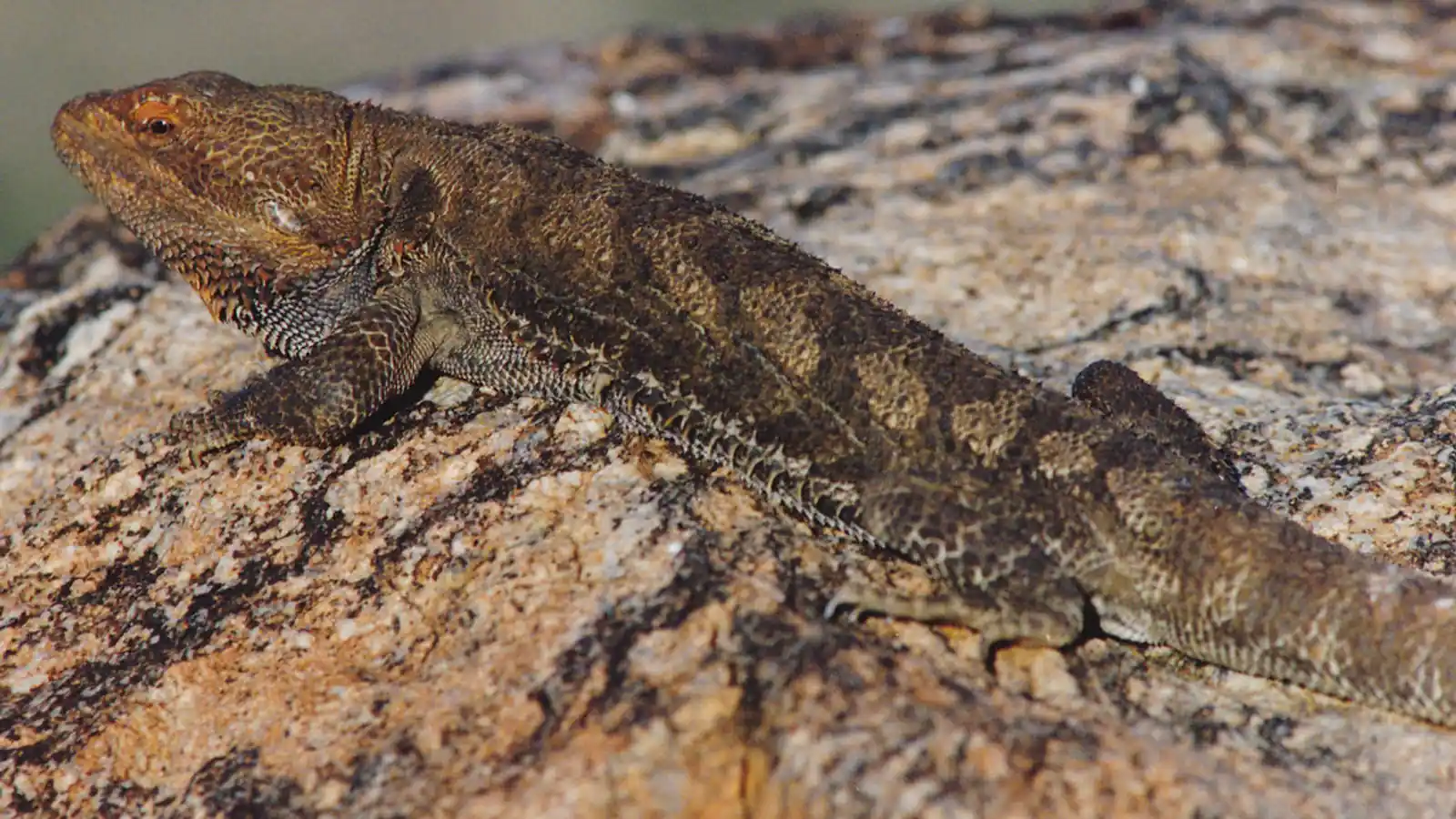
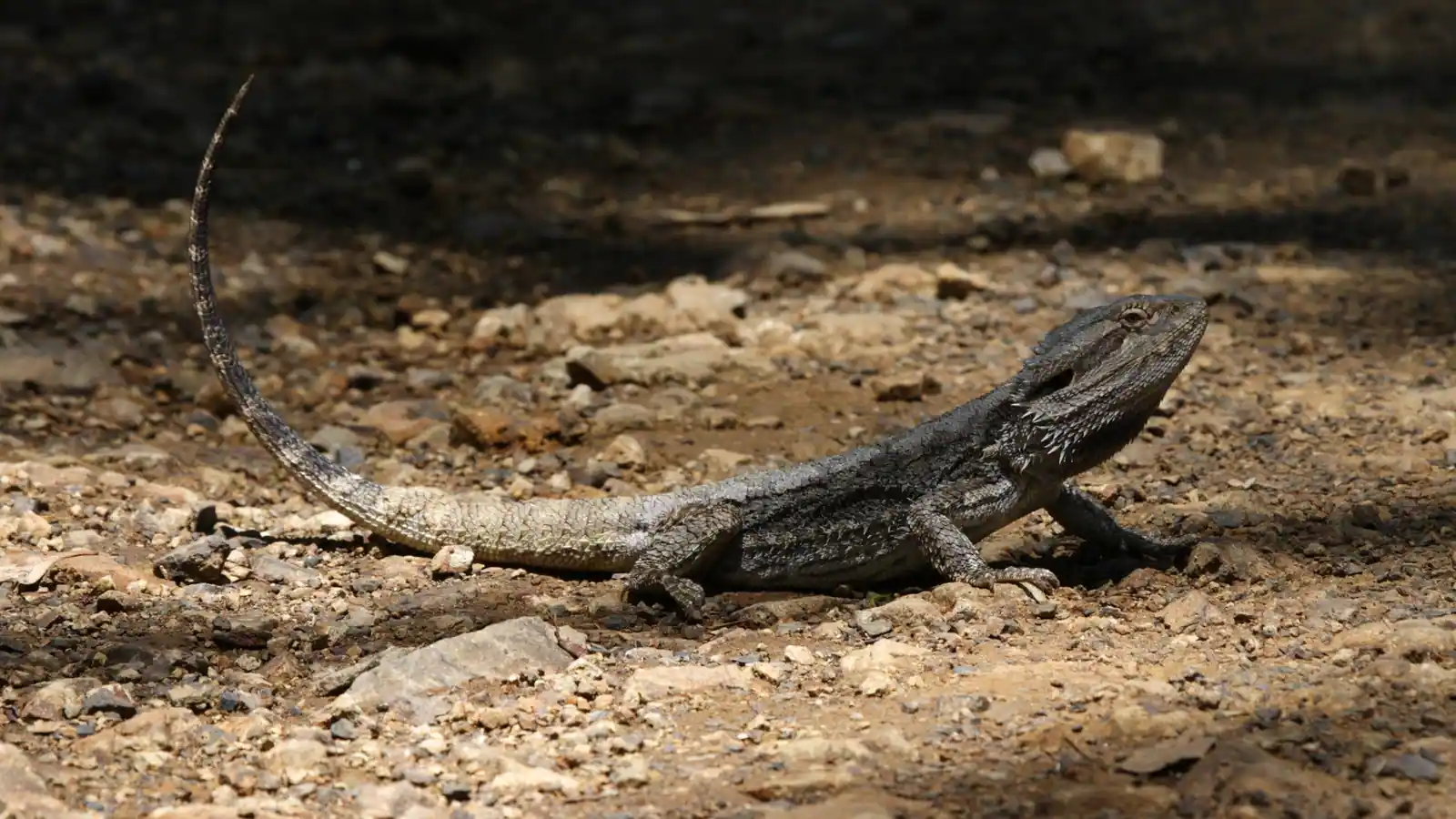
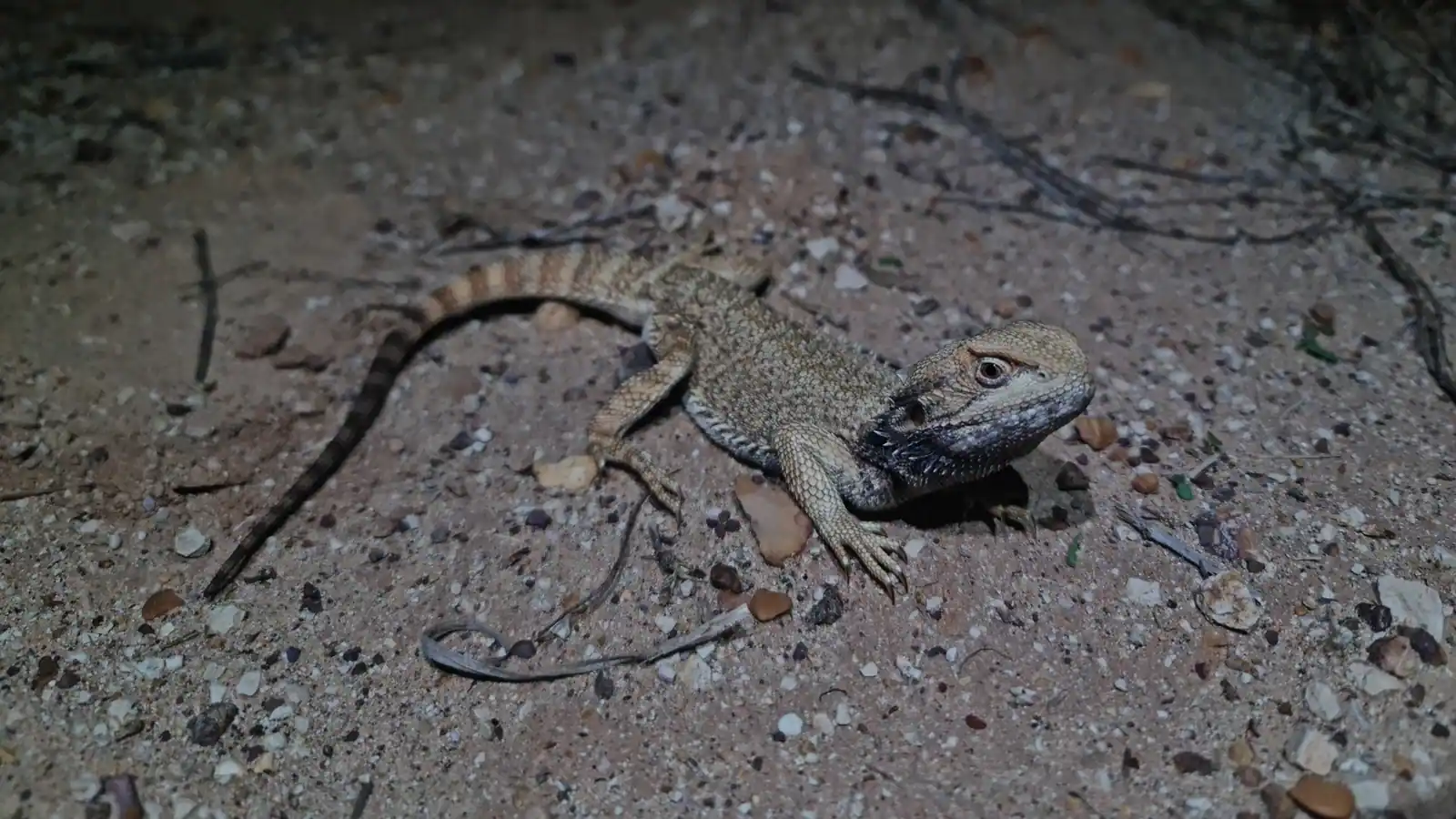
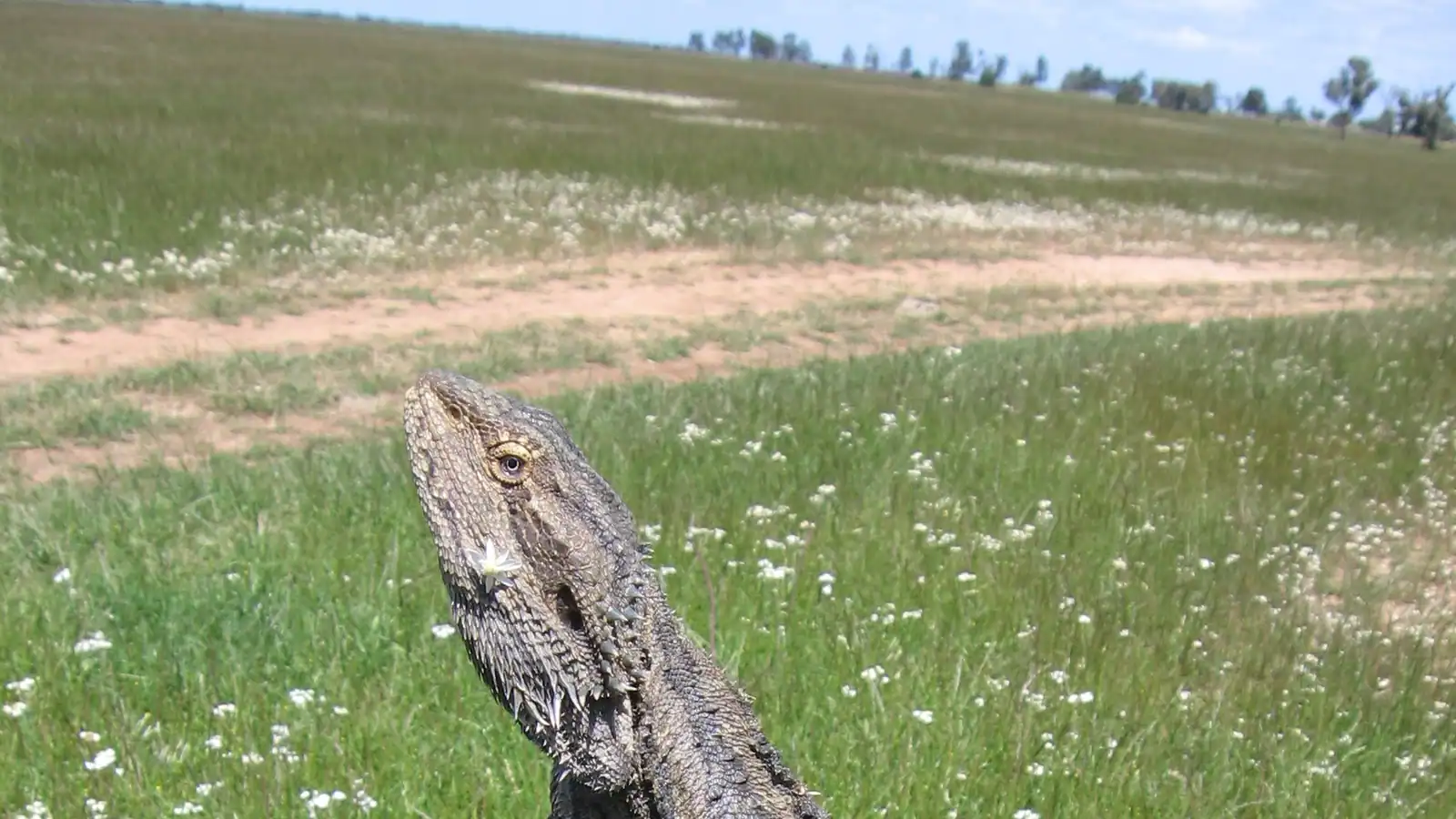
A morph is an inherited variation selected by breeders, usually affecting colour, pattern, or scale structure. Wild-type bearded dragons look like the animal the desert produced: Dull brown to tan with red or gold highlights; shades of red, brown and yellow that tend to match local soil color; yellow around eyes and sides of head.
Everything beyond that came from breeding decisions, which means morph names describe genetics rather than species. A leatherback is not a different animal from a normal bearded dragon; it carries a specific allele.
The scale morphs are the best documented genetically: The leatherback/silkback scalation trait shows incomplete dominance; the causal gene is ectodysplasin-A (EDA), identified by Di-Poi & Milinkovitch (Science Advances, 2016) - the same gene whose mutations disrupt hair, teeth, gland and nail development in humans and mice
The welfare line this section will not blur
One morph carries a documented cost, and we treat it as a welfare question rather than an aesthetic preference.
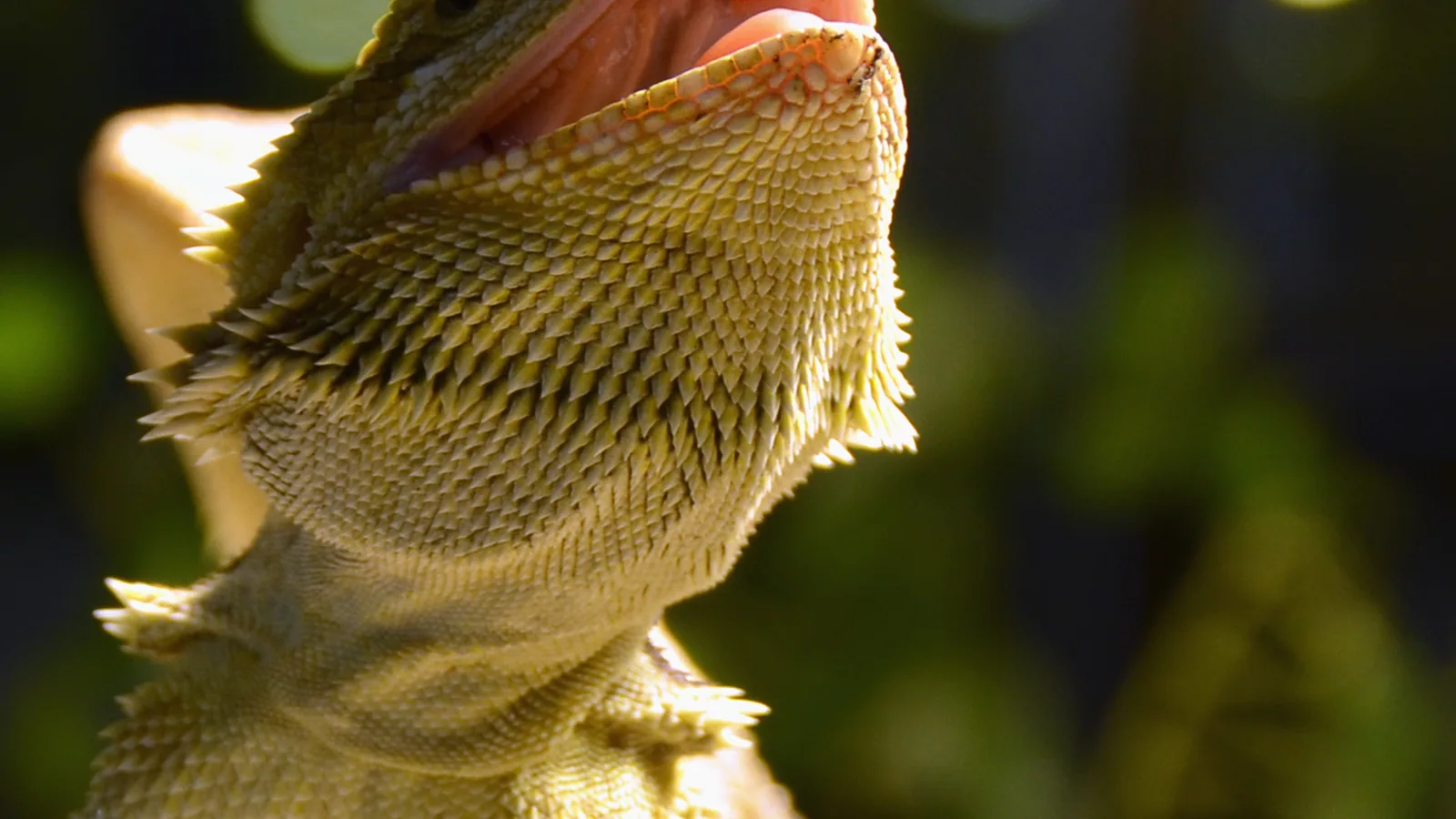
Silkback: two copies of the mutant allele (homozygote); completely scaleless with no tubercles or lateral spines; very thin, damage-sensitive skin and more vibrant coloration
And the consequence, measured in a peer-reviewed study: Silkbacks lose evaporative water at roughly twice the rate of wild-type bearded dragons, and leatherbacks are intermediate (closer to silkbacks); the morphs do not adjust their thermal preferences to compensate
That is not a matter of opinion between breeders. A scaleless animal loses water at roughly twice the rate of a wild-type one, in a species built for arid conditions. Anyone choosing a morph deserves to know that before buying, which is why the leatherback guide covers the breeding outcome honestly: Breeding leatherback x leatherback yields approximately 25% normal-scaled, 50% leatherback, 25% silkback offspring (classic incomplete-dominance ratio); no hidden 'het' carriers - the trait is always visible
The colour and pattern morphs
The common ones each have a guide.
Hypomelanistic: Hypomelanistic ('hypo'): reduced melanin producing more vibrant/pastel colors and clear nails lacking the usual brown melanin stripe; recessive mutation Covered in the hypo guide.
Translucent: Translucent ('trans'): partially see-through skin and solid black eyes; hatchlings often show blue underbellies; recessive mutation Covered in the translucent guide.
Zero: Zero: completely patternless morph in silvery off-white to darker silver/gray shades; recessive mutation Covered in the zero guide.
Witblits: Witblits: patternless morph in muted earth tones to sandy orange; recessive mutation, distinct from zero
A note on sourcing for this section. Veterinary and academic sources document scale genetics and welfare effects; the visual descriptions of colour morphs come largely from breeders, and we label them as such rather than dressing breeder marketing as science.
Size and growth
Morph does not change how big a dragon gets. That is a species question, and the numbers are documented: Adults roughly 33-61 cm (13-24 in) total length including tail; VCA gives 45-56 cm (18-22 in); Australian Museum gives up to 55 cm; about half the length is tail.
Weight follows: 250 to 510 grams
Hatchlings start small: around 4 cm snout to vent
And adulthood arrives on a timeline: 1 to 2 years
The size and growth guide covers what a normal growth trajectory looks like, and why no cited veterinary source publishes a month-by-month weight chart.
Telling males from females
Sex is not a morph, but it is the other identification question every owner asks. The physical differences are documented: Adult males have larger femoral pores on the underside of the thighs, larger heads, darker beards and slightly larger bodies than females; males are also more brightly colored.
Age matters here: Sexing bearded dragons under three months of age is very challenging; sex differences become clear as animals mature.
There is a genuinely strange biological wrinkle here too: Incubation temperatures at or above 32 C can cause complete phenotypic feminisation (sex reversal) of genetically male (ZZ) embryos; P. vitticeps is one of only two reptile species known to show thermally triggered sex reversal in wild populations (Holleley et al. 2015, Nature)
The sexing guide covers the methods and the honest limits of each.
One practical consequence of sex worth knowing before buying: Never keep more than one adult male per enclosure - males are territorial and will fight; adult females kept together also require monitoring for aggression.
Morphs do not change care
This is the most useful takeaway in the section. A zero, a hypo, a translucent, and a wild-type dragon all need the same enclosure, the same basking zone at 95 to 110 F (35 to 43 C), the same UVB schedule, and the same diet.
The exception is the scaleless silkback, whose water loss and skin fragility create genuine additional husbandry demands, which is precisely the argument against the morph.
So choose on appearance if you like, then read the habitat section and the care section, because those decide how your dragon actually lives.
Quick reference: morph groups
| Group | What it affects |
|---|---|
| Leatherback | Scale size, reduced; one copy of the allele |
| Silkback | Scaleless; two copies, with documented welfare costs |
| Hypomelanistic | Reduced melanin, brighter colour, clear nails |
| Translucent | Partially see-through skin, solid black eyes |
| Zero, witblits | Patternless, in silver or earth tones |
Source note: scale genetics from University of Geneva research and the Journal of Experimental Biology; colour morph descriptions from breeder sources, labeled as such in each guide.