Start with the healthy baseline
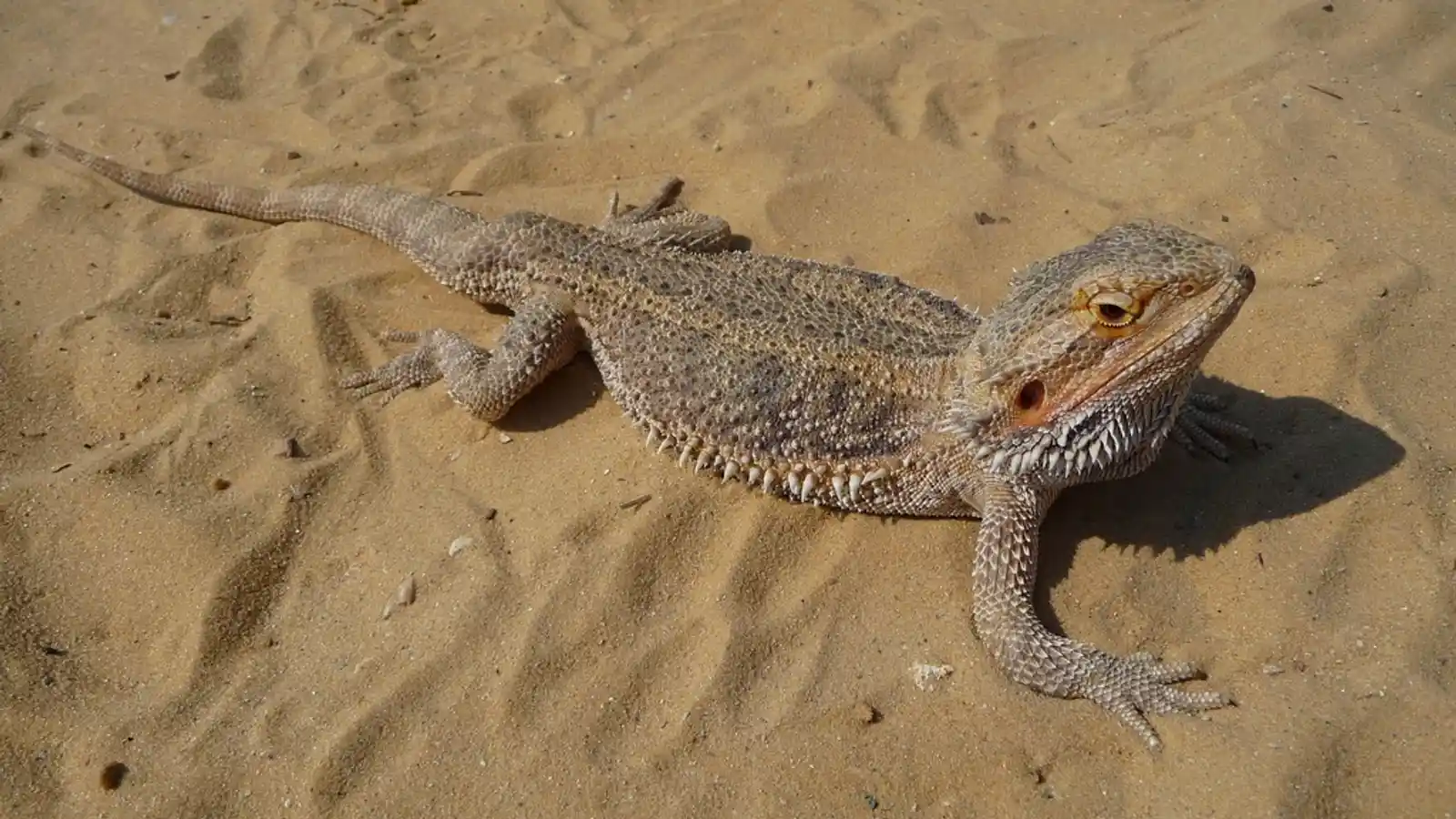
You cannot spot sick without a clear picture of well. VCA Animal Hospitals describes it precisely: A healthy bearded dragon is alert, active, and aware, with clear bright eyes, a thick round tail base, hips that do not protrude, a clean dry vent, bright pink mouth tissue, and clear saliva.
Two details in that description deserve a daily glance. The tail base is the dragon's fat storage, so a thick, rounded tail base is a body condition report you can read from across the room. And the vent should stay clean and dry; anything smeared or wet there is information.
The unhealthy picture inverts the same list. Signs of an unhealthy dragon include a skinny appearance or loose skin, sunken eyes, lethargy or inactivity, a sunken bony tail, wet or soiled vent, cloudy mucus or cottage-cheese-like material in the mouth, and gum redness or pinpoint hemorrhages.
Why waiting to see is the wrong strategy
Reptiles are prey animals that mask weakness, and the clinical consequence is blunt: Reptiles typically do not show signs of illness until disease has significantly progressed, so subtle changes matter and owners should not wait to see if the lizard recovers on its own.
Appetite is your most sensitive early instrument. Leaving food after a meal can be one of the first signs of illness in a lizard, and not eating at all - even once - is a sign that cannot be ignored. If meals are being refused, work through our dedicated guide to a bearded dragon not eating, which covers the husbandry checks to run the same day.
A head to tail symptom checklist
Run this top to bottom whenever something feels off. Each row pairs a body system with the specific signs the veterinary sources flag.
| Where to look | Warning signs per the sources |
|---|---|
| Eyes | Swollen, sunken, closed, or draining eyes are a reason to contact a veterinarian; eye infections are among the common conditions seen in bearded dragons. |
| Mouth and gums | Signs include pinpoint hemorrhages on the gums, red/inflamed or bleeding gums, gum swelling, excessive thick mucus, cottage-cheese-like material in the mouth, loss of appetite, inability to close the mouth, and jaw swelling in advanced cases. |
| Breathing | Signs include sneezing, discharge from the eyes or nose, bubbles from the mouth or nose, rapid or shallow breathing, open-mouth breathing, difficulty breathing, decreased appetite, and lethargy. |
| Skin | Signs include yellow to brown crusted, thickened skin plaques on the face, back, sides, or legs that crack, peel, and can bleed; discoloration that won't wash away and progressively expanding sensitive areas; weight loss and weakness in advanced cases. |
| Bones and movement | Signs include weakness or difficulty walking, swollen or softened 'rubber' jaw, swollen or deformed limbs, muscle tremors or twitching, lethargy, loss of appetite, fractures, and seizures in advanced cases; RSPCA also lists permanently deformed limbs or spine. |
| Droppings | Abnormal droppings, constipation, diarrhea, foul-smelling feces, or profuse diarrhea can indicate internal parasites and call for veterinary fecal testing. |
| Tail and toes | In tail rot, the end of the tail turns black, appears shriveled, and feels mushy, with infection through the tail's circumference; it requires aggressive veterinary intervention and may need surgical amputation. |
Source note: compiled from VCA Animal Hospitals disease pages, WSU veterinary hospital, PetMD, and Merck Veterinary Manual entries listed in Sources.
Each row has a deeper guide behind it: metabolic bone disease for the movement row, mouth rot for the gum signs, and bearded dragon poop for reading droppings properly.
Dehydration ties several rows together and is easy to miss on its own: Sunken eyes, sticky mucus in the mouth, and retained non-shedding skin can all be signs of dehydration; sunken eyes also suggest weight loss.
The emergency tier: vet today, not this week
Most symptoms buy you a phone call and a booked appointment. These do not. Emergency-level signs include seizures, suspected egg binding in a lethargic female, a blackening mushy tail, not eating at all, no droppings with lethargy, constriction injuries from retained shed, and any trouble breathing.
Female dragons carry one extra emergency even when housed alone, since females can produce eggs without a male. Egg binding (dystocia) is life-threatening: gravid females stop eating and become sick, lethargic, or unresponsive; causes include inadequate UV lighting, temperature, humidity, malnutrition, obstruction, or reproductive tract abnormality - see a vet immediately.
Normal things that look like symptoms
Half of panicked owner searches trace to normal reptile behavior. Three examples worth knowing before you assume the worst:
An open mouth at the basking spot. Bearded dragons often open their mouths (gape) while basking to expel excess heat - a thermoregulatory behavior. Open-mouth basking under the lamp is thermoregulation. Open-mouth breathing at rest on the cool side, especially with mucus or clicking, belongs in the respiratory row above.
A black beard. The beard turns dark to jet black and inflates during displays; used in both threat/aggression and courtship. When threatened, the dragon faces the intruder with mouth wide open and beard puffed out; darkening also occurs with stress, fear or mating arousal. Stress and display darken the beard; the behavior alone is not a disease marker. Our black beard guide separates mood from medical.
Winter slowdown. Brumating dragons become lethargic, refuse food, stop defecating, and their scales may appear darker; slowing down, sleeping more, and eating less in cooler seasons is normal. The season, the dragon's age, and stable weight separate brumation from illness, and the checks live in our brumation guide. VCA's rule of thumb still applies: If the household temperature is a normal 60-70 F (16-21 C), a lethargic dragon may not be brumating - it may be sick; rather than assuming brumation, have the pet examined by a reptile-knowledgeable veterinarian.
Most symptoms trace back to the setup
Here is the pattern reptile vets see over and over: Many medical problems vets see in bearded dragons - weak legs, soft jaws, yellow fungus disease, poor growth - trace back to incorrect diet, lighting, temperature, or enclosure setup. The RSPCA's condition list reads the same way: Most common bearded dragon health problems are husbandry-linked: metabolic bone disease, impaction, dysecdysis (abnormal shedding), parasites, gout, fatty liver and trauma appear on RSPCA SA's list of common conditions; incorrect diet, lighting and temperature are root causes cited by vet sources.
The practical takeaway is that a symptom is a prompt to audit two things at once, the dragon and the enclosure. Temperatures, UVB age, humidity, and substrate answer for more vet visits than infection does.
Reading body condition the way a vet does
A hands-on check once a week catches what daily glances miss. Vets read fat and muscle at specific landmarks, and the same landmarks work at home. Observable weight-loss signs in lizards include tail thinning (fat is stored in the tail), prominent ribs, and defined skull bones.
Pair the landmarks with a scale. A kitchen scale reading logged weekly turns a vague sense that your dragon feels lighter into a number a vet can act on, and it is the single cheapest diagnostic tool you own. Adults hold weight within a narrow band; a steady downward trend across two or three weigh-ins is a finding, even when behavior still looks normal.
Professional care has its own schedule. A newly acquired bearded dragon should be examined by a reptile-experienced veterinarian within 48 hours of purchase or adoption. After that, Healthy bearded dragons should have a veterinary wellness examination once every year, ideally bringing a fresh fecal sample for parasite screening; regular annual checkups plus proper environment help catch and prevent illness early. The fecal sample matters because parasitized dragons often show nothing at all on the outside: Parasitized dragons often show no visible signs; advanced cases can show abnormal droppings, mild loose stool to foul-smelling feces, profuse diarrhea, constipation, and weight loss - a vet fecal test is needed to diagnose.
One last habit protects the humans in the house while you handle a possibly sick animal: CDC: wash hands for at least 20 seconds with soap and water right after touching reptiles or anything in the area where they live, and before preparing food or eating.
Symptoms are a language, and you now have the dictionary. When a specific condition comes into focus, the detailed guides in our health section take you the rest of the way.