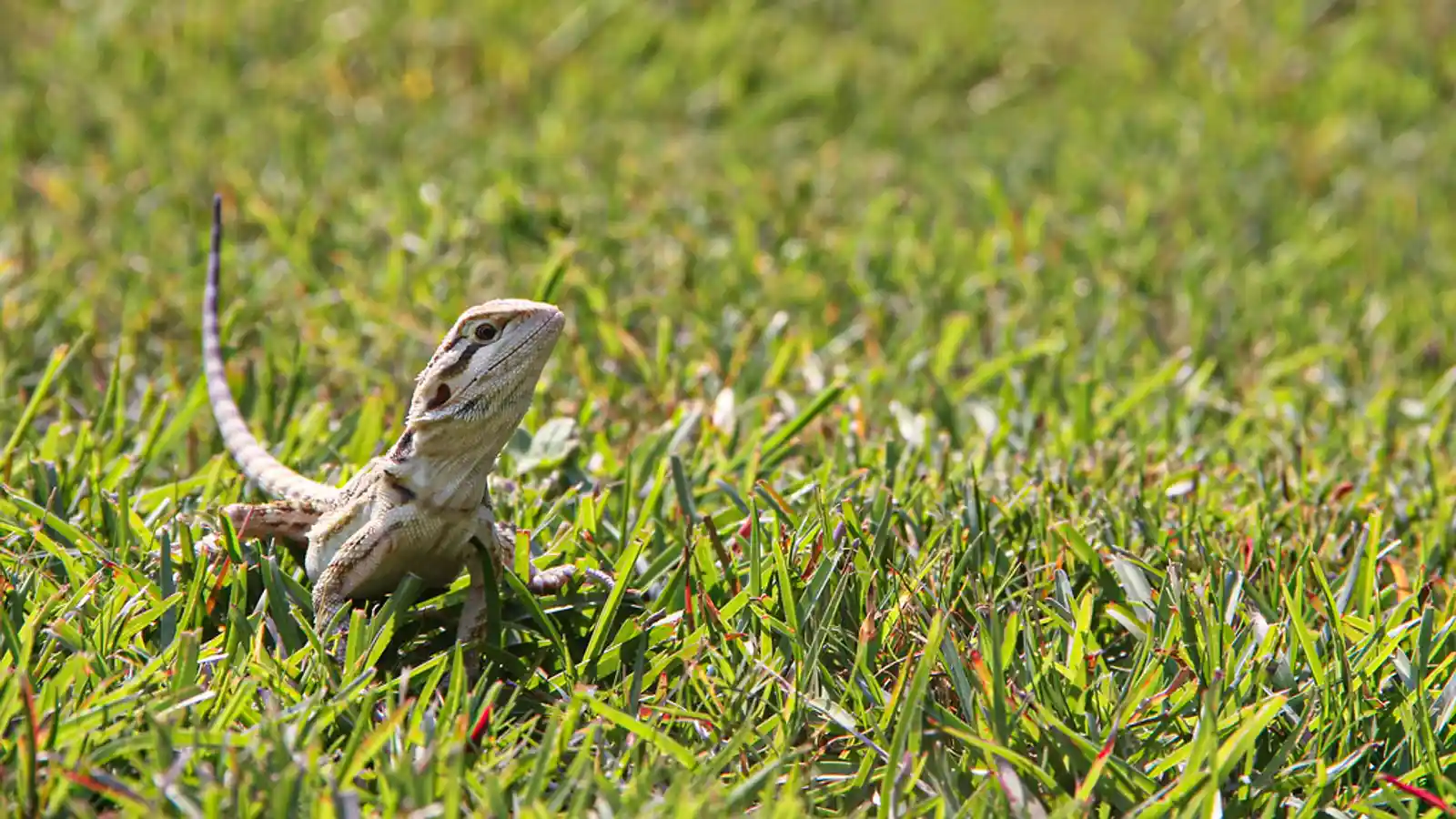
How seriously should you take a skipped meal?
PetMD's reptile guidance sets the tone here. Leaving food after a meal can be one of the first signs of illness in a lizard, and not eating at all - even once - is a sign that cannot be ignored. That sounds strict for an animal that naturally eats less as it ages, but the strictness has a reason: Reptiles typically do not show signs of illness until disease has significantly progressed, so subtle changes matter and owners should not wait to see if the lizard recovers on its own.
So treat a refused meal as a prompt to investigate the same day. Most investigations end at a thermostat or a season, not a disease. The point is to run the checks in order instead of waiting a week to see what happens.
Check the enclosure before you change the menu
Common causes of appetite loss include brumation (seasonal slowdown), improper enclosure temperature (a common reason dragons stop eating per WSU), stress, and illness such as metabolic bone disease, mouth rot, parasites, respiratory infection, impaction, or egg binding.
Temperature leads that list for a mechanical reason: a cold dragon cannot digest. Verify your gradient with thermometers at both ends rather than by feel. Use two thermometers, one at the cool end and one at the warm end near the heat source. The targets are a basking surface of 95 to 110 F (35 to 43 C), a cool side of 75 to 80 F (24 to 27 C), and nights no colder than 65 to 70 F (18 to 21 C). Our temperature guide walks through fixing a gradient that has drifted.
UVB sits right behind heat on the checklist. Bearded dragons rely on UVB light to synthesize vitamin D3 in the skin; D3 is essential for calcium metabolism, and without adequate UVB they can develop metabolic bone disease (nutritional secondary hyperparathyroidism), weak bones and fractures. A UVB tube that quietly died months ago suppresses appetite slowly while it damages bone, so check the bulb's age at the same time as the temperatures.
Normal reasons a bearded dragon stops eating
Brumation. Brumating dragons become lethargic, refuse food, stop defecating, and their scales may appear darker; slowing down, sleeping more, and eating less in cooler seasons is normal. If it is late autumn, your dragon is an adult, and weight is holding steady, read our brumation guide before you panic. One caution from VCA: If the household temperature is a normal 60-70 F (16-21 C), a lethargic dragon may not be brumating - it may be sick; rather than assuming brumation, have the pet examined by a reptile-knowledgeable veterinarian.
A shed in progress. A dragon in the dull, pre-shed phase often acts restless and less hungry for a few days. Appetite that returns once the skin comes off needs no follow-up.
The adult slowdown. Owners of new adults often mistake maturity for illness. Adult bearded dragons can be fed every day or every other day; VCA notes adults may only eat every 24-72 hours since they are no longer growing. On top of that, the menu itself flips with age: Diet shifts with age: hatchlings/young juveniles eat roughly 70% insects / 30% vegetation, flipping in adulthood to mostly vegetation (RSPCA Australia: adults ~90% vegetation / 10% animal matter; PetMD: adults 70-80% plants) An adult ignoring insects while eating greens is not sick. An adult ignoring everything is a different story.
Stress. A recent move, a new enclosure, renovation noise, or a housemate all suppress appetite. House bearded dragons individually: RSPCA SA states they 'can inflict severe damage to each other, resulting in loss of limbs and even death' and that keeping multiple females together 'is not a safe practice and is best to avoid'; RSPCA UK: 'it's best to house bearded dragons separately'. Pairs and trios that seemed fine for months can also stop eating when one animal starts dominating the basking spot and food.
Medical causes and the signs that go with them
When husbandry checks out and the season is wrong for brumation, illness moves up the list. The table pairs each common condition with the signs that separate it from a simple sulk.
| Condition | What else you would see |
|---|---|
| Metabolic bone disease | Signs include weakness or difficulty walking, swollen or softened 'rubber' jaw, swollen or deformed limbs, muscle tremors or twitching, lethargy, loss of appetite, fractures, and seizures in advanced cases; RSPCA also lists permanently deformed limbs or spine. |
| Mouth rot | Signs include pinpoint hemorrhages on the gums, red/inflamed or bleeding gums, gum swelling, excessive thick mucus, cottage-cheese-like material in the mouth, loss of appetite, inability to close the mouth, and jaw swelling in advanced cases. |
| Internal parasites | Parasitized dragons often show no visible signs; advanced cases can show abnormal droppings, mild loose stool to foul-smelling feces, profuse diarrhea, constipation, and weight loss - a vet fecal test is needed to diagnose. |
| Respiratory infection | Signs include sneezing, discharge from the eyes or nose, bubbles from the mouth or nose, rapid or shallow breathing, open-mouth breathing, difficulty breathing, decreased appetite, and lethargy. |
| Impaction or constipation | Reduced or absent droppings with loss of appetite and lethargy warrant veterinary evaluation; decreased stool production typically indicates reduced food intake or constipation. |
Source note: signs compiled from WSU, VCA Animal Hospitals, PetMD, and Merck Veterinary Manual pages listed in Sources.
Each row links deeper: see our guides to metabolic bone disease and impaction for the two conditions owners most often miss early.
Female dragons add one urgent possibility, and it applies even to females housed alone: Egg binding (dystocia) is life-threatening: gravid females stop eating and become sick, lethargic, or unresponsive; causes include inadequate UV lighting, temperature, humidity, malnutrition, obstruction, or reproductive tract abnormality - see a vet immediately.
What you can safely do at home
- Fix what the thermometer tells you. Wrong temperatures are the most fixable cause on the whole list.
- Support hydration. Soaking/bathing in shallow warm water helps hydration: VCA suggests soaking in warm water for several minutes a few times a week; NCSU says bearded dragons enjoy a shallow soak weekly in warm water along with misting. A dehydrated dragon eats worse, and a soak also gives you a close look at its body condition.
- Offer the right food for the age. Juveniles need daily insects; adults need a salad-first plate. The full breakdown by age is in our feeding schedule guide.
- Weigh twice a week. Falling weight converts a watch-and-wait into a vet visit.
- Do not force-feed. Syringe feeding without a diagnosis can injure a weakened dragon and masks the underlying problem a vet needs to see.
When the vet call stops being optional
Contact a veterinarian if a bearded dragon is lethargic, isn't eating well, or isn't growing normally (WSU); RSPCA advises watching weight and contacting a vet if a dragon loses weight during seasonal slowdown. Add the emergency tier on top: Emergency-level signs include seizures, suspected egg binding in a lethargic female, a blackening mushy tail, not eating at all, no droppings with lethargy, constriction injuries from retained shed, and any trouble breathing.
Weight loss you can see is a late sign, which makes it a serious one. Observable weight-loss signs in lizards include tail thinning (fat is stored in the tail), prominent ribs, and defined skull bones.
Why appetite runs on body heat
Here is the mechanism experienced keepers should hold onto, because it explains most refusals that are not illness. Bearded dragons are ectotherms: every process, digestion included, runs at the speed their environment allows. Preferred optimal temperature zone (body temperature range) for bearded dragons: 25-32 C (77-90 F) RSPCA Australia puts the species' working body temperature even higher: Preferred body temperature in the high thirties to low forties Celsius; thermal gradient of 27-45 C recommended in captivity.
A dragon kept below those numbers is not being fussy when it refuses crickets. Its gut literally cannot process the meal at a safe pace, and undigested food sitting in a cool gut is its own health risk. That is also why a gradient matters more than a single hot spot: A hot-to-cool temperature gradient is mandatory so the dragon can thermoregulate within its preferred optimal temperature zone (POTZ)
The practical version: before you buy new feeders, spend one evening confirming your dragon can actually reach digestion temperature, then feed the next morning after a full basking session.
Appetite is the loudest health signal a bearded dragon gives you. When it changes and the checks above do not explain it, our sick bearded dragon symptoms guide is the next read.