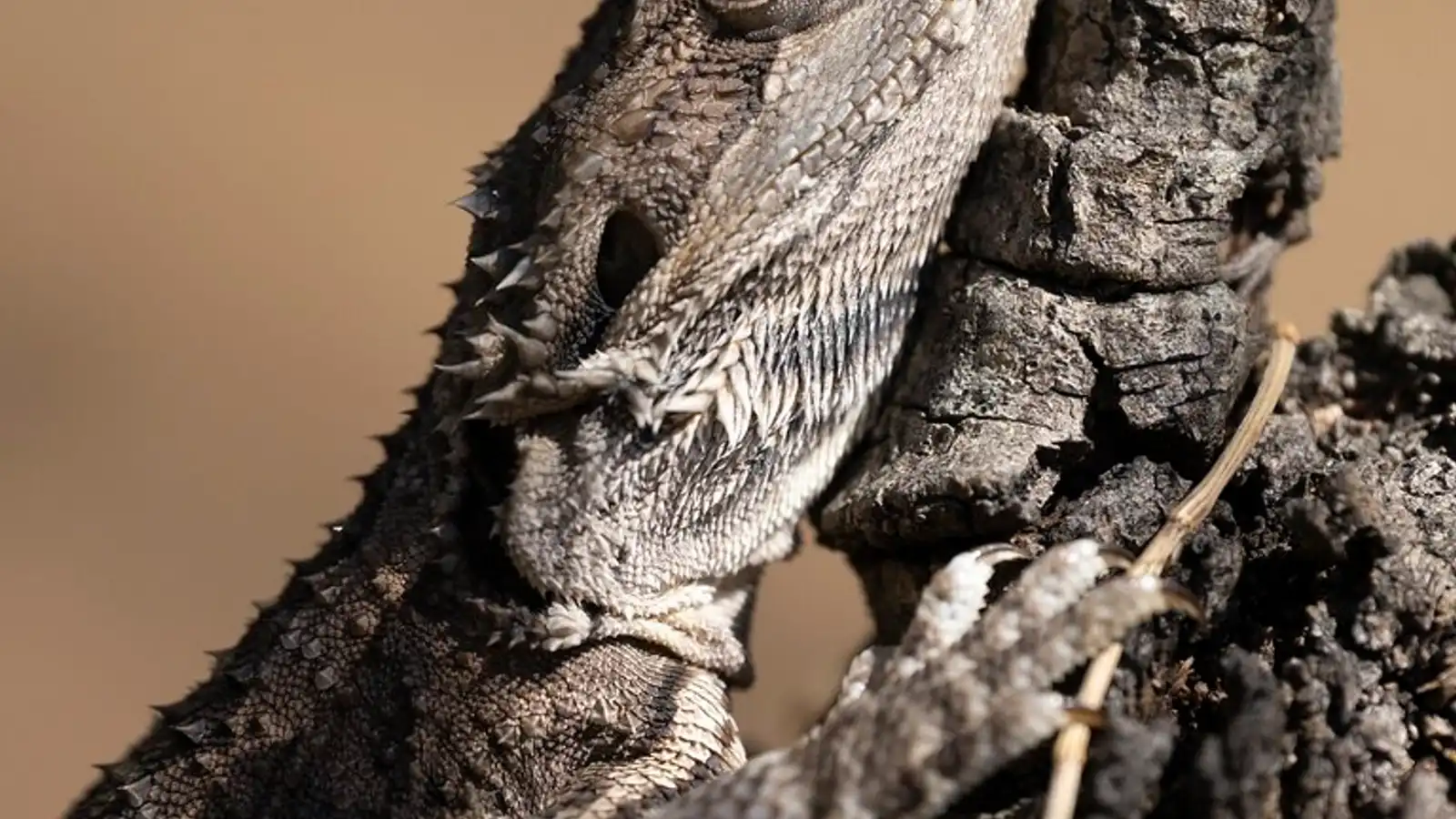
What brumation is
Brumation is a state of sluggishness, inactivity, or torpor exhibited by reptiles during winter or cold periods; unlike true hibernation, brumating reptiles retain some activity and may seek water to drink. The word gets swapped with hibernation in casual conversation, but the difference matters for owners. A brumating dragon still shifts position, opens its eyes on some days, and gets up to drink. A hibernating mammal does none of that.
The behavior is wired in from the species' home range. In their native Australian habitat, bearded dragons brumate during the southern-hemisphere winter months (May to August), when daytime temperatures are about 68-72 F and nights drop to about 40-44 F. Your living room never gets that cold, yet many captive dragons still wind down when day length shortens and the house cools slightly. The RSPCA treats the pattern as expected rather than alarming: During cooler seasons bearded dragons slow down, sleep more and eat less (brumation)
Signs your bearded dragon is brumating
Brumating dragons become lethargic, refuse food, stop defecating, and their scales may appear darker; slowing down, sleeping more, and eating less in cooler seasons is normal. Owners usually notice appetite first. A dragon that cleared its salad dish every morning starts leaving food, then stops coming to the dish at all. Time in the hide grows next, often at the cool end of the enclosure, and basking sessions shrink.
Droppings taper off along with food intake, and that part is expected. Decreased stool production typically indicates reduced food intake or constipation and warrants veterinary evaluation; brumating dragons normally stop defecating while eating little.
None of this looks dramatic, and that is exactly the problem. Lethargy, refused food, and absent droppings also open most illness timelines, so the next section is the one to read carefully.
Brumation or illness: how to tell the difference
Start with your room temperature, because VCA Animal Hospitals uses it as the first filter. If the household temperature is a normal 60-70 F (16-21 C), a lethargic dragon may not be brumating - it may be sick; rather than assuming brumation, have the pet examined by a reptile-knowledgeable veterinarian.
Weight is the second filter. Dragons should not lose significant weight or stop eating entirely during seasonal slowdown; weight loss during brumation warrants contacting a vet. A kitchen scale reading once a week costs you two minutes and separates a resting dragon from a declining one better than any amount of watching through the glass.
| Check | What the veterinary sources say |
|---|---|
| Appetite and activity | Brumating dragons become lethargic, refuse food, stop defecating, and their scales may appear darker; slowing down, sleeping more, and eating less in cooler seasons is normal. |
| Droppings | Decreased stool production typically indicates reduced food intake or constipation and warrants veterinary evaluation; brumating dragons normally stop defecating while eating little. |
| Weight | Dragons should not lose significant weight or stop eating entirely during seasonal slowdown; weight loss during brumation warrants contacting a vet. |
| Household temperature | If the household temperature is a normal 60-70 F (16-21 C), a lethargic dragon may not be brumating - it may be sick; rather than assuming brumation, have the pet examined by a reptile-knowledgeable veterinarian. |
Source note: compiled from VCA Animal Hospitals brumation guidance and RSPCA care advice listed in the Sources section.
Reptiles also hide sickness well, which stacks the odds against a wait-and-see approach. Reptiles typically do not show signs of illness until disease has significantly progressed, so subtle changes matter and owners should not wait to see if the lizard recovers on its own. If anything about the slowdown looks off, book the checkup. Our guide to sick bearded dragon symptoms lists the red flags worth acting on the same day.
When dragons start brumating, and for how long
Bearded dragons finish their growth spurt around 10-12 months of age and often slow their food consumption at that point; brumation behavior is associated with maturity rather than young juveniles. A young juvenile that suddenly stops eating deserves an illness workup before anyone reaches for the brumation label, because a dragon not eating at that age has several likelier causes.
On duration, honesty serves you better than an invented number. None of the veterinary sources this site cites publishes a typical captive brumation length. The wild season gives the only sourced anchor: it spans May to August in inland Australia. Captive dragons vary around that rhythm, some resting for short stretches and others sitting out much of the winter, which is why the weekly weigh-in beats calendar watching every time.
What to do during brumation
The most useful step happens before the slowdown, not during it. Before allowing or inducing brumation, have the dragon checked by a knowledgeable reptile veterinarian; unhealthy dragons with poor diets or parasites may become critically ill upon waking.
Once your dragon is resting:
- Keep water available. Provide a shallow dish of fresh water the dragon can step into, changed/cleaned daily; fresh clean water should always be available. Brumating reptiles wake to drink, so the dish earns its place even while the salad goes untouched.
- Weigh weekly and log it. Stable weight supports the brumation call. A downward line means a vet call, per the RSPCA guidance above.
- Keep the light schedule honest. Provide a regular day-night light cycle: RSPCA UK and RSPCA SA recommend 12 hours light / 12 hours dark; NCSU: 12-14 hours light in spring/summer and 8 hours in fall/winter; PetMD: 10-12 hours UVB daily; Merck: 12 hours/day suitable for general maintenance. NC State's seasonal split, longer days in spring and summer and shorter days in fall and winter, gives a captive dragon the day-length cue its biology expects. Bulb specs and placement live in our UVB lighting guide.
- Leave the thermal gradient in place. A hot-to-cool temperature gradient is mandatory so the dragon can thermoregulate within its preferred optimal temperature zone (POTZ) A resting dragon still chooses its own temperature, and removing the gradient takes that choice away. Full numbers are in the temperature guide.
- Skip force-feeding. A dragon that refuses food while brumating is following the script. Offer a meal on days it is awake and alert, and let appetite come back on its own schedule.
The biology behind the winter clock
Experienced keepers sometimes ask how an indoor lizard under artificial light knows the season at all. Part of the answer sits on top of its head. Lizards have a parietal 'third eye' atop the head with a primitive retina and photoreceptor cells; it detects changes in light and dark and helps regulate hormone production (circadian/thermoregulatory function) Day length is exactly the kind of signal that organ tracks, which is why a timer that quietly drifts, or a lamp left running late on winter evenings, blurs the cues your dragon reads.
Metabolism supplies the second mechanism. Bearded dragons are ectotherms, so body temperature sets the pace of digestion, immunity, and activity. Preferred optimal temperature zone (body temperature range) for bearded dragons: 25-32 C (77-90 F) Below that zone everything runs slower by design. Brumation leans into the same physics: the animal parks itself at the cool end, cuts its metabolic spend, and lives off body reserves until the light returns.
One caution for keepers considering a deliberate cool-down ahead of breeding: that protocol sits outside this article's scope, and the pre-brumation vet check above is the step every cited source agrees on before any planned rest period.
A slow dragon in winter is usually a healthy dragon on schedule. Keep the health guides close for the moments when it is not.