The short answer
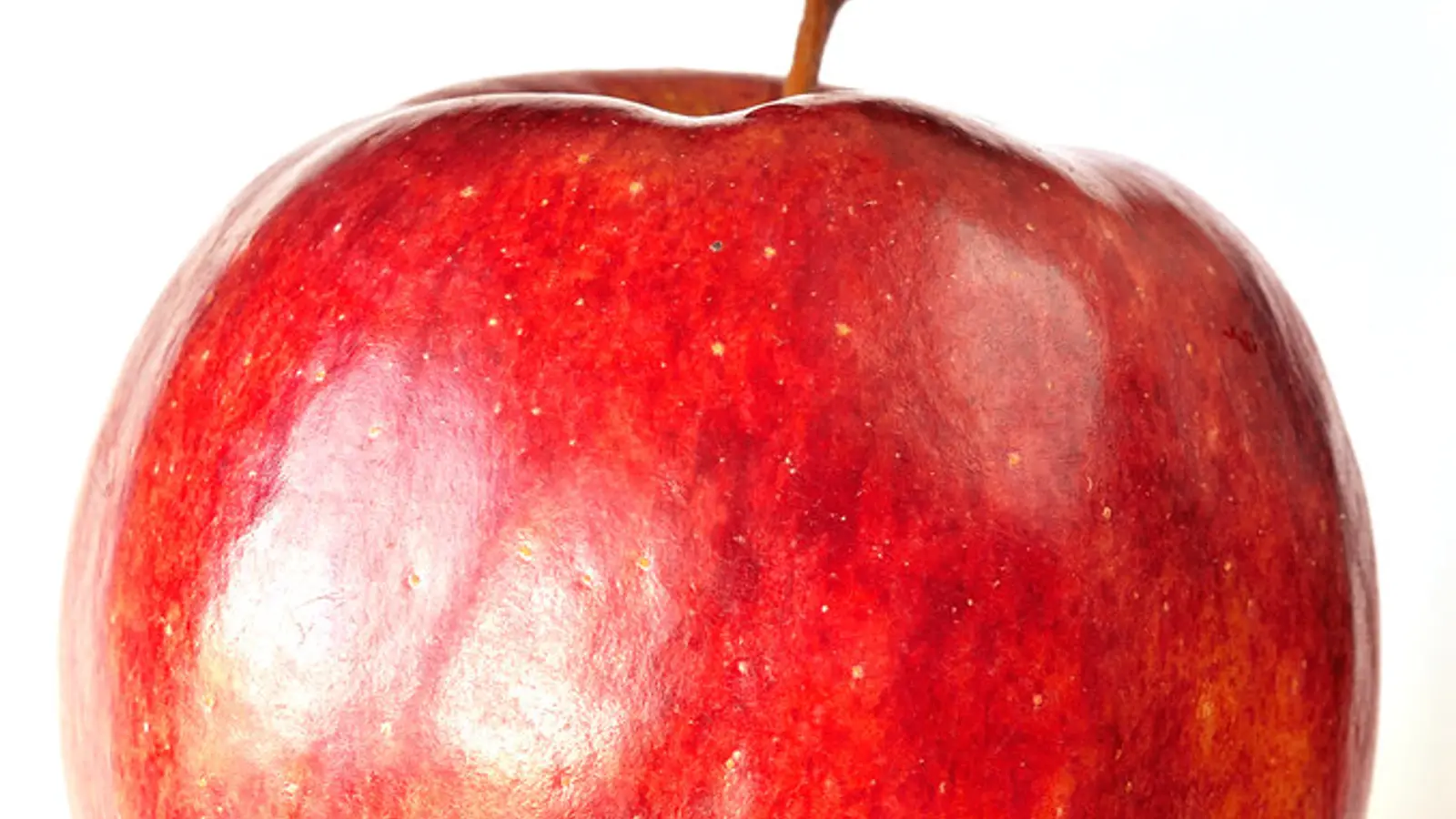
Apple is safe as an occasional treat. It appears by name on the veterinary list: Safe occasional fruits include papaya, melon, watermelon, banana, figs, apples, mango, dates, peaches, apricots (NCSU), strawberries and blueberries (PetMD), and apple, apricot, banana, dates, figs, grapes, guava, kiwi, mango, melon, peach, pear, raspberry, star fruit, strawberry, tomato (VCA)
What makes apple worth writing about separately is texture. It is firm, it holds its shape, and it contains a core and seeds. Every risk attached to apple is mechanical rather than chemical.
Preparation, step by step
This is the section that matters most for this particular fruit.
Wash the skin. Apples carry surface residue and wax. A proper rinse and scrub handles both.
Remove the core and every seed. Apple seeds are hard, small, and indigestible. None of the veterinary sources we cite names them as toxic to reptiles, so we will not claim that they are. What we will say is that a hard object in a lizard's gut is a risk you have no reason to take. Cut them out.
Decide on the skin. Skin is fibrous and tough for a small dragon to break down. For juveniles and smaller adults, peel it. For a large adult, finely grated skin is acceptable.
Grate or dice small. This is the step owners skip. Apple does not mash the way banana does, so a cube stays a cube all the way down. Follow the size rule veterinary sources set for prey items: Never feed an insect whose length is greater/wider than the width of the dragon's head; RSPCA: live food greater than the width of the dragon's head should not be offered.
Serve fresh, in a dish. Offer food in a separate dish or feeding container rather than on the substrate to reduce accidental substrate ingestion. Apple browns quickly and dries out, so anything uneaten comes out the same day.
| Apple part | Verdict |
|---|---|
| Flesh, grated or diced | The edible part, occasional treat |
| Skin | Peel for juveniles; grate finely for adults |
| Core | Remove completely |
| Seeds | Remove completely, hard and indigestible |
| Dried apple, apple sauce, juice | Not appropriate, sugar concentrated or added |
Source note: portion and prey-size rules from NC State's veterinary hospital and the RSPCA, cited below.
How often, and how much
A tablespoon of grated apple mixed into a salad, once a week at most, suits an adult dragon. That is a treat portion, not a meal component.
The ceiling that governs it: Fruit should be limited to at most about 5% of the total diet (NCSU/WSU/PetMD) because it is high in sugar; VCA allows fruit as 10-20% of the plant portion only, 'as a treat only'.
One fruit day per week covers your entire allowance. If apple goes in on Tuesday, melon does not get its own day on Friday. Owners break the cap by giving each fruit its own schedule rather than making them share one.
Why the plant portion cannot be mostly fruit
The plant side of a bearded dragon's diet has a defined internal structure, and fruit occupies the smallest slice of it: 80-90% of the plant material fed should be leafy green vegetables; fruit plus yellow/red/orange vegetables should be only 10-20% of the plant portion.
The reason is calcium. Staple greens exist to carry it: Calcium-rich staple greens include collard greens, mustard greens, turnip greens, and dandelion greens. Apple contributes very little, so every spoonful displaces something that was doing nutritional work.
That matters because of the ratio the whole diet is judged on. The calcium:phosphorus ratio of the diet should be at least 1:1, with 2:1 preferred (Merck); WSU and Illinois WEL state the ideal Ca:P ratio is 2:1. A diet drifting below that target, sustained over months, produces metabolic bone disease, which reptile vets see constantly and which is almost entirely preventable.
The insect side makes the same point
Keepers sometimes assume the calcium problem is a plant problem. It is not. The insects are worse, and the numbers are blunt: Feeder insects naturally contain extremely low calcium (about 0.03-0.3%) with 0.8-0.9% phosphorus; a 3-day 12% calcium gut-load raises insect calcium to roughly 0.8-0.9%, giving a Ca:P ratio of approximately 1.2:1.
That is why gut loading and dusting exist. Feeder insects should be gut-loaded (fed a high-calcium, nutrient-fortified diet) before feeding: NCSU recommends 24-72 hours prior; PetMD says 6-12 hours before; Merck describes a 3-day gut-load with a 12% calcium (calcium carbonate) diet.
With both halves of the diet running calcium-poor by default, the greens and the supplement routine are doing all the corrective work. Apple is a passenger. A pleasant one, but a passenger. The calcium guide sets out the dusting schedule that holds the whole system together.
Salad technique: stopping the pick-out problem
Apple creates a specific practical problem that softer fruits do not. Because the pieces stay distinct, a dragon can pick every scrap of apple out of a salad and leave the greens sitting there. You then have a dragon that has eaten a spoonful of sugar for dinner.
Three techniques fix it.
Match the piece size. Chop the greens to roughly the size of the grated apple. A dragon selects by what is easy to grab, and uniform pieces remove the advantage fruit otherwise has.
Mix rather than layer. Fruit scattered on top is a target. Fruit turned through the salad is an occasional pleasant surprise.
Use apple as the exception, not the incentive. Owners sometimes add fruit to tempt a dragon that is off its food. That teaches the dragon that refusing salad produces something better. If appetite is genuinely down, the cause is usually temperature or health rather than menu: Common causes of appetite loss include brumation (seasonal slowdown), improper enclosure temperature (a common reason dragons stop eating per WSU), stress, and illness such as metabolic bone disease, mouth rot, parasites, respiratory infection, impaction, or egg binding.
The scale of the feeding problem across the hobby is worth knowing: A Tufts-affiliated survey of 405 bearded dragon owners found approximately half were feeding a diet with less than 50% plant material and more than 50% insects, and researchers noted a need for clear evidence-based nutritional guidelines on food type, quantity, and frequency.
Apple varieties and what actually differs
Owners ask which apple is best. Honestly, the differences between varieties are small compared to the difference between a correct portion and an incorrect one.
Sweeter varieties carry more sugar, so a Fuji or Gala is marginally worse than a tart Granny Smith. None of our cited sources ranks apple cultivars for reptile feeding, so we will not pretend to a precision the evidence does not support. Choose whatever is in the house, prepare it properly, and keep the portion small.
What our sources are clear about is the fruit to avoid entirely: Avoid feeding citrus fruits, as the acidity can cause gastrointestinal upset.
After the treat
A fruit day sometimes produces looser droppings than usual, which the droppings guide puts in context against a normal baseline. That settles within a day or two on plain salads.
What is not normal: a dragon refusing greens afterward, losing weight, or going quiet. Contact a veterinarian if a bearded dragon is lethargic, isn't eating well, or isn't growing normally (WSU); RSPCA advises watching weight and contacting a vet if a dragon loses weight during seasonal slowdown. The not eating guide works through the causes in the order a vet would.