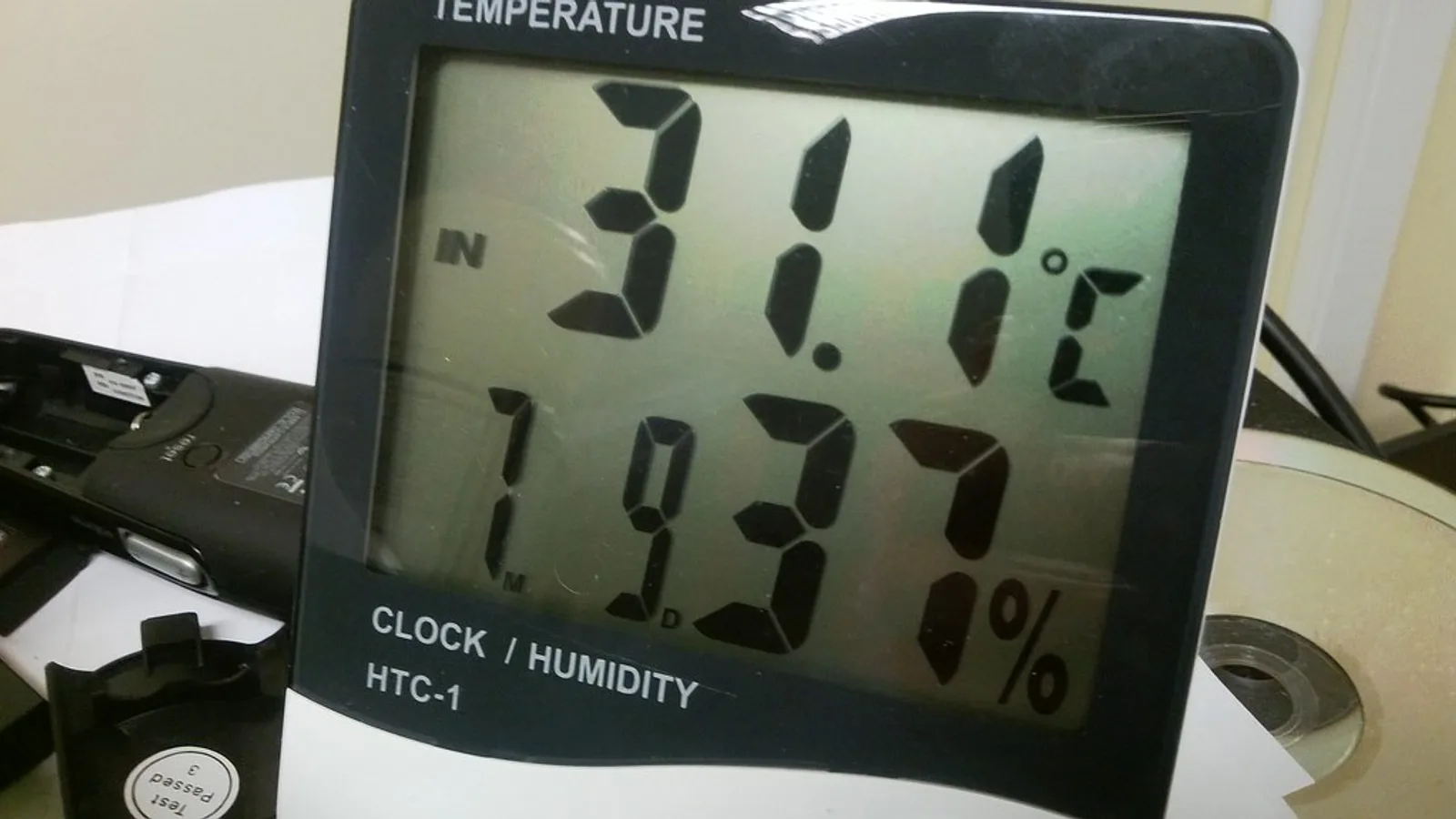
The night temperature floor, source by source
Start with the numbers, because the whole decision hangs on one reading. Night temperature should not fall below about 65-70 F (18-21 C); RSPCA UK: not below 20-22 C; RSPCA South Australia: not below 20 C at the hot end overnight; NCSU: nighttime around 70-75 F; VCA: nighttime 65-80 F.
| Source | Overnight guidance |
|---|---|
| RSPCA (UK) | not below 20 to 22 C (68 to 72 F) |
| RSPCA South Australia | not below 20 C (68 F) at the hot end overnight |
| NC State Veterinary Hospital | around 70 to 75 F |
| VCA Animal Hospitals | 65 to 80 F |
Source note: overnight figures from each organization's bearded dragon care guidance; citations in the Sources section.
Notice what the table does not say: none of these organizations asks you to hold daytime warmth around the clock. The floor exists to prevent genuine cold, not to abolish the nightly drop.
Why a cooler, darker night is the goal
Bearded dragons run on a day-night rhythm as fixed as their heat needs. Diurnal - active during the day The lighting guidance builds the rhythm in: Provide a regular day-night light cycle: RSPCA UK and RSPCA SA recommend 12 hours light / 12 hours dark; NCSU: 12-14 hours light in spring/summer and 8 hours in fall/winter; PetMD: 10-12 hours UVB daily; Merck: 12 hours/day suitable for general maintenance.
Sleep itself is more sophisticated in this species than anyone suspected until recently. Bearded dragons show both REM and slow-wave sleep (first demonstrated in a reptile; Shein-Idelson et al., Science 352:590, 2016). Sleep cycle is ~80 seconds at 27 C (vs ~30 min in cats, 60-90 min in humans), with the two phases of roughly equal duration. An animal cycling through genuine sleep stages benefits from genuine darkness, which is exactly what the lights-off rule provides.
Their homeland delivers the same pattern with harder numbers. Native to arid and semi-arid inland Australia - deserts, dry forests, scrublands, woodland and hummock grassland; this hot, dry origin underlies captive heat/low-humidity requirements. Deserts shed heat after sundown, and the species evolved with that swing. VCA's brumation material records how far the wild version goes: In their native Australian habitat, bearded dragons brumate during the southern-hemisphere winter months (May to August), when daytime temperatures are about 68-72 F and nights drop to about 40-44 F. Captive guidance keeps dragons far above those wild lows, but the direction of travel is the point: night is supposed to be cooler than day.
Decision tree: does your tank need night heat?
One week of measurement answers it permanently.
- Set up monitoring where it counts. Use two thermometers, one at the cool end and one at the warm end near the heat source.
- Read the warm-end thermometer at your coldest hour, typically just before dawn, across a week that includes your home's coldest nights.
- Compare against the published rule that tanks stay no colder than 65 to 70 F (18 to 21 C). Readings above the floor: lamps off, done. Readings below it: add lightless heat, sized to lift the low reading just past the floor.
- Re-test in deep winter, because a tank that passes in September can fail in January. Room placement shifts the result too: Position the vivarium away from other heat sources such as radiators or bright windows that could affect enclosure temperature.
The right night heater emits no light
When the room genuinely runs cold, equipment choice matters as much as wattage. Heat the basking zone with a 60-100 W reflector bulb (RSPCA UK) or reptile-specific flood/spot lamp on a thermostat (RSPCA SA); ceramic (non-light-emitting) heaters maintain night temperature. The ceramic unit is the night specialist in that lineup: it screws into a lamp fitting, radiates heat, and produces zero light, leaving the dark cycle intact.
Skip colored "night glow" bulbs entirely. The photoperiod guidance is built on real darkness for the dark half of the cycle, and a red or purple glow is still light shining on a sleeping animal all night. A ceramic heater on a thermostat delivers warmth without breaking the rhythm; the same thermostat logic that runs your day setup, covered in the temperature guide, applies after dark.
One caution transfers from day to night unchanged: Basking lamp must not be positioned too close to the lizard (RSPCA UK: back no closer than 25-30 cm from the lamp); basking area should be as large as the dragon so the whole body heats evenly; guard lamps to prevent burns. Mount a ceramic heater with the same clearance you would give a basking lamp, because it burns skin just as readily while being invisible.
Cold nights and the brumation connection
Sustained cool exposure does more than chill a dragon; it flips seasonal switches. During cooler seasons bearded dragons slow down, sleep more and eat less (brumation) The signs look dramatic the first time: Brumating dragons become lethargic, refuse food, stop defecating, and their scales may appear darker; slowing down, sleeping more, and eating less in cooler seasons is normal.
Here is where night temperatures and health intersect. A dragon kept over a cold floor for weeks can drift into brumation-like sluggishness out of season, and VCA's guidance draws the line sharply: If the household temperature is a normal 60-70 F (16-21 C), a lethargic dragon may not be brumating - it may be sick; rather than assuming brumation, have the pet examined by a reptile-knowledgeable veterinarian. Correct night temperatures remove the ambiguity: with the tank kept no colder than 65 to 70 F (18 to 21 C) and days at full strength, a suddenly lethargic dragon is a vet conversation, not a thermostat conversation. The full picture is in our brumation guide.
The physiology of the overnight drop
The technical rationale for tolerating, even wanting, a cooler night comes from how ectotherm metabolism scales with temperature. Preferred optimal temperature zone (body temperature range) for bearded dragons: 25-32 C (77-90 F) That zone describes the operating range for an active, digesting, UVB-processing animal. A sleeping dragon is doing none of those jobs, so it has no need to hold daytime body temperature until morning.
The daily cycle works as a loop: overnight cooling lowers metabolic burn, and the morning basking session under a 95 to 110 F (35 to 43 C) lamp reloads body temperature for the day's work. That morning warm-up is not a design flaw to engineer away with 24-hour heat; it is the species' normal startup sequence, the same one wild dragons run on every sunrise rock. What the floor temperature protects is the bottom of the loop, keeping the overnight trough inside the range the welfare sources have validated.
Night heat, when needed, should be the minimum that holds the floor, on its own thermostat, not a second daytime. A tank that reads warm all night quietly deletes the rhythm the lighting schedule works to build, and the setup checklist in our tank setup guide treats the night configuration as part of the build, not an afterthought.