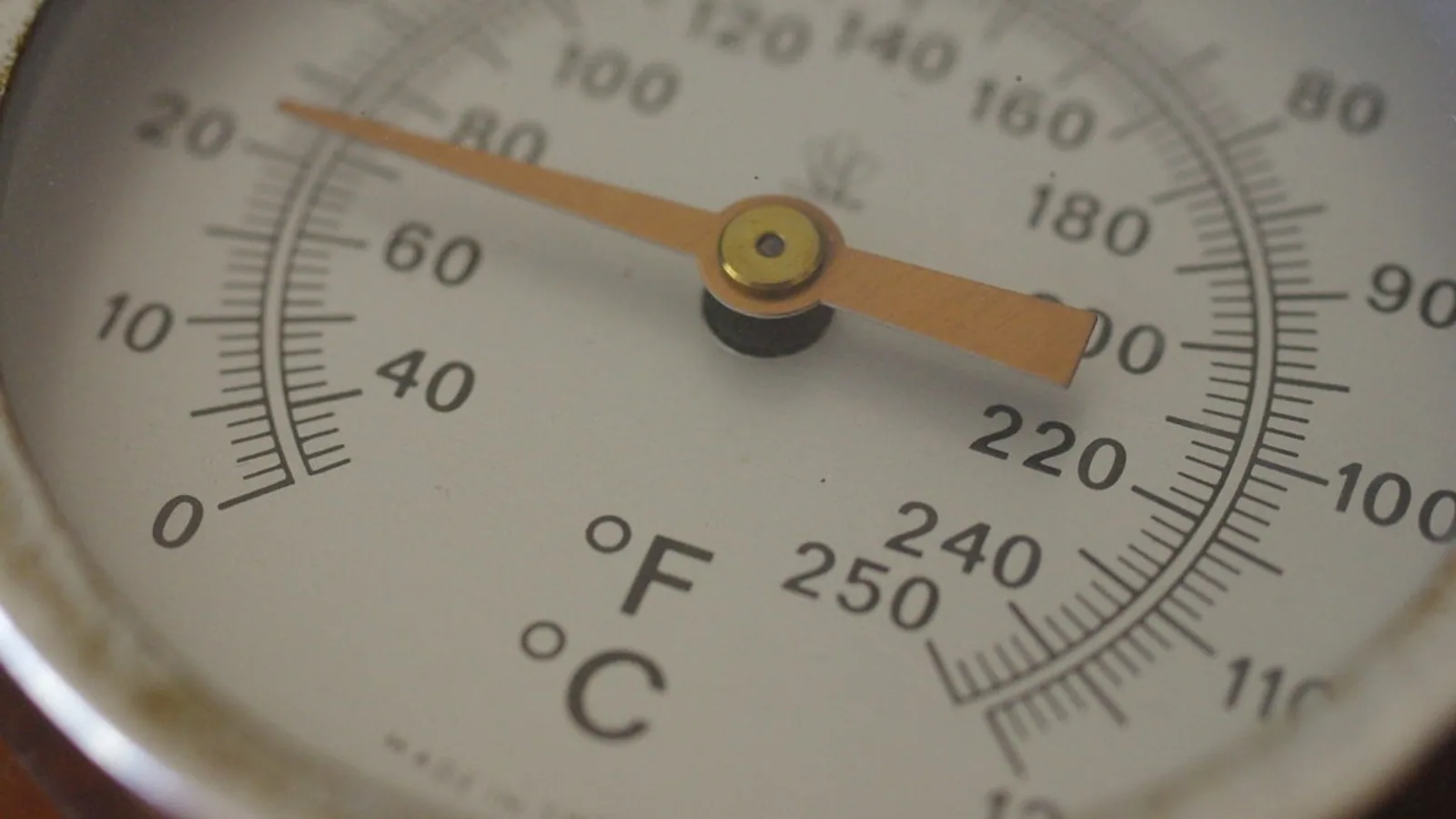
The temperature chart
Four zones, four targets. Get these right and most of husbandry falls into place behind them.
| Zone | Target |
|---|---|
| Basking spot | 95 to 110 F (35 to 43 C) |
| Warm end ambient | Warm end of enclosure 90-100 F (32-38 C) |
| Cool end | 75 to 80 F (24 to 27 C) |
| Overnight | no colder than 65 to 70 F (18 to 21 C) |
Source note: compiled from RSPCA (UK and South Australia), NC State, WSU, VCA and PetMD guidance; each is cited in the Sources section.
The published basking figures vary more than beginners expect, and the honest presentation is the spread itself:
| Source | Basking recommendation |
|---|---|
| RSPCA (UK) | 38 to 42 C (about 100 to 108 F) |
| RSPCA South Australia | 40 to 45 C (104 to 113 F) |
| NC State Veterinary Hospital | 88 to 100 F |
| WSU Veterinary Teaching Hospital | 95 to 110 F |
| VCA Animal Hospitals | 90 to 100 F |
| PetMD | around 100 F |
Source note: basking figures from each organization's bearded dragon care material; see Sources below.
Every source agrees on the structure: the basking zone is the hottest point of a gradient, and the animal must always be able to leave it.
Why a gradient instead of one temperature
Bearded dragons are ectotherms from arid Australia; the enclosure is their furnace and their shade tree at once. A hot-to-cool temperature gradient is mandatory so the dragon can thermoregulate within its preferred optimal temperature zone (POTZ)
Heat one end only. The lamp goes above the basking platform at the far end of the tank, the cool retreat and one hide sit at the opposite end, and every point in between becomes an intermediate option. That geometry is also why tank length matters: a short tank cannot hold 95 to 110 F (35 to 43 C) and 75 to 80 F (24 to 27 C) at the same time.
The basking zone, done properly
Basking spot approximately 95-110 F (35-43 C); RSPCA UK specifies 38-42 C, RSPCA South Australia 40-45 C, NCSU 88-100 F, WSU 95-110 F, VCA 90-100 F, PetMD 100 F.
Equipment first: Heat the basking zone with a 60-100 W reflector bulb (RSPCA UK) or reptile-specific flood/spot lamp on a thermostat (RSPCA SA); ceramic (non-light-emitting) heaters maintain night temperature. The thermostat is the part that makes the number reliable across seasons, since the same bulb runs hotter in July than in January.
Then safety. Basking lamp must not be positioned too close to the lizard (RSPCA UK: back no closer than 25-30 cm from the lamp); basking area should be as large as the dragon so the whole body heats evenly; guard lamps to prevent burns. Thermal burns happen to real dragons because a lizard basking under a too-close lamp does not feel the damage arriving. Fix the geometry once, at setup, and the risk disappears.
Night temperatures
Dragons want a genuine temperature drop after dark. Night temperature should not fall below about 65-70 F (18-21 C); RSPCA UK: not below 20-22 C; RSPCA South Australia: not below 20 C at the hot end overnight; NCSU: nighttime around 70-75 F; VCA: nighttime 65-80 F.
In most heated homes that means all lamps off and nothing more. If your room runs colder, add heat without light; ceramic heaters exist for exactly this job. The decision tree, with each source's night figure, is in do bearded dragons need heat at night.
Monitoring: two thermometers, no guessing
One thermometer in the middle of the tank measures a temperature no zone actually has. Use two thermometers, one at the cool end and one at the warm end near the heat source.
Check both readings in the morning and again at basking peak for the first week, then weekly once the setup proves stable. Humidity rides along on the same routine: Measure humidity with a hygrometer (RSPCA UK: place at the cool end) Full humidity targets live in the humidity guide.
Reading your dragon as a thermometer
Behavior confirms what the instruments say.
A dragon gaping at the basking spot is cooling itself, not in distress. Bearded dragons bask to raise body temperature and gape (open the mouth) to cool by evaporative cooling when overheated. Color does thermal work too: Bearded dragons regulate body temperature partly by changing shades of skin colour. A dragon that stays dark and flattened under the lamp all day is harvesting heat and telling you the basking zone runs cool; one that spends every hour pressed into the cool end hide is telling you the opposite.
Appetite is the loudest signal of all. Common causes of appetite loss include brumation (seasonal slowdown), improper enclosure temperature (a common reason dragons stop eating per WSU), stress, and illness such as metabolic bone disease, mouth rot, parasites, respiratory infection, impaction, or egg binding. Before assuming illness in a dragon that stops eating, verify the gradient with real measurements, then read our guide to a bearded dragon not eating.
The three temperature mistakes vets keep seeing
Patterns repeat at reptile clinics, and each has a cheap fix.
- One thermometer, placed wherever. A single mid-tank reading averages two zones into a number that describes neither. Use two thermometers, one at the cool end and one at the warm end near the heat source.
- A lamp with no thermostat. Output drifts with room temperature and season, so the same bulb that was perfect in October overshoots in July. The equipment guidance builds control in from the start.
- Treating the chart as optional. Health-supporting temperature gradient: basking area about 95-110 F (WSU) / 38-42 C hot end (RSPCA), cool zone about 75-80 F (24-27 C), and a minimum of about 20-22 C (68-72 F) at night per RSPCA. Basking is not a luxury behavior; it is how the animal powers everything else: Ectothermic; bask under heat sources to raise body temperature before activity and to maintain preferred body temperature, often perching on elevated sites for extended periods.
The physiology: POTZ and why digestion runs on heat
The deeper logic behind the chart is a concept reptile vets use daily. Preferred optimal temperature zone (body temperature range) for bearded dragons: 25-32 C (77-90 F) The Merck figure describes body temperature, not air temperature, and the enclosure exists to let the dragon hold its body inside that band by shuttling.
Field biology adds precision: Preferred body temperature in the high thirties to low forties Celsius; thermal gradient of 27-45 C recommended in captivity. That is why the basking surface runs hotter than the POTZ itself; the dragon loads heat quickly at the hot spot, then retreats and coasts. Digestion, immune function, and the skin's vitamin D3 synthesis all run at rates set by body temperature, which is why a chronically cool dragon eats less, digests slower, and sickens more easily even when everything else in the setup is right.
A practical consequence for feeding: give the dragon access to the full gradient for several hours after meals rather than powering the lamp down early. An ectotherm digesting a meal needs the option to sit warm, and the 12 hours of light a day photoperiod on a timer provides exactly that window.