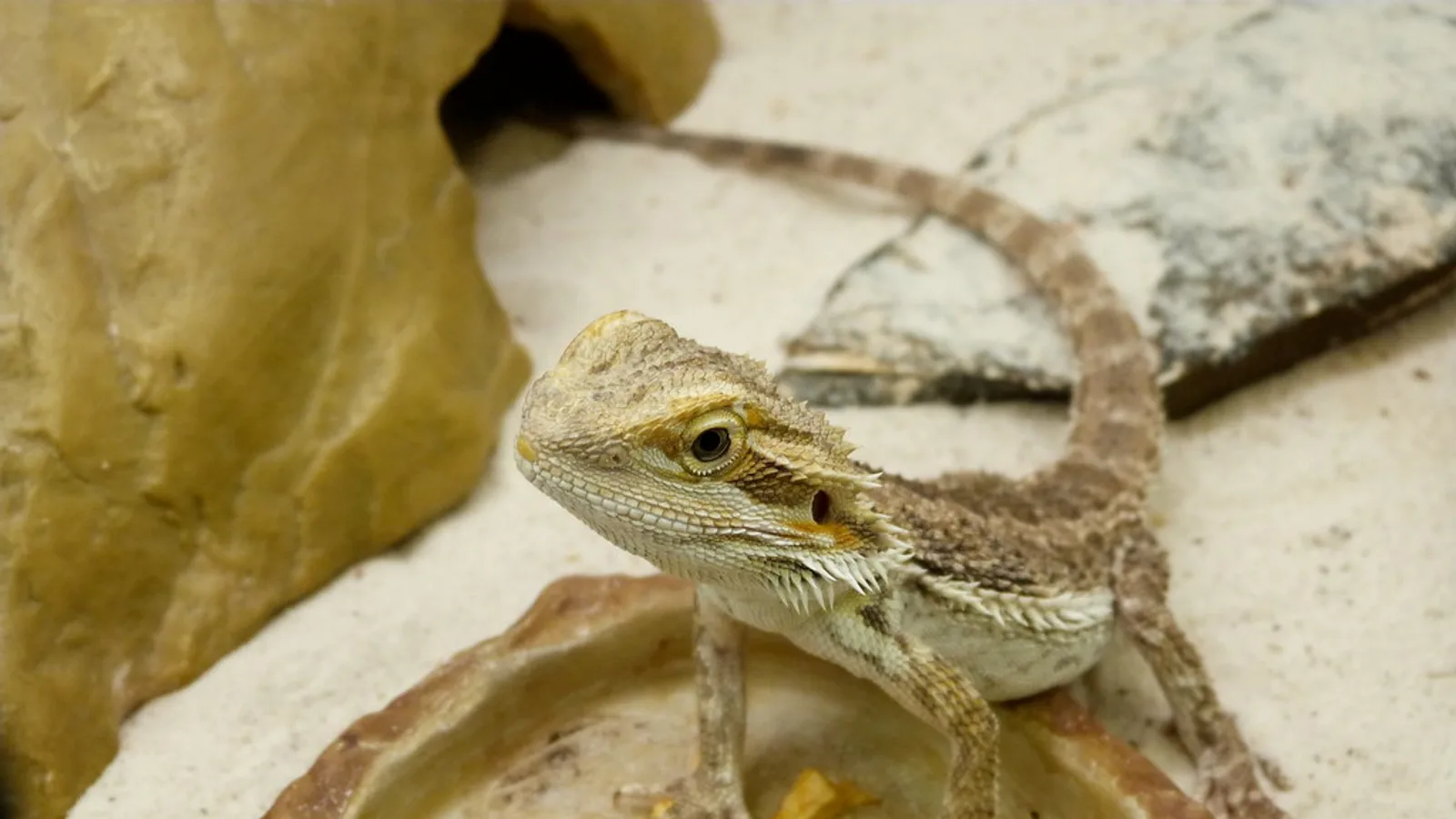
The target range, source by source
The headline number is 30 to 40 percent, but the published ranges differ enough to be worth seeing side by side:
| Source | Recommended humidity |
|---|---|
| RSPCA (UK) | 30 to 40 percent, measured at the cool end |
| WSU Veterinary Teaching Hospital | 30 to 40 percent |
| NC State Veterinary Hospital | 20 to 40 percent |
| PetMD | 30 to 50 percent |
| Merck Veterinary Manual | 20 to 30 percent |
Source note: each figure comes from that organization's bearded dragon or reptile husbandry guidance, cited in the Sources section.
The overlap of every published range sits at 30 to 40 percent, which is why that band is the safe target. Readings a few points outside it are a nudge to adjust, not an emergency.
Why a desert lizard needs dry air
Humidity requirements are inherited from geography. Native to arid and semi-arid inland Australia - deserts, dry forests, scrublands, woodland and hummock grassland; this hot, dry origin underlies captive heat/low-humidity requirements.
A captive dragon carries the same lungs, skin and kidneys that evolved for that dry country, so the enclosure air has to imitate it. This also explains why bearded dragon humidity advice runs opposite to most reptile care you find online, which skews toward tropical species that want the air wet.
How to measure it properly
You cannot eyeball humidity, so instrumentation is the whole game. Measure humidity with a hygrometer (RSPCA UK: place at the cool end)
Placement matters because the enclosure is not one climate. Air near the basking lamp reads far drier than air over the water dish, and the RSPCA's cool-end placement gives you the representative number. Check the reading during your morning routine alongside the two thermometers described in our temperature guide; the three instruments together tell you the whole climate story in ten seconds.
When humidity runs too high
High readings are the more dangerous direction for this species. RSPCA advises keeping humidity around 30-40% at the cool end to help prevent respiratory and skin problems.
The illness this guards against is worth taking seriously. Respiratory infections (including pneumonia) occur in dragons that are stressed, improperly fed, or kept in poor, cold, or dirty conditions; causes include bacteria, viruses, fungi, and parasites, plus unfavorable temperatures, unsanitary conditions, malnutrition, and vitamin A deficiency. Watch for the early signs: Signs include sneezing, discharge from the eyes or nose, bubbles from the mouth or nose, rapid or shallow breathing, open-mouth breathing, difficulty breathing, decreased appetite, and lethargy. A dragon showing them needs a reptile vet, not a husbandry tweak alone; our respiratory infection guide covers what the appointment looks like.
The fix for chronically damp air starts with airflow. Good ventilation is essential for air circulation, temperature control and humidity management. Practical steps in order: move the water dish to the cool end away from the heat lamp, swap any absorbent damp-holding decor, increase ventilation, and check the room itself, since a tank in a damp basement inherits the room's air.
When humidity runs too low
Very dry air shows up at shedding time. Shedding problems (dysecdysis) are caused by low humidity, temperatures that are too cool, lack of abrasive surfaces to rub against, nutritional deficiencies, skin parasites, infections, dehydration, and rarely thyroid dysfunction.
An enclosure held inside the target band supports the shed cycle: Keeping enclosure humidity in the proper range (about 30-50% per PetMD; 30-40% per RSPCA/WSU) supports healthy shed cycles. Hydration support helps from the inside as well: Soaking/bathing in shallow warm water helps hydration: VCA suggests soaking in warm water for several minutes a few times a week; NCSU says bearded dragons enjoy a shallow soak weekly in warm water along with misting. During an active shed, that soak plus normal humidity usually keeps skin coming off cleanly; the shedding guide explains when a stuck shed becomes a vet issue.
Resist the tropical-keeper reflex of heavy daily misting. The documented role of misting is hydration, not raising air moisture: Misting supports hydration: VCA suggests misting or washing vegetables and lightly misting the bearded dragon itself; NCSU mentions misting alongside weekly soaks. A light mist that dries quickly serves the dragon; a permanently damp enclosure trades a shedding convenience for a respiratory risk.
Water in the tank without the humidity spike
A water dish is standard equipment and compatible with dry air. Provide a shallow dish of fresh water the dragon can step into, changed/cleaned daily; fresh clean water should always be available.
Keep the dish shallow, sized so the dragon can step in, and stationed at the cool end where evaporation runs slowest. Daily changes do double duty: hygiene and a stable baseline of evaporation your hygrometer learns to expect.
Do not read a rarely used water bowl as a hydration failure, either. Bearded dragons can and do drink standing water — the Australian Museum reports wild dragons 'will drink from standing free water' — and pet care sources still recommend a water bowl; wild dragons also harvest rainwater by licking water channeled to the snout. The species' native trick for scarce water is stranger still: Wild bearded dragons will drink from standing free water; during rain they also stand on rear limbs with head sloped down and lick water that runs forward over the body to the snout, holding the position 20-30 minutes. A captive dragon carries those same instincts, which is why vets lean on moisture-rich greens, occasional soaks and light misting alongside the bowl. How dragons actually drink is its own surprising topic, covered in do bearded dragons drink water.
The technical layer: humidity as a disease variable
Experienced keepers treat the hygrometer as preventive medicine, because the two failure directions map onto two different disease clusters.
Sustained high humidity belongs to the respiratory and skin cluster. Respiratory infections (including pneumonia) occur in dragons that are stressed, improperly fed, or kept in poor, cold, or dirty conditions; causes include bacteria, viruses, fungi, and parasites, plus unfavorable temperatures, unsanitary conditions, malnutrition, and vitamin A deficiency. Damp air in a warm enclosure is exactly the microbial incubator that list describes, and the RSPCA's advice to hold 30 to 40 percent, measured at the cool end exists to keep the enclosure out of that zone.
Sustained low humidity belongs to the shedding cluster, and its endpoint is more serious than cosmetic. Retained shed shrinks as it dries and can constrict circulation, especially on toes and tail tips; poor shedding on the feet can cut off blood supply and lead to loss of toes or tissue death requiring amputation. That is the mechanism by which a cheap hygrometer and a weekly glance genuinely protect toes and tail tips.
Seasonal drift is the last variable. Household air dries in winter heating season and dampens in humid summers, so the same setup reads differently across the year. The habit that catches it: log the reading once a week on the same day you do the full tank clean, and you will spot a trend long before it becomes a symptom.