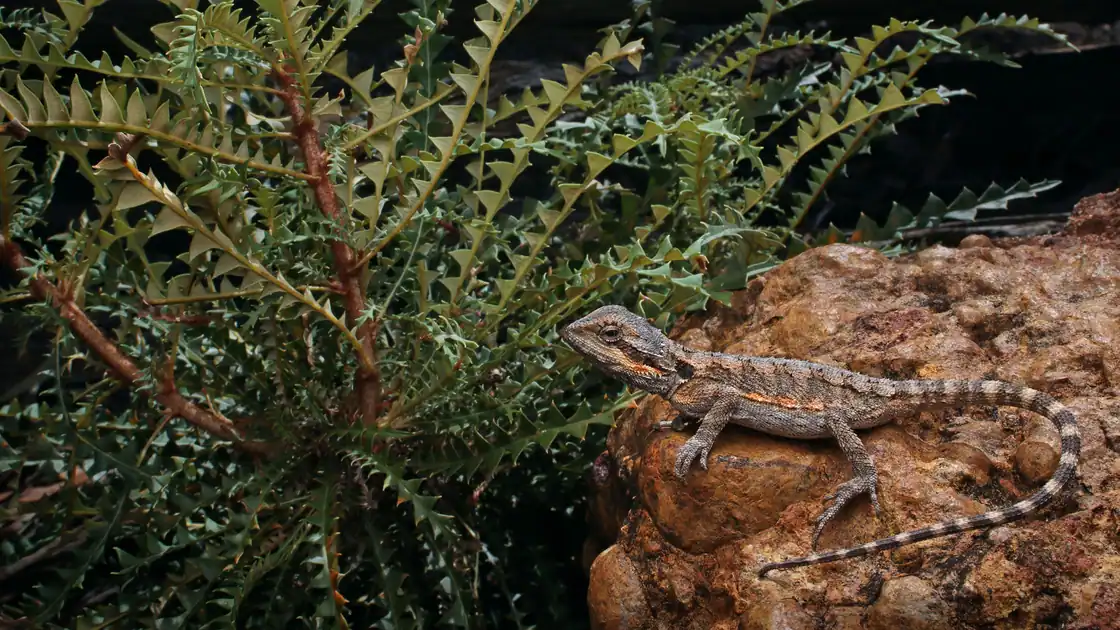
Start with the honest position
This page is shorter on step-by-step instruction than most nail-trimming articles you will find, and that is deliberate.
The sourced guidance is clear: Most bearded dragons naturally wear down their nails and do not require regular trimming (PetMD)
And where a trim is needed: If a bearded dragon's nails become overly long, damaged, or broken, PetMD advises consulting your veterinarian for guidance on proper nail care.
No veterinary source we cite publishes a detailed at-home trimming protocol for bearded dragons. Plenty of websites do, usually written by people rather than veterinarians. We are not going to add to that pile by inventing a procedure and dressing it as guidance. What we can do is explain the anatomy, the circumstances that create the problem, and how to prevent it entirely.
When a trim is actually warranted
The situations are specific: Dragons that are handled frequently or have limited opportunities to wear down their nails may occasionally need a trim (PetMD)
In practice that means two kinds of dragon. The first is one kept on smooth surfaces with little to climb, so nothing files the nails down. The second is a dragon handled often enough that long nails become a problem for the handler, catching on clothing and scratching skin.
The signs worth noticing:
- Nails that curve rather than pointing forward
- Claws catching repeatedly on fabric or carpet
- A nail that has split, broken, or torn
- Difficulty gripping surfaces the dragon used to manage
A broken or damaged nail moves this out of grooming and into veterinary territory, because exposed tissue can become infected.
The anatomy that makes this risky
The reason casual trimming goes wrong is the same in every clawed animal: Every claw contains a blood vessel and nerve running partway down the middle, called the quick; the longer the nail grows, the longer the quick becomes, and light-coloured claws show it as a pink area while dark claws hide it (VCA, general nail anatomy)
That guidance comes from veterinary material written about dogs, and we flag that rather than pretending it is species-specific. The anatomical principle holds across clawed animals: a claw is not a fingernail, and there is living tissue inside it.
On technique, the same general principle applies: VCA advises cutting dark-coloured claws in several small cuts rather than one, to reduce the chance of cutting into the quick (general nail-trimming guidance)
A cut into the quick causes pain and bleeding. In a small reptile with correspondingly small margins, that is a genuinely easy mistake, which is why the sourced advice for this species points to a veterinarian rather than to a home method.
Prevention beats trimming
The better solution is an enclosure that wears nails down as the dragon moves, and this is well supported: Provide sturdy basking furniture: large climbable rocks and secured low branches; RSPCA SA calls thick branches, rocks, hollows, basking sites and climbing facilities 'essential to minimise stress and provide choice for self-regulation and environmental enrichment'.
Bearded dragons use those surfaces constantly, because climbing is natural to them: Bearded dragons are adept climbers in the wild - one Australian Museum observation records a dragon perched in the same tree 3 m above ground for three weeks during extreme heat.
And young dragons more than adults: Young bearded dragons are semi-arboreal; adults are mostly terrestrial but remain excellent climbers and perch on elevated sites to bask.
A dragon with a rough slate basking platform, secured branches, and textured hides files its own nails as a side effect of ordinary movement. A dragon on a bare paper-towel floor with nothing to climb does not.
The tank decor guide covers furniture layouts, and the substrate guide covers floor options, including the tile surfaces that help here.
If your vet shows you how
The sensible route, and the one the sourcing supports, is to have a reptile veterinarian trim the nails at a routine appointment and demonstrate the technique on your own animal.
That fits an existing schedule: Healthy bearded dragons should have a veterinary wellness examination once every year, ideally bringing a fresh fecal sample for parasite screening; regular annual checkups plus proper environment help catch and prevent illness early.
A vet handling your dragon's feet also checks the toes for something more serious that owners miss: Retained shed shrinks as it dries and can constrict circulation, especially on toes and tail tips; poor shedding on the feet can cut off blood supply and lead to loss of toes or tissue death requiring amputation.
That detail matters more than nail length. Retained shed constricting a toe can cost the toe, and it is far more common than overgrown claws. Our shedding guide covers what to watch for.
Handling for foot work
Whatever the reason you are holding your dragon's feet, the handling rules do not change: Support the whole body from underneath including fore and hind limbs; do not squeeze; RSPCA UK suggests about 10-15 minutes at a time as a safe handling period; over-handling is stressful.
A dragon that is comfortable being held will tolerate having a foot examined. One that is not needs the taming progression first, which the handling guide covers.
Watch for the signals that mean stop: When threatened they flatten the body and enlarge the throat, which can turn black.
And afterward, the standard hygiene rule applies: CDC: wash hands for at least 20 seconds with soap and water right after touching reptiles or anything in the area where they live, and before preparing food or eating.
What we will not tell you to do
A few things circulate online that we will not repeat as advice, because no veterinary source we cite supports them for this species.
We will not give you a specific millimetre figure for how much to cut. We will not recommend a particular clipper type as safe for reptile claws. And we will not describe a home remedy for a bleeding quick, because the correct answer there is to apply gentle pressure and contact your vet.
What is well supported is preventive husbandry and, when needed, professional trimming.
Quick reference
| Situation | Action |
|---|---|
| Nails wearing down normally | Nothing needed; this is the usual case |
| Enclosure with no rough surfaces | Add slate, secured branches, textured hides |
| Nails catching on clothing | Discuss a trim at the next vet appointment |
| Nail split, broken, or torn | Veterinary attention; infection risk |
| Stuck shed around a toe | Veterinary attention; circulation risk |
Source note: nail guidance from PetMD's bearded dragon care sheet; general claw anatomy from VCA material written for dogs, labeled as such; enclosure furnishing from RSPCA and NC State guidance, cited below.
The care routine guide folds foot checks into the weekly look-over, which is where most of these problems get caught early.