Design by zone, not by shopping cart
A bearded dragon enclosure has a hot end and a cool end, and every decor decision hangs off that line. The gradient runs from a 95 to 110 F (35 to 43 C) basking spot to a 75 to 80 F (24 to 27 C) retreat, so furniture placement is climate engineering: what you put at each end decides what the dragon can do there.
Here is the layout logic in one table:
| Item | Where it goes | What the sources say |
|---|---|---|
| Basking rock or branch | warm end, under the lamps | Provide sturdy basking furniture: large climbable rocks and secured low branches; RSPCA SA calls thick branches, rocks, hollows, basking sites and climbing facilities 'essential to minimise stress and provide choice for self-regulation and environmental enrichment'. |
| Hides | one at each end | Provide hiding places at BOTH the warm and cool ends of the enclosure; hides can be commercial caves, clay pots or cardboard boxes. |
| Plants | mid-tank and cool end, for cover | Hardy live non-toxic plants can be included (NCSU suggests sansevieria, aloe, palms, cycads); artificial plants also work for cover. |
| Digging box | cool end | RSPCA UK recommends a digging box with a sand/soil mixture in the cool end. |
| Water dish | cool end | Provide fresh water in a shallow, non-tip dish; NCSU also recommends a weekly shallow warm-water soak. |
Source note: placement guidance compiled from RSPCA (UK and South Australia), VCA, NC State and WSU care material; citations below.
The basking platform: the centerpiece that earns it
Every working layout is built around one elevated, stable perch under the heat and UVB. Provide sturdy basking furniture: large climbable rocks and secured low branches; RSPCA SA calls thick branches, rocks, hollows, basking sites and climbing facilities 'essential to minimise stress and provide choice for self-regulation and environmental enrichment'.
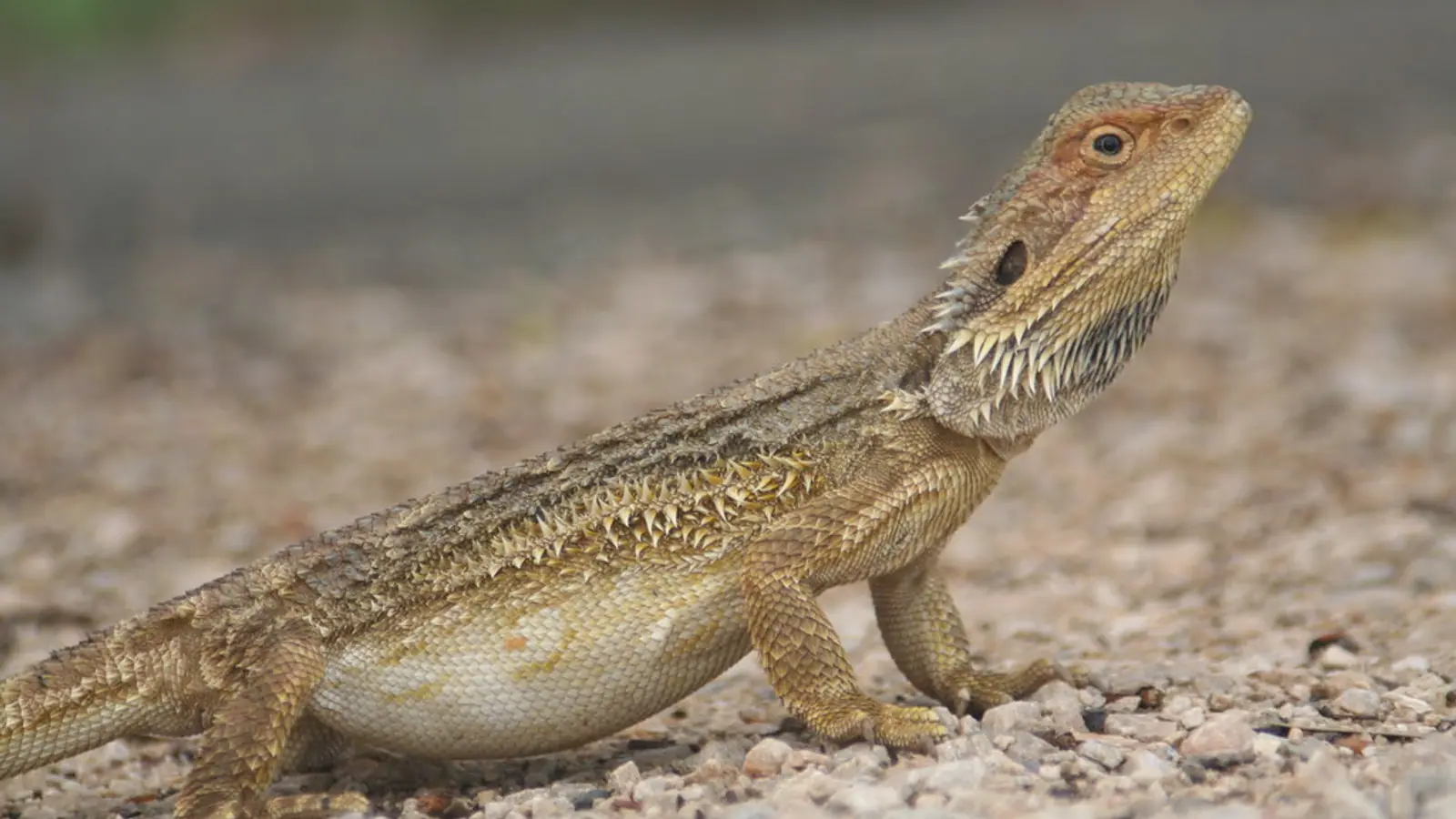
The elevation is not just for looks. The species climbs by nature: Young bearded dragons are semi-arboreal; adults are mostly terrestrial but remain excellent climbers and perch on elevated sites to bask. The Australian Museum has even documented how far wild dragons take it: Bearded dragons are adept climbers in the wild - one Australian Museum observation records a dragon perched in the same tree 3 m above ground for three weeks during extreme heat.
One safety spec governs the height. Basking lamp must not be positioned too close to the lizard (RSPCA UK: back no closer than 25-30 cm from the lamp); basking area should be as large as the dragon so the whole body heats evenly; guard lamps to prevent burns. Set the perch height first, then choose decor that reaches it, never the other way around. Expect the platform to be the most used object you own once it is in: Ectothermic; bask under heat sources to raise body temperature before activity and to maintain preferred body temperature, often perching on elevated sites for extended periods.
The feeding station counts as functional decor too, and its placement is a health rule rather than a taste call: Offer food in a separate dish or feeding container rather than on the substrate to reduce accidental substrate ingestion. A shallow, heavy dish at the mid-tank mark keeps insects corralled and off the floor.
Hides: the least glamorous, most important pieces
A dragon with nowhere to disappear lives on permanent display, and that is a stressor. Provide hiding places at BOTH the warm and cool ends of the enclosure; hides can be commercial caves, clay pots or cardboard boxes.
Two hides minimum, because one is a thermal trap: a dragon forced to choose between feeling safe and being at the right temperature will often pick safe, and sit cold for days. Cheap works fine here; RSPCA guidance explicitly blesses clay pots and cardboard boxes alongside commercial caves.
Plants: live, fake, and forbidden
Greenery gives a flat desert tank its cover and sight breaks. Hardy live non-toxic plants can be included (NCSU suggests sansevieria, aloe, palms, cycads); artificial plants also work for cover.
The forbidden list matters more than the approved one, because dragons sample-bite their scenery. Toxic plants for reptiles include azaleas, laurel and rhododendrons (grayanotoxins - GI signs and potential cardiac damage), yews (taxine - heart damage), castor beans, sago palms, and certain ivy varieties; there is no antidote and treatment is supportive. Screen every live plant against that list before it enters the tank, and when a plant cannot be identified with certainty, artificial wins by default.
The digging box: enrichment hiding in plain sight
The urge to dig is hardwired. Digging is a natural behavior; captive enclosures should provide substrate that allows it. The RSPCA's answer squares that drive with substrate safety: RSPCA UK recommends a digging box with a sand/soil mixture in the cool end.
A plastic tub sunk into the cool end with a sand and soil mix gives the behavior a legal outlet while the main floor stays a safe solid substrate. Sudden intense digging can also carry meaning of its own, decoded in why is my bearded dragon digging.
Decor mistakes that cost dragons
Four patterns to avoid, each traceable to a documented risk:
- Furniture stacked too close to the lamp. Basking lamp must not be positioned too close to the lizard (RSPCA UK: back no closer than 25-30 cm from the lamp); basking area should be as large as the dragon so the whole body heats evenly; guard lamps to prevent burns.
- Loose particle flooring as decor. Avoid substrates linked to gut impaction or toxicity: sand including calcium-based 'calci-sand' (VCA, NCSU, RSPCA SA), gravel/pea gravel, wood chips/shavings, corn cob, crushed walnut shells, cat litter, and cedar (toxic) or pine shavings.
- Unsecured heavy pieces. Rocks and branches must be seated on the tank floor and unable to shift; a burrowing dragon under a toppling rock has no exit. RSPCA guidance specifies sturdy, secured furniture for exactly this reason.
- Clutter that kills the open run. The enclosure minimum of at least 120 cm long by 60 cm wide by 60 cm high exists so the dragon can move; a maze of ornaments shrinks the usable floor back below minimum. If everything cannot fit, the tank size guide makes the case for a bigger box before more stuff.
Why enrichment is welfare, not luxury
The technical grounding for all of this comes straight from the welfare bodies, and the recurring word in their guidance is choice. Furniture exists so the animal can self-regulate: pick its own temperature, UV exposure, elevation and visibility at every hour of the day. Strip the tank to a lamp and a food dish and the dragon loses every one of those choices at once, which is the working definition of a stressful environment for a prey species.
An under-furnished enclosure announces itself through behavior. Repeatedly running along the enclosure walls ('glass surfing') can indicate stress, boredom, or a desire to explore. A dragon that paces the glass for hours in an otherwise correct setup is often reporting an environment problem, not a health one; our glass surfing guide walks through the diagnosis.
Budget nothing fancy to fix it. The full furnishing list above assembles from a paver stone, a scrubbed branch, two clay pots, a plastic digging tub and one artificial plant, and every element of it appears in the complete tank setup guide.