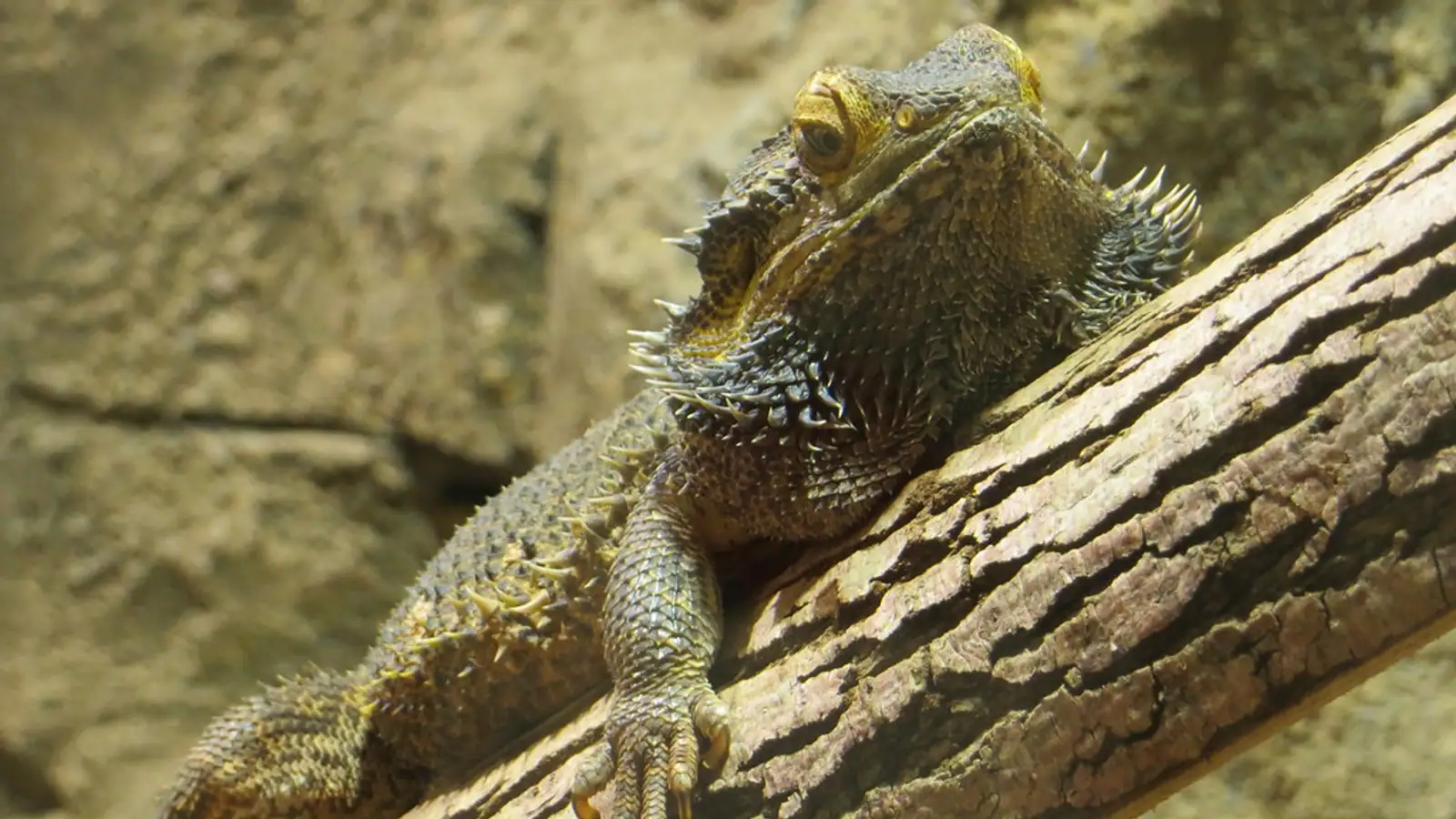
Do bearded dragons need baths?
Not for cleanliness. A dragon in a clean enclosure does not get dirty the way a dog does, and no veterinary source recommends bathing as a hygiene measure for the animal. The reason baths appear in every care sheet is water. Soaking/bathing in shallow warm water helps hydration: VCA suggests soaking in warm water for several minutes a few times a week; NCSU says bearded dragons enjoy a shallow soak weekly in warm water along with misting. The University of Illinois Wildlife Epidemiology Laboratory gives its bearded dragon colony weekly soaks, noting that the soaking helps with hydration and shedding.
The behavior behind it is wild. Wild bearded dragons will drink from standing free water; during rain they also stand on rear limbs with head sloped down and lick water that runs forward over the body to the snout, holding the position 20-30 minutes. A pet dragon standing in a tub of warm water often does the same thing in miniature, dipping its snout and lapping, which is why many owners see their dragon drink more in the bath than it ever does from the dish. A spray bottle rounds out the picture: Misting supports hydration: VCA suggests misting or washing vegetables and lightly misting the bearded dragon itself; NCSU mentions misting alongside weekly soaks.
How often to bathe a bearded dragon
The published cadences differ, so the table lists each one as its source states it:
| Source | Recommendation |
|---|---|
| VCA Animal Hospitals | a few minutes in shallow warm water, a few times a week |
| NC State University veterinary hospital | a shallow soak weekly in warm water, along with misting |
| University of Illinois WEL colony | weekly soaks, for hydration and shedding |
| RSPCA UK, for stuck shed only | shallow tepid water for about five minutes |
Source note: VCA feeding guidance, NC State's care page, the Illinois Wildlife Epidemiology Laboratory colony write-up, and RSPCA UK's care advice; see Sources.
Weekly is the floor across every source. Bump the frequency during a shed, in a dry house in winter, and for any dragon that ignores its water dish. Cut it back for a dragon that panics in water; a stressed five minutes does less for hydration than a calm two.
Where to bathe: the sink rule
This is the section most bathing guides leave out, and it is the only part with a public health agency behind it. Reptiles, including bearded dragons, can carry Salmonella bacteria while appearing healthy and clean and showing no signs of illness; carriers shed the bacteria in their feces. Bath water is where that bacteria goes, and a sink is where your toothbrush or salad goes next. The CDC's rule is explicit: CDC: keep reptiles out of areas where food or drink is prepared, served, or stored (kitchens, outdoor patios); do not bathe reptiles in kitchen or bathroom sinks - use a tub or bin dedicated to reptile use only; clean reptile equipment outside the house and disinfect any surfaces reptiles contact.
Buy a plastic storage tub, label it, and use it for nothing else. Empty it outside or into the toilet, never a sink, and disinfect it after every bath. The stakes are documented rather than theoretical: A 2024 U.S. Salmonella Cotham outbreak linked to pet bearded dragons involved 27 cases across 14 states; 42% of patients with known outcomes were hospitalized, 65% of confirmed cases were children under 5, and half were infants under 1 year. CDC: children under 5 years old (highest risk of serious illness), older adults, and people with weakened immune systems are at high risk from reptile-associated Salmonella; households expecting or with infants are advised against acquiring pet reptiles. The full hygiene routine for the enclosure itself is in how to clean a bearded dragon tank.
Bathing a bearded dragon step by step
- Set up the tub on the floor or a low table. A dragon that bolts from a bath on a counter falls a long way.
- Fill it shallow. PetMD advises soaking a bearded dragon in a large, shallow container of warm water that is wide enough for the dragon to submerge its body while keeping its head safely above the water. For a hatchling that means barely enough to wet the belly.
- Check the water with your hand. Warm, not hot. RSPCA UK's word for stuck-shed baths is "tepid" and VCA's is "warm"; no veterinary source publishes a temperature in degrees, so test it the way you would test a baby's bath and err cool.
- Lower the dragon in feet first, supporting its whole body from underneath, and keep one hand nearby for the first minute.
- Stay in the room for the whole soak. A few minutes is enough for most dragons; extend it to about five for a stuck shed.
- Lift out, pat dry with a towel kept for the dragon, and put it straight back under the basking lamp. A wet lizard in a cool room loses heat fast and cannot digest or move properly until it warms back up.
- Empty and disinfect the tub, then wash your hands at least 20 seconds with soap and water.
Skip soap, shampoo, and anything sold as a reptile bath additive. Plain water is what every veterinary source describes, and the enclosure guidance is a warning about what dragons absorb from products: Safe cleaning: soap and water is generally sufficient; bleach may be used if rinsed thoroughly; avoid phenolic disinfectants (toxic to reptiles); RSPCA SA recommends diluted F10 disinfectant at a 1:250 ratio with water for cage items. Save the soap for the tub afterward.
Baths for stuck shed
Stuck shed is the second job a bath handles, and here the veterinary sources are more specific. For stuck patches after a shed, bathe the dragon in shallow, tepid water for about five minutes to soften the skin; PetMD similarly advises soaking in a large, shallow container of warm water. The bath softens the retained skin so it lifts on its own; it is not a license to peel. Never pull off old skin that seems stuck - it can tear the new skin underneath.
The parts to inspect after every shed are the extremities. Retained shed shrinks as it dries and can constrict circulation, especially on toes and tail tips; poor shedding on the feet can cut off blood supply and lead to loss of toes or tissue death requiring amputation. A toe ring that survives two baths is a vet appointment, not a third bath. Retained shed that keeps recurring usually points at the enclosure rather than the dragon: Shedding problems (dysecdysis) are caused by low humidity, temperatures that are too cool, lack of abrasive surfaces to rub against, nutritional deficiencies, skin parasites, infections, dehydration, and rarely thyroid dysfunction. The shed cycle from dull skin to clean scales is walked through in our shedding guide.
What a bath will not fix
A warm soak gets credited with curing everything from constipation to a bad mood, and it is worth being clear about its limits. Many dragons defecate in the bath because warm water and a relaxed body make it easy, which is a convenience rather than a treatment. Reduced or absent droppings with loss of appetite and lethargy warrant veterinary evaluation; decreased stool production typically indicates reduced food intake or constipation. If the reason you are bathing is that your dragon has stopped pooping, the bath is where you observe, and the vet is where you go.
The same applies to a lethargic dragon. Warm water perks up a cold dragon because it is a heat source, and that improvement can mask an enclosure that is running too cool. Check the basking surface against 95 to 110 F (35 to 43 C) before deciding the bath worked.
Common bathing mistakes
Deep water. Dragons can float and paddle, but a bath is not a swim, and a tired hatchling in water above its shoulders is at risk. The question of swimming has its own answer in can bearded dragons swim.
Cold room, wet dragon. Bathe in the warmest room in the house and go straight back to the lamp. The cool end target is 75 to 80 F (24 to 27 C); a wet dragon on a cold kitchen floor is well below that within minutes.
Wet enclosure afterward. A dripping dragon plus a damp towel left in the tank pushes humidity past 30 to 40 percent, and RSPCA UK ties sustained damp to illness: RSPCA advises keeping humidity around 30-40% at the cool end to help prevent respiratory and skin problems.
The sink. Covered above, and worth repeating because it is the most common mistake of all.
Hydration physiology: what a soak does and does not do
Keepers who have owned dragons for years tend to run the bath as a check-up as much as a drink, and the physiology supports that.
Dragons are desert animals that take water in three ways: drinking from standing water, licking rain harvested off their own bodies, and moisture in food. Provide a shallow dish of fresh water the dragon can step into, changed/cleaned daily; fresh clean water should always be available. PetMD's dehydration signs are the checklist to run while the dragon sits in the tub: Sunken eyes, sticky mucus in the mouth, and retained non-shedding skin can all be signs of dehydration; sunken eyes also suggest weight loss. A dragon showing those signs on a normal diet with a clean dish is not a dragon that needs more baths; it is a dragon that is probably unwell, and the bath has done its job by revealing that.
Skin type changes the math. Silkbacks lose evaporative water at roughly twice the rate of wild-type bearded dragons, and leatherbacks are intermediate (closer to silkbacks); the morphs do not adjust their thermal preferences to compensate A silkback or leatherback benefits from the upper end of the soaking frequency in the table above, alongside a closer watch on the hygrometer.
The extremities story ties back to circulation. Avascular necrosis of toes and tail tips - discoloration/darkening, swelling, infection, then hardened dead tissue - results from blood vessel obstruction due to low humidity, retained shed rings, trauma, infection, blood clots, or tumors. That list explains why the bath, the humidity reading and the post-shed toe check belong to the same routine: each one removes a cause of the ring that strangles a toe. Where the bath fits in the weekly schedule, alongside feeding and cleaning, is set out in our bearded dragon care routine, and the care hub collects the rest.