Why a desert lizard gets a chest infection
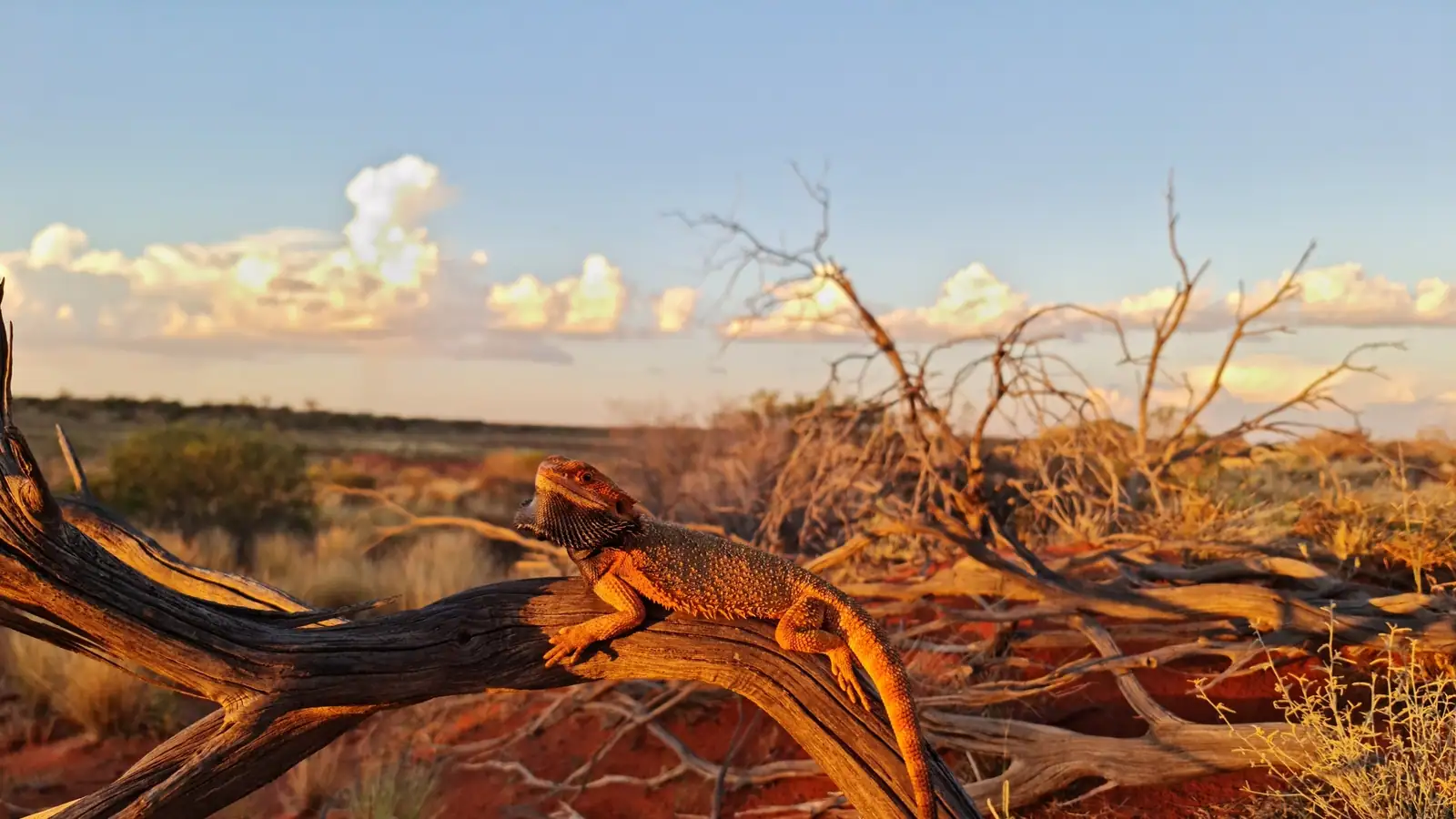
Bearded dragons evolved for hot, dry inland Australia, so their airways are built for warm, low-humidity air. Native to arid and semi-arid inland Australia - deserts, dry forests, scrublands, woodland and hummock grassland; this hot, dry origin underlies captive heat/low-humidity requirements. Put that animal in a cool, damp, or dirty box and its defenses fall behind the microbes that are always present.
The veterinary cause list reflects exactly that. Respiratory infections (including pneumonia) occur in dragons that are stressed, improperly fed, or kept in poor, cold, or dirty conditions; causes include bacteria, viruses, fungi, and parasites, plus unfavorable temperatures, unsanitary conditions, malnutrition, and vitamin A deficiency. Note how few of those items are bad luck. Cold, damp, dirt, stress, and poor diet are all settings, and settings can be fixed.
The symptoms, from subtle to obvious
Signs include sneezing, discharge from the eyes or nose, bubbles from the mouth or nose, rapid or shallow breathing, open-mouth breathing, difficulty breathing, decreased appetite, and lethargy.
Early cases usually show as small things: a sneeze you hear twice in an evening, a faint wet clicking, slightly harder breathing after activity that used to cost nothing. Later cases are unmistakable, with mucus bubbles at the nostrils, breathing with the mouth held open at rest, and a dragon that stops eating. Eye and nose discharge often ride along: Discharge from the eyes or nose can accompany respiratory infection in bearded dragons.
Do not wait for the unmistakable stage. Reptiles typically do not show signs of illness until disease has significantly progressed, so subtle changes matter and owners should not wait to see if the lizard recovers on its own.
Open mouth: basking or struggling?
The single most common false alarm deserves its own section. Bearded dragons often open their mouths (gape) while basking to expel excess heat - a thermoregulatory behavior. Wild dragons do the same thing in extreme heat: During extreme heat, bearded dragons thermoregulate behaviorally, opening their mouths (gaping) to cool blood passing through the head by evaporative cooling.
Location and posture tell the two apart. A dragon gaping on the basking perch, alert, upright, and closing its mouth when it moves off the hot spot, is running its cooling system. A dragon breathing open-mouthed at the cool end, at night, or while flat and lethargic is not thermoregulating, and that picture belongs on the phone with your vet. More on the normal behavior in our mouth open guide.
The enclosure audit that prevents most cases
Run the four checks below the day you notice any breathing oddity, and quarterly even when nothing is wrong.
Humidity. RSPCA advises keeping humidity around 30-40% at the cool end to help prevent respiratory and skin problems. The full working range across sources is 30 to 40 percent, measured with a real hygrometer: Measure humidity with a hygrometer (RSPCA UK: place at the cool end) Our humidity guide covers fixes for a persistently damp enclosure.
Temperature. Chronic chill suppresses immunity in an ectotherm. Verify a basking zone of 95 to 110 F (35 to 43 C), a cool side of 75 to 80 F (24 to 27 C), and nights no colder than 65 to 70 F (18 to 21 C). Rooms that drop lower need dedicated night heat: Heat the basking zone with a 60-100 W reflector bulb (RSPCA UK) or reptile-specific flood/spot lamp on a thermostat (RSPCA SA); ceramic (non-light-emitting) heaters maintain night temperature. Setup details live in the temperature guide.
Cleanliness. Waste and old food feed bacterial loads. Spot-clean waste daily (or immediately when seen); remove uneaten insects from the enclosure. On top of that, Full clean/disinfection: PetMD recommends complete cleaning at least once a week; VCA: replace paper bedding weekly and wash reptile carpet weekly; RSPCA UK: clean the vivarium once a month with a reptile-safe disinfectant.
Airflow. Good ventilation is essential for air circulation, temperature control and humidity management. A sealed, stagnant enclosure holds moisture against every surface; the RSPCA's advice when humidity runs high is to add ventilation rather than just removing water sources.
Stress load. The cause list above includes stress, and the biggest chronic stressor in this species is a cage mate. House bearded dragons individually: RSPCA SA states they 'can inflict severe damage to each other, resulting in loss of limbs and even death' and that keeping multiple females together 'is not a safe practice and is best to avoid'; RSPCA UK: 'it's best to house bearded dragons separately'. Your handling routine counts too: Support the whole body from underneath including fore and hind limbs; do not squeeze; RSPCA UK suggests about 10-15 minutes at a time as a safe handling period; over-handling is stressful.
| Environment check | Target |
|---|---|
| Humidity | 30 to 40 percent |
| Basking zone | 95 to 110 F (35 to 43 C) |
| Cool side | 75 to 80 F (24 to 27 C) |
| Overnight low | no colder than 65 to 70 F (18 to 21 C) |
Source note: ranges drawn from RSPCA, WSU, NC State, VCA, and PetMD husbandry pages listed in Sources.
What the vet visit looks like
Diagnosis and treatment belong to a reptile vet, and this site does not publish medication protocols. What you can expect is a physical exam, questions about your exact setup numbers, and possibly diagnostics to identify the organism involved, since bacteria, viruses, fungi, and parasites all produce similar outward signs. Bring your humidity and temperature readings with you; they shorten the conversation and often point straight at the cause.
The general thresholds apply here with no modification: Contact a veterinarian if a bearded dragon is lethargic, isn't eating well, or isn't growing normally (WSU); RSPCA advises watching weight and contacting a vet if a dragon loses weight during seasonal slowdown. Trouble breathing sits on the emergency list, not the wait-and-see list.
The nutrition connection keepers miss
Merck's reptile chapter puts malnutrition and vitamin A deficiency on the respiratory cause list, which surprises owners who think of breathing problems as purely environmental. The route to that deficiency runs straight through the feeder bin. Feeder insects are low in calcium and vitamin A; feeder invertebrates are best fed a formulated diet fortified with calcium and vitamin A ('gut loading') Pair gut loading with the standard supplement rotation, Dust feeder insects with a reptile multivitamin powder 1-2 times per week (PetMD diet guide) or once weekly (PetMD care sheet); RSPCA applies multivitamin powder to vegetables every two weeks. and the deficiency route to infection closes. A dragon eating poorly overall needs the cause found first; our not eating guide runs that checklist.
One more environmental subtlety for experienced keepers: humidity needs are not constant, and the sources publish a spread rather than a single figure. Keep humidity low, around 30-40%; source ranges: RSPCA UK 30-40% (measured at cool end), WSU 30-40%, NCSU 20-40%, PetMD 30-50%, Merck 20-30%. The skill is holding the baseline dry and letting shed-time moisture increases be short and deliberate rather than a permanent state, with the hygrometer confirming the return to baseline.
Respiratory infections are among the most preventable problems this species faces. Hold the environment to the numbers above, act early on breathing changes, and keep our health guides bookmarked for the rest of the symptom map.