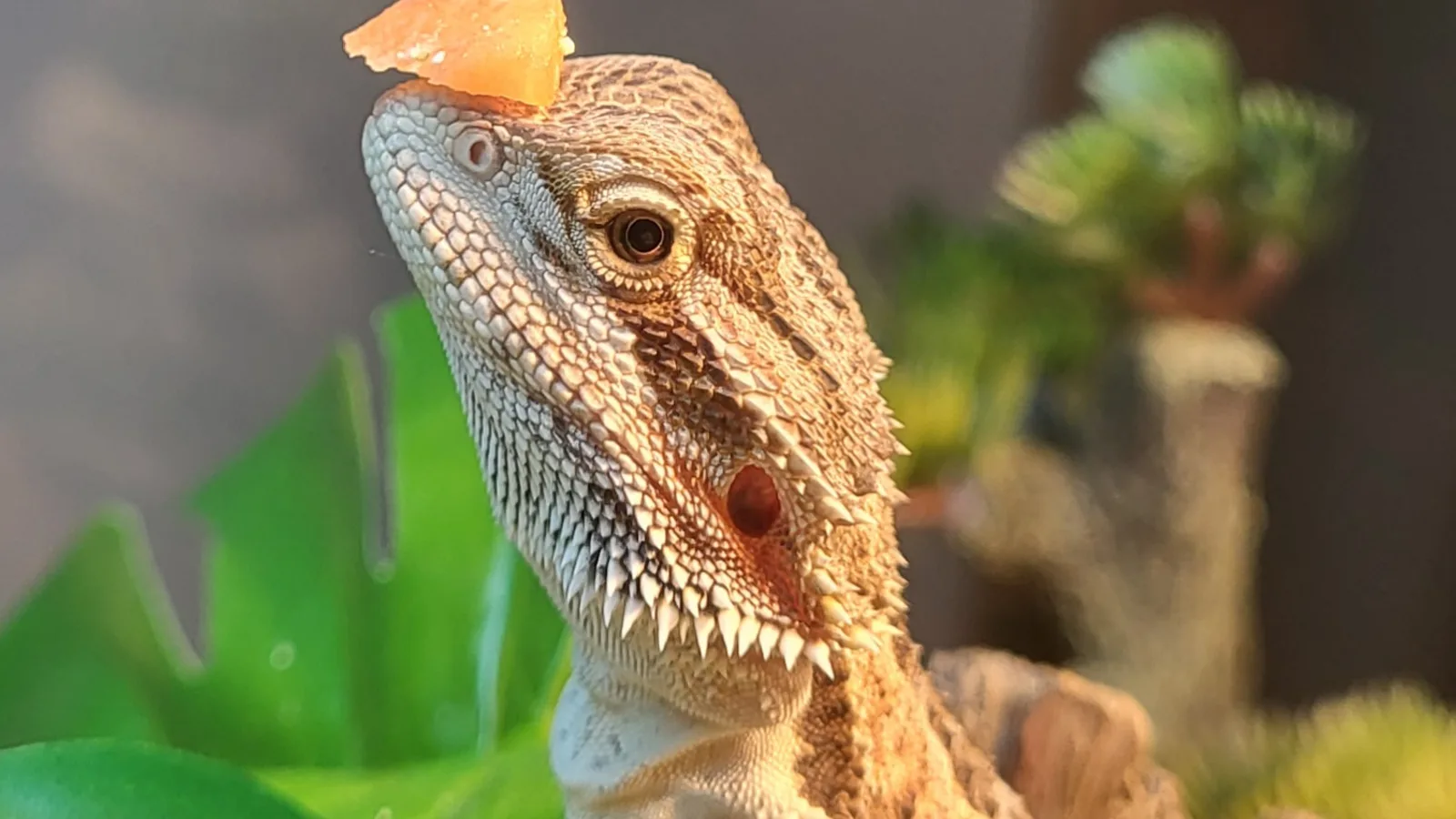
Why digging is built in, not broken
A lizard from the arid Australian interior comes wired to move earth. Captive care guidance treats the urge as a need to serve rather than a habit to break: RSPCA UK lists digging among the natural behaviors substrate should encourage, and its recommended setup includes a dedicated site for it. RSPCA UK recommends a digging box with a sand/soil mixture in the cool end.
So the first question is not how to stop the digging. It is which of four drivers is behind it, because one of the four is time sensitive.
| What the digging looks like | Likely driver | Response |
|---|---|---|
| Casual scraping, settling into a corner or hide | Normal behavior seeking an outlet | Provide a digging box |
| Frantic, repeated digging by a mature female, often with food refusal | Egg laying | Lay box now, vet if she weakens |
| Slower activity, more sleep, less eating in cooler months | Seasonal slowdown | Check against brumation signs |
| Scrabbling at slick flooring that cannot be dug | Substrate blocks the urge | Add a digging box to solid substrates |
Source note: drivers compiled from RSPCA UK and RSPCA South Australia care guidance and VCA Animal Hospitals reproductive and brumation material.
The urgent one: a female preparing to lay
This is the driver that owners cannot afford to misread, and it applies to females housed alone their entire lives. Females can lay unfertilized eggs regardless of whether a male is present. The RSPCA states the stakes plainly: It is quite common for female bearded dragons to develop eggs even if they have never been with a male; this is not a problem if she is offered a digging box in which to lay her eggs, but without one she may become egg bound, a serious condition.
RSPCA and VCA guidance agree egg binding is not a wait-and-see condition: Egg binding (dystocia) is life-threatening: gravid females stop eating and become sick, lethargic, or unresponsive; causes include inadequate UV lighting, temperature, humidity, malnutrition, obstruction, or reproductive tract abnormality - see a vet immediately.
The line between normal and emergency runs through energy level. According to VCA Animal Hospitals, A normal gravid (egg-carrying) bearded dragon may not eat but is generally still bright, active, and alert; a gravid dragon with dystocia (egg binding) also will not eat and rapidly becomes sick, lethargic, or unresponsive. Translate that into a rule: a digging female who skips meals but still basks, patrols, and holds her posture gets a lay box and daily observation. A digging female who turns dull, flat, or unresponsive goes to a reptile vet the same day.
Give a suspected gravid female a box deep enough to work in, filled with a diggable sand and soil mixture, placed at the cool end. Leave her undisturbed. Weigh her weekly through the period, and treat continued weight loss as its own vet trigger.
The brumation question: what the sources actually say
Keepers widely report digging as a brumation signal, and wild reptiles do shelter through cold periods. The documented captive sign list is narrower though. Brumating dragons become lethargic, refuse food, stop defecating, and their scales may appear darker; slowing down, sleeping more, and eating less in cooler seasons is normal.
None of the veterinary pages we cite lists digging as a brumation indicator, so digging alone is not evidence your dragon is brumating. Read the season and the whole animal instead, and VCA flags the trap in the other direction: If the household temperature is a normal 60-70 F (16-21 C), a lethargic dragon may not be brumating - it may be sick; rather than assuming brumation, have the pet examined by a reptile-knowledgeable veterinarian. A dragon slowing down on schedule in a properly heated enclosure fits the seasonal picture; one slowing down in a warm room with normal light cycles deserves an exam. The brumation guide covers safe management once brumation is confirmed.
When the floor itself is the problem
Some digging is the substrate conversation going badly. Solid floors are safe and cleanable, but they leave the urge with nowhere to go. RSPCA UK's own advice closes the loop: Non-loose floor coverings such as slate tiles prevent natural digging behaviour, so RSPCA UK advises pairing them with a digging box: a plastic tub with an entrance cut into the top, filled with a sand and soil mixture, placed in the cool end.
The loose substrate question underneath this is genuinely contested between authorities. Sources differ on loose substrate: US veterinary sources (VCA, NCSU) advise against all sand due to impaction risk, while RSPCA UK permits reptile-safe sand or sand/soil mix with a digging box, and RSPCA SA lists sand as an option but excludes calci-sand; all sources agree calci-sand, gravel, corn cob and walnut shell are unsafe. What no source disputes is the unsafe list: Avoid substrates linked to gut impaction or toxicity: sand including calcium-based 'calci-sand' (VCA, NCSU, RSPCA SA), gravel/pea gravel, wood chips/shavings, corn cob, crushed walnut shells, cat litter, and cedar (toxic) or pine shavings.
The digging box resolves the argument neatly for most keepers: a safe solid main floor plus a contained, supervised digging site. Our substrate guide weighs every option in detail.
When digging signals distress instead
A dig that pairs with wall pacing, constant escape attempts, or all-day restlessness belongs in the stress column rather than the digging column. Work through the same audit as for glass surfing: enclosure size against the at least 120 cm long by 60 cm wide by 60 cm high minimum, hides at both ends, a correct temperature gradient, and no other animals with sight lines into the tank.
Appetite is the tiebreaker, and PetMD is blunt about it: Leaving food after a meal can be one of the first signs of illness in a lizard, and not eating at all - even once - is a sign that cannot be ignored. A digging dragon that eats normally has a behavior to accommodate. A digging dragon that stops eating has a problem to diagnose, and in females that problem is eggs until proven otherwise.
How to build a digging box that actually gets used
The technical details decide between a box your dragon uses and one it ignores.
Placement. The cool end, per RSPCA UK. It keeps the digging site away from the basking zone so a working female is not forced to overheat, and it adds a cool retreat to the enclosure's choice map.
Fill. A sand and soil mixture, the specific fill RSPCA UK names. Pure play sand collapses and pure soil cakes; the mix holds a scrape the way the species' native ground does. Skip every material on the documented avoid list, especially calcium sand, gravel, and walnut shell.
Impaction control. The ingestion risk that drives the substrate debate is manageable with two habits. Feed in a dish or separate container, never on loose fill: Offer food in a separate dish or feeding container rather than on the substrate to reduce accidental substrate ingestion. And keep the loose material contained to the box, where you can watch how the dragon interacts with it. NC State's veterinary hospital frames the wider rule: Avoid small-particle loose substrates because bearded dragons will eat bedding made of small particles; safer options include newspaper, paper towels, or reptile carpet, and insects should be fed in a dish to avoid substrate ingestion.
Depth. Deep enough to bury a front leg at minimum, deeper for a gravid female who needs to excavate a real chamber. A shallow scatter of sand over tile reads as decoration to a lizard that wants to dig.
A box like this turns the most misread behavior on this list into routine enrichment, and it doubles as your insurance policy the day a female you never bred decides she has eggs to lay.