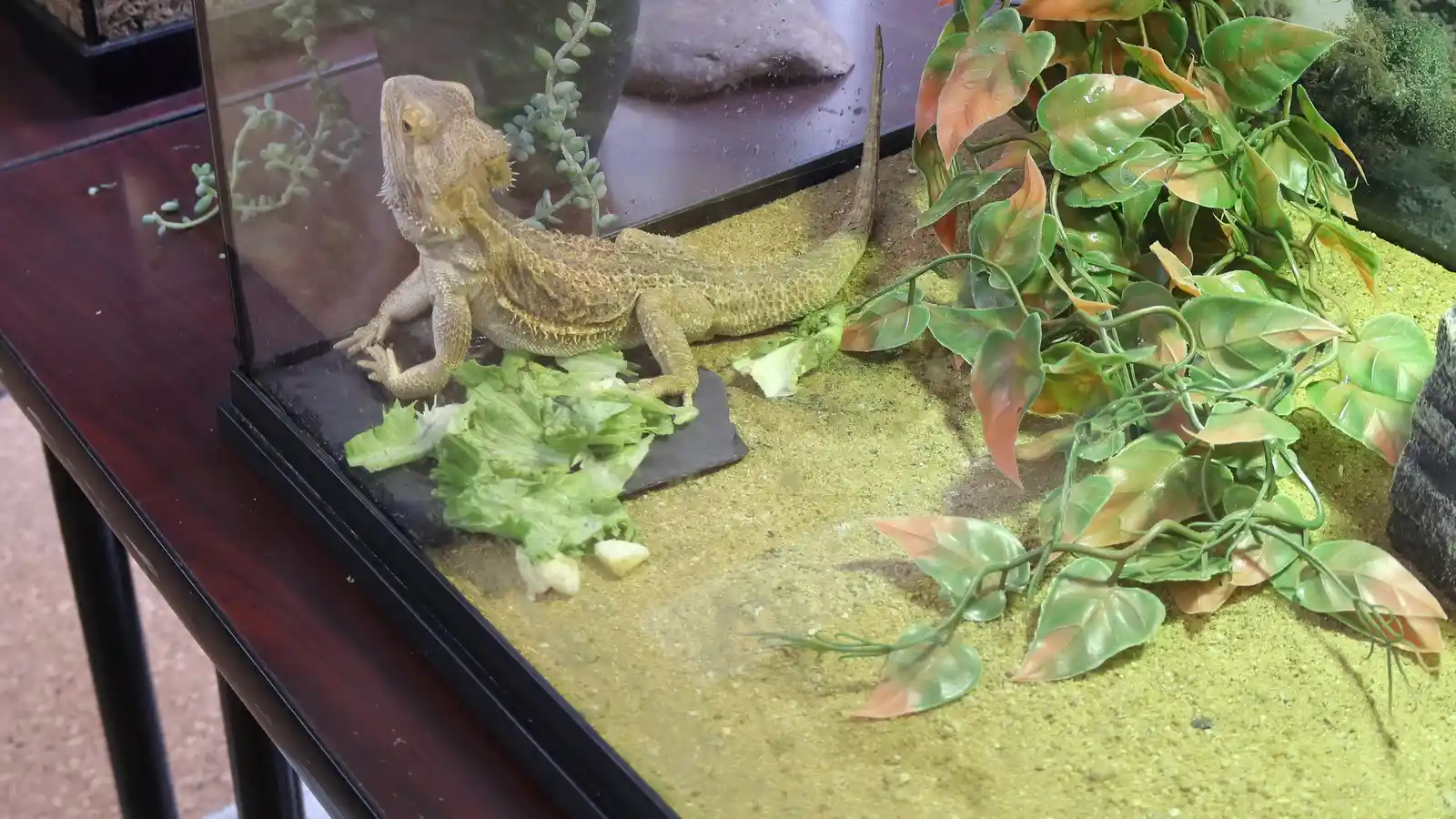
Speed and context decide the meaning
A head bob is not one signal. It is a family of signals that differ by tempo, posture, and audience, and the documented readings sort cleanly by those variables.
| Bob style | Typical performer | Documented meaning |
|---|---|---|
| Fast bobbing with an inflated, blackened beard | Adult male | Dominance display, also used in mating displays |
| Slow, bowing bob | Adult female | Submission signal toward a male |
| Bob answered by an arm wave | Dominant animal, then subordinate | Rank exchange settled without a fight |
Source note: display meanings from the Australian Museum, Animal Diversity Web, and VCA Animal Hospitals behavior material.
The pairing in the last row runs through everything this species does socially. Males head-bob with an inflated, blackened beard to signal dominance; smaller/subordinate dragons respond with arm waving as a submission signal. The bob asserts, the wave concedes. Our arm waving guide covers the conceding half.
Fast bobbing: dominance and territory
A rapid, emphatic bob is the male's assertion signal. It says this basking spot, this territory, and this encounter belong to him. The beard usually joins in, darkening and inflating to make the head look larger. When the challenge is serious the whole body follows: When threatened they flatten the body and enlarge the throat, which can turn black.
Males aim this display at other males first, but a captive male with no rivals still performs it. A reflection of movement, a pet walking past, a hand entering the tank, even a toy can pull the same routine. A male bobbing at you is asserting status, not asking for attention. Give him a moment to settle before reaching in, and watch what the beard does next; a beard that stays dark has its own set of causes, covered in the black beard guide.
Courtship bobbing
The same fast bob doubles as a courtship signal, which makes sense once you know the display evolved for both jobs at once: advertising status to rivals and fitness to females. Wild breeding occurs September-March (Australian spring/summer) Captive dragons keep hormonal rhythms, so expect seasonal surges of bobbing, pacing, and appetite changes in mature males even with no female anywhere in the house.
Sex differences make the performer easy to identify. Adult males have larger femoral pores on the underside of the thighs, larger heads, darker beards and slightly larger bodies than females; males are also more brightly colored. A large-headed, dark-bearded adult doing fast bobs is almost always male. Confirmation methods are in our guide to sexing a bearded dragon.
Slow bobbing: the submission bow
Females use a slower, deeper movement, closer to a bow than a bob, to signal submission during encounters with males. Juveniles and subordinate animals of both sexes lean on appeasement signals too, usually the arm wave, sometimes with slow bobbing mixed in.
A slow bob from your dragon aimed at you carries the same non-challenge message. It is one of the calmer signals in the repertoire and needs no response beyond not looming.
Bobs traded in a shared tank are a red flag
Two dragons trading bobs and waves are not communicating happily. They are running a dominance hierarchy in a box neither can leave, and the subordinate pays for it daily in lost basking time and chronic pressure. The welfare evidence is blunt: House bearded dragons individually: RSPCA SA states they 'can inflict severe damage to each other, resulting in loss of limbs and even death' and that keeping multiple females together 'is not a safe practice and is best to avoid'; RSPCA UK: 'it's best to house bearded dragons separately'.
Male pairs escalate worst; PetMD states it flatly: Never keep more than one adult male per enclosure - males are territorial and will fight; adult females kept together also require monitoring for aggression. Constant bobbing between cage mates is a signal to separate them permanently, and our cohabitation guide lays out why no shared setup fixes it.
How to respond when your dragon bobs at you
A bob aimed at your hand is information, and the useful response lowers the perceived challenge. Stop the approach mid-motion and hold still for a few seconds; a paused hand stops reading as an advancing rival. Drop your angle so the hand arrives from the side at the dragon's eye level instead of descending from above, the direction predators come from. Then continue at half speed.
Handling technique does the rest. Support the whole body from underneath including fore and hind limbs; do not squeeze; RSPCA UK suggests about 10-15 minutes at a time as a safe handling period; over-handling is stressful. A dragon lifted with full support and returned before it struggles learns that hands predict nothing worth displaying at, and the bobbing fades across weeks of consistent, short sessions. A dragon grabbed mid-display learns the opposite lesson.
Track the trend rather than the day. Occasional bobbing from a healthy male is background noise, especially in his breeding season. A rising trend across weeks, aimed at everything that moves, usually tracks a stressor you can locate: a new pet with a sight line to the tank, a relocated enclosure, or temperatures that drifted off the 95 to 110 F (35 to 43 C) basking target.
Bob or tremor? When movement means illness
A communication bob is rhythmic, deliberate, and aimed at something. A tremor is involuntary shaking, twitching, or wobbling that happens at rest, without an audience, or alongside weakness. That distinction matters because tremors sit on a documented disease symptom list. Signs include weakness or difficulty walking, swollen or softened 'rubber' jaw, swollen or deformed limbs, muscle tremors or twitching, lethargy, loss of appetite, fractures, and seizures in advanced cases; RSPCA also lists permanently deformed limbs or spine.
Metabolic bone disease comes from calcium, vitamin D3, and UVB failures, and it is both common and preventable. Washington State's veterinary hospital sets the threshold: Contact a veterinarian if a dragon shows weakness, tremors, or jaw/limb swelling; suspected MBD requires professional treatment and cannot be remedied at home. If you cannot tell display from tremor, film the movement and send it to a reptile vet; the metabolic bone disease guide lists the other early signs worth checking while you wait.
How the display ladder escalates
Keepers who read the whole ladder can predict what a bobbing dragon does next. The species runs a graded escalation, each step cheaper than a bite for everyone involved.
Step one is assessment. A dragon that notices something novel flicks its tongue and watches: Other defensive/communication behaviors documented by an exotics vet clinic: hissing (warning), body puffing (appear larger), tail twitching (agitation/excitement), tongue flicking (environmental exploration)
Step two is assertion, the fast bob with beard involvement. Step three raises the stakes visually: The beard turns dark to jet black and inflates during displays; used in both threat/aggression and courtship. When threatened, the dragon faces the intruder with mouth wide open and beard puffed out; darkening also occurs with stress, fear or mating arousal. Step four is the full threat posture, body flattened and throat enlarged, often with hissing. Only after all of that does a bite become likely, which is why bites are rare in dragons whose warnings get respected.
The practical use of the ladder is simple. Note which rung your dragon is on and act one rung early. A male bobbing at your hand gets a pause; a dark, inflated beard gets the hand withdrawn; a flattened, hissing dragon gets left alone entirely. Owners who reach in at step four teach the dragon that displays fail and biting works. Owners who respect step two rarely see step three.