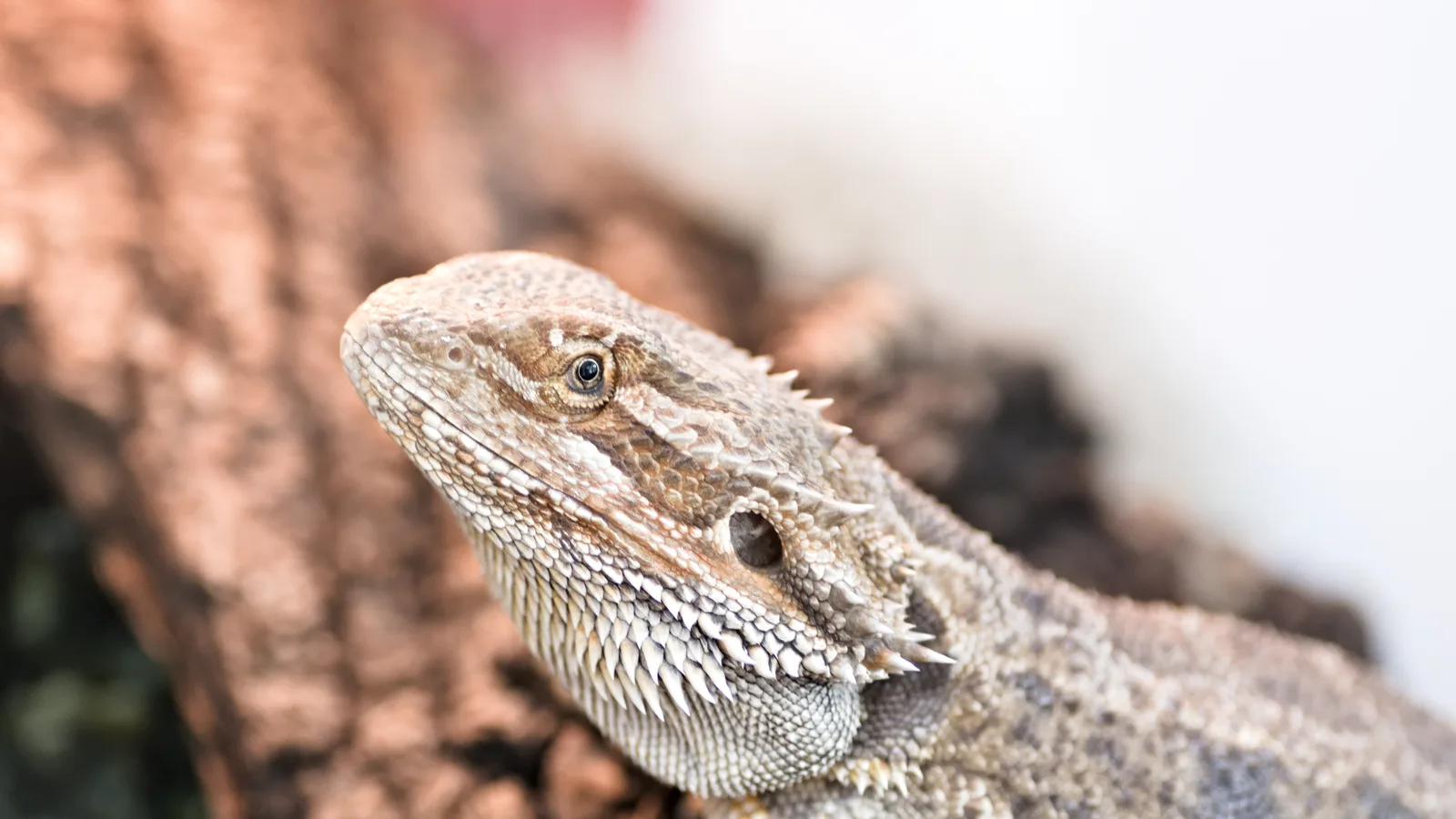
What arm waving looks like
The gesture is hard to mistake once you have seen it. Your dragon plants three legs, lifts one front leg off the ground, and rotates it in a slow arc, like a person tracing a circle in the air. Animal Diversity Web, the University of Michigan's species database, describes it this way: Slow circular wave of one forelimb while standing on three legs; used for species recognition and to show submission/appeasement - most often seen in younger or subordinate animals signalling they are not a threat.
Both front legs get used, though rarely at the same time. A wave can last a few seconds or repeat in bouts, and it often arrives together with a slow lowering bob of the head. That pairing matters, because the two signals belong to the same conversation about rank.
What the wave actually means
Field and species accounts give arm waving two documented jobs.
Species recognition. A wave tells another bearded dragon that the waver has seen it and identifies it as the same species. Two dragons that spot each other across open ground exchange information before either commits to a fight or a retreat.
Submission and appeasement. This is the meaning owners see most. The wave says the signaler accepts the other animal's dominance and wants no conflict. According to the Australian Museum and Animal Diversity Web, the display pattern works as a pair: Males head-bob with an inflated, blackened beard to signal dominance; smaller/subordinate dragons respond with arm waving as a submission signal.
The head bob and the wave are two ends of the same exchange. Dominant animal bobs, subordinate animal waves. Our guide to bearded dragon head bobbing covers the other half of that conversation.
| What you see | Documented reading | Sensible response |
|---|---|---|
| Wave after another dragon head bobs | Submission to the dominant animal | House the dragons separately |
| Wave aimed at you or a large pet | Appeasement of a bigger animal | Approach lower, slower, from the side |
| Occasional wave from a juvenile | Normal signaling from a young, low-rank animal | Nothing needed |
Source note: signal meanings from Animal Diversity Web, the Australian Museum, and VCA Animal Hospitals; husbandry responses follow RSPCA guidance on solitary housing.
Why your bearded dragon waves at you
Your dragon has no separate signal vocabulary for humans. When it waves at you, it is running its normal species script on a very large animal that just loomed over the enclosure. The honest translation is closer to "I see you, I am not challenging you" than to "hello."
That is not a bad thing. A wave means your dragon registered you and chose appeasement over defensive displays like a darkened beard or an open-mouthed threat posture. Compare that with the alternative: When threatened they flatten the body and enlarge the throat, which can turn black. A dragon that waves is calmer than a dragon that flattens and blackens.
You can lower the trigger even further. Approach at enclosure level rather than from directly above, keep movements slow, and let the dragon see your hand before contact. The same reading of rank and threat drives handling tolerance, which our handling and taming guide walks through step by step.
A wave between two dragons is a warning sign
A wave exchanged inside a shared tank is not cute. It means one animal is actively signaling submission to a dominant cage mate, and that arrangement has a documented cost. House bearded dragons individually: RSPCA SA states they 'can inflict severe damage to each other, resulting in loss of limbs and even death' and that keeping multiple females together 'is not a safe practice and is best to avoid'; RSPCA UK: 'it's best to house bearded dragons separately'.
Male pairs are the worst case, and PetMD's care sheet is categorical: Never keep more than one adult male per enclosure - males are territorial and will fight; adult females kept together also require monitoring for aggression. A subordinate dragon in a shared enclosure lives under constant social pressure, often loses access to the best basking spot, and can stop eating well. Frequent waving from one of two housed dragons is a signal to separate them, not a sign they are getting along. The full argument sits in our guide on can bearded dragons live together.
Does waving mean your dragon is happy?
No source we cite supports that reading. The claim that waving is a friendly greeting or a sign of affection circulates widely on forums, but the species accounts from Animal Diversity Web and the Australian Museum, and the behavior notes from VCA Animal Hospitals, all describe waving as submission and recognition signaling. Nothing in the documented record ties it to positive emotion.
The distinction changes what you do next. An owner who reads waving as happiness sees a frequent waver as a content pet. An owner who reads it correctly asks what the dragon keeps appeasing. A dragon that waves constantly at its own enclosure walls, at people crossing the room, or at another pet is telling you it perceives repeated social pressure. Check for a cat or dog with sight lines into the tank, heavy foot traffic past the glass, or a second dragon nearby. Persistent appeasement signaling alongside hiding or glass surfing points to a stressed animal, not a friendly one.
The social system behind the wave
Experienced keepers can read the wave more precisely by placing it inside the species' actual social structure. Not social - solitary animals; should be housed individually, and males must be kept separately (territorial)
That solitary baseline explains why the signal exists. Wild dragons do not live in groups, but they do meet, and meetings between territorial reptiles carry injury risk. A cheap, unambiguous rank signal lets the smaller animal end the encounter without a fight. The wave is that signal, and the display set around it escalates in readable steps: Other defensive/communication behaviors documented by an exotics vet clinic: hissing (warning), body puffing (appear larger), tail twitching (agitation/excitement), tongue flicking (environmental exploration)
Age changes the math. The wave appears most often in juveniles and subordinate adults because they lose any physical contest. As a male matures, his signaling shifts from waving toward the dominance end of the repertoire, the fast head bob with a blackened, inflated beard. Adult females keep a slow bowing bob as their submission signal during encounters with males. A fast head bob combined with an inflated, blackened beard signals male dominance (also used in mating displays); a slow bowing bob is used by adult females to signal submission to a male.
So a juvenile that waves often, then bobs more and waves less as it matures, is following the documented developmental arc, and the change is a useful soft clue about sex and rank. It is not proof on its own, since both sexes carry the full display set. Both sexes have a beard and can display it, but males display more frequently, especially in courtship.
Read the wave as one word in a longer sentence. The complete body language decoder puts it next to every other signal your dragon uses.