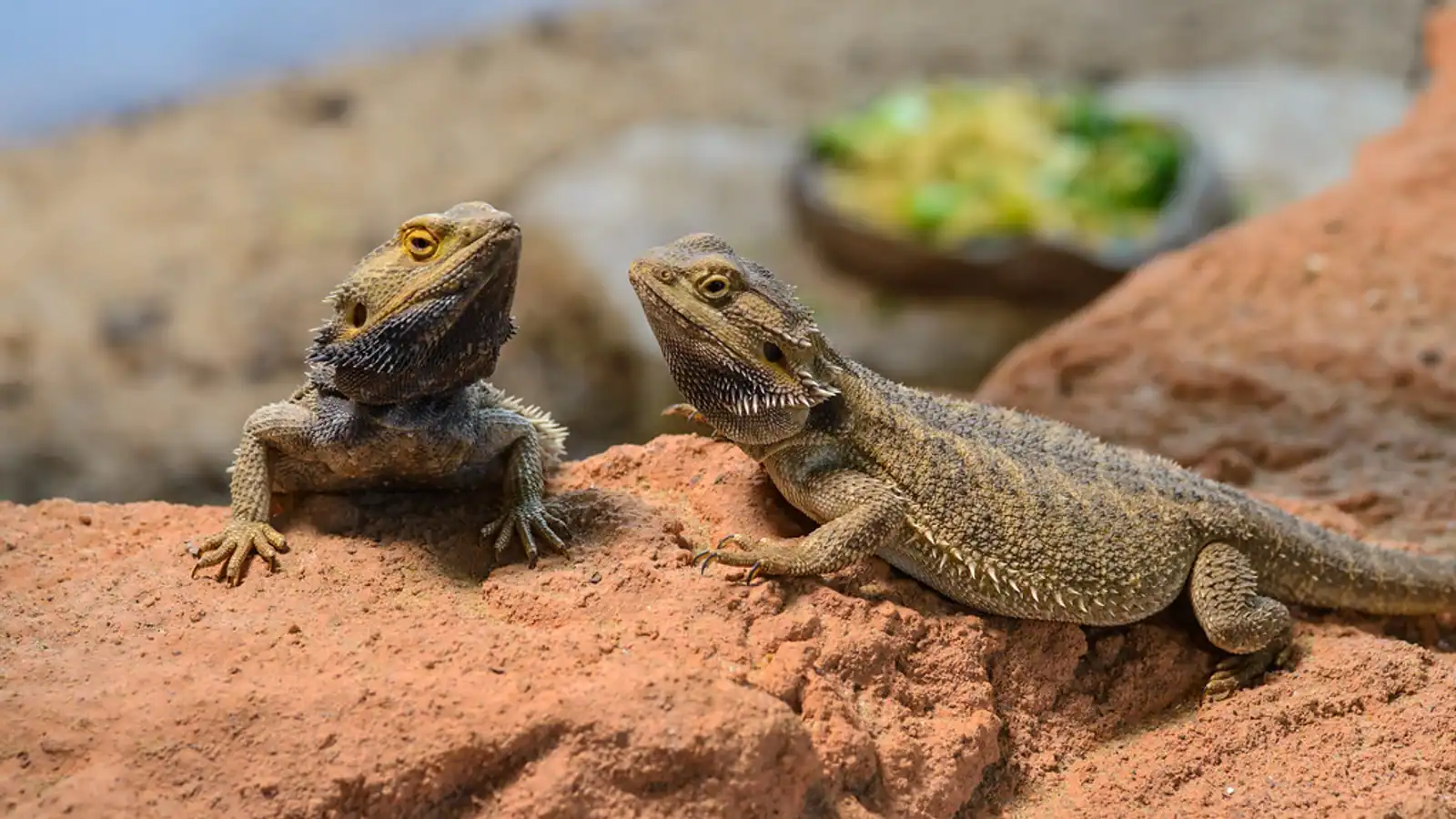
The anatomy, which is genuinely unusual
Most reptiles replace teeth continuously through life. Bearded dragons largely do not, and the reason is how the teeth attach: Bearded dragons have acrodont dentition: teeth directly ankylosed (fused) to the mandibles and maxilla, are permanent and are not replaced throughout life.
Acrodont means the teeth are ankylosed, or fused, to the top edge of the jawbone. There is no socket, no root sitting in a pocket, and no reserve tooth waiting underneath. The tooth is effectively part of the bone.
That design works well for a lizard that crushes insects. It has one significant weakness, which is the subject of the rest of this page.
Why it creates a dental disease risk
The consequence is documented directly: The acrodont anatomy makes captive bearded dragons highly susceptible to dental/periodontal disease; advanced cases can progress to bone involvement.
Think about what a socket does in a mammal. It creates a defined boundary between tooth and bone, with a periodontal ligament and a gum margin that seal the junction. In an acrodont arrangement, the gum tissue meets bone-fused tooth along a much less protected line.
So plaque and food debris accumulating at the gum line have a shorter route to the underlying bone. What starts as gum inflammation can progress into the jaw itself, which is why the bacterial condition covered in the mouth rot guide is taken so seriously in this species.
The progression matters: Mouth rot (infectious stomatitis) is a bacterial or fungal infection of the gums and jawbone; bearded dragon teeth are fused to the jaw with minimal gum coverage, making the mouth easily injured and prone to secondary infection.
Diet is the lever you control
No veterinary source we cite recommends brushing a bearded dragon's teeth, so diet and monitoring carry the load.
Soft, sugary food is the problematic category, which reinforces the fruit ceiling already set for nutritional reasons: Fruit should be limited to at most about 5% of the total diet (NCSU/WSU/PetMD) because it is high in sugar; VCA allows fruit as 10-20% of the plant portion only, 'as a treat only'.
The fibrous, crunchy side of the diet does more work than owners realise: 80-90% of the plant material fed should be leafy green vegetables; fruit plus yellow/red/orange vegetables should be only 10-20% of the plant portion.
And insects with chitinous exoskeletons contribute mechanical cleaning as the dragon crushes them. The whole natural diet points this way: In the wild they feed on vegetation including fruit and leaves, invertebrates (including ants and beetles), and small vertebrates such as lizards.
The practical version: a salad built on staple greens with insects appropriate to age, and fruit kept to a genuine treat. Our fruit guide and vegetable guide cover the balance.
What to look for in the mouth
A monthly look inside the mouth is worth adding to your care routine. Gently is the operative word, and never force the jaw open.
Healthy tissue looks even and pink. The signs that matter: Signs include pinpoint hemorrhages on the gums, red/inflamed or bleeding gums, gum swelling, excessive thick mucus, cottage-cheese-like material in the mouth, loss of appetite, inability to close the mouth, and jaw swelling in advanced cases.
One detail prevents unnecessary alarm: Some bearded dragons naturally have yellow pigmentation inside the mouth - this alone is normal and not a sign of disease; healthy mouth tissue is bright pink with clear saliva.
And the threshold for acting: Any mouth sores, mucus changes, or gum redness warrant veterinary evaluation to determine severity and underlying cause.
Do bearded dragons bite, and does it hurt?
Given all this, owners reasonably ask about bites. Bearded dragons are not aggressive animals: Described as highly social with keepers, friendly, animated, curious, docile and gentle; docile and interactive when handled often.
Warnings come first: Other defensive/communication behaviors documented by an exotics vet clinic: hissing (warning), body puffing (appear larger), tail twitching (agitation/excitement), tongue flicking (environmental exploration)
A bite from a dragon is a mechanical injury rather than a serious wound, and there is a curious footnote to it: Bearded dragons are mildly venomous: Fry et al. (Nature 439:584-588, 2006) found Pogona barbata retains an ancestral venom system with serial, lobular non-compound venom-secreting glands on both upper and lower jaws.
That finding, from a study in Nature, changed scientific thinking about venom evolution without changing anything practical for owners. The biting guide covers prevention and what to do afterward, including hygiene: CDC: wash hands for at least 20 seconds with soap and water right after touching reptiles or anything in the area where they live, and before preparing food or eating.
Teeth and feeder size
Dental anatomy connects to a feeding rule that exists for a different reason. A dragon crushes prey rather than chewing it thoroughly, which makes prey size a swallowing question: Never feed an insect whose length is greater/wider than the width of the dragon's head; RSPCA: live food greater than the width of the dragon's head should not be offered.
The consequence of ignoring it: Small prey must be fed to baby bearded dragons to avoid health problems such as impaction; start with pinhead crickets and tiny, freshly molted worms and move gradually to larger sizes.
Hard-shelled feeders in appropriate sizes are fine, and the feeder insect guide covers the ranking.
What happens when a tooth is lost
Because the teeth are fused rather than socketed, a lost tooth leaves an exposed area of jawbone rather than an empty socket that heals over. That is a veterinary matter rather than something to monitor at home.
Dragons with significant dental disease may show it through eating changes before anything visible appears in the mouth: Leaving food after a meal can be one of the first signs of illness in a lizard, and not eating at all - even once - is a sign that cannot be ignored.
The not eating guide works through the causes in order, and dental problems belong on that list.
Quick reference
| Question | Answer |
|---|---|
| Do they have teeth? | Yes, fused to the jawbone rather than in sockets |
| Do teeth grow back? | Not the way most reptiles replace theirs |
| Why does it matter? | The anatomy raises dental and periodontal disease risk |
| What helps? | Fibrous greens, appropriate insects, fruit kept to a treat |
| When to see a vet? | Gum redness, swelling, bleeding, sores, or eating changes |
Source note: dental anatomy from Clinician's Brief and the veterinary literature; mouth condition guidance from VCA and PetMD, cited below.