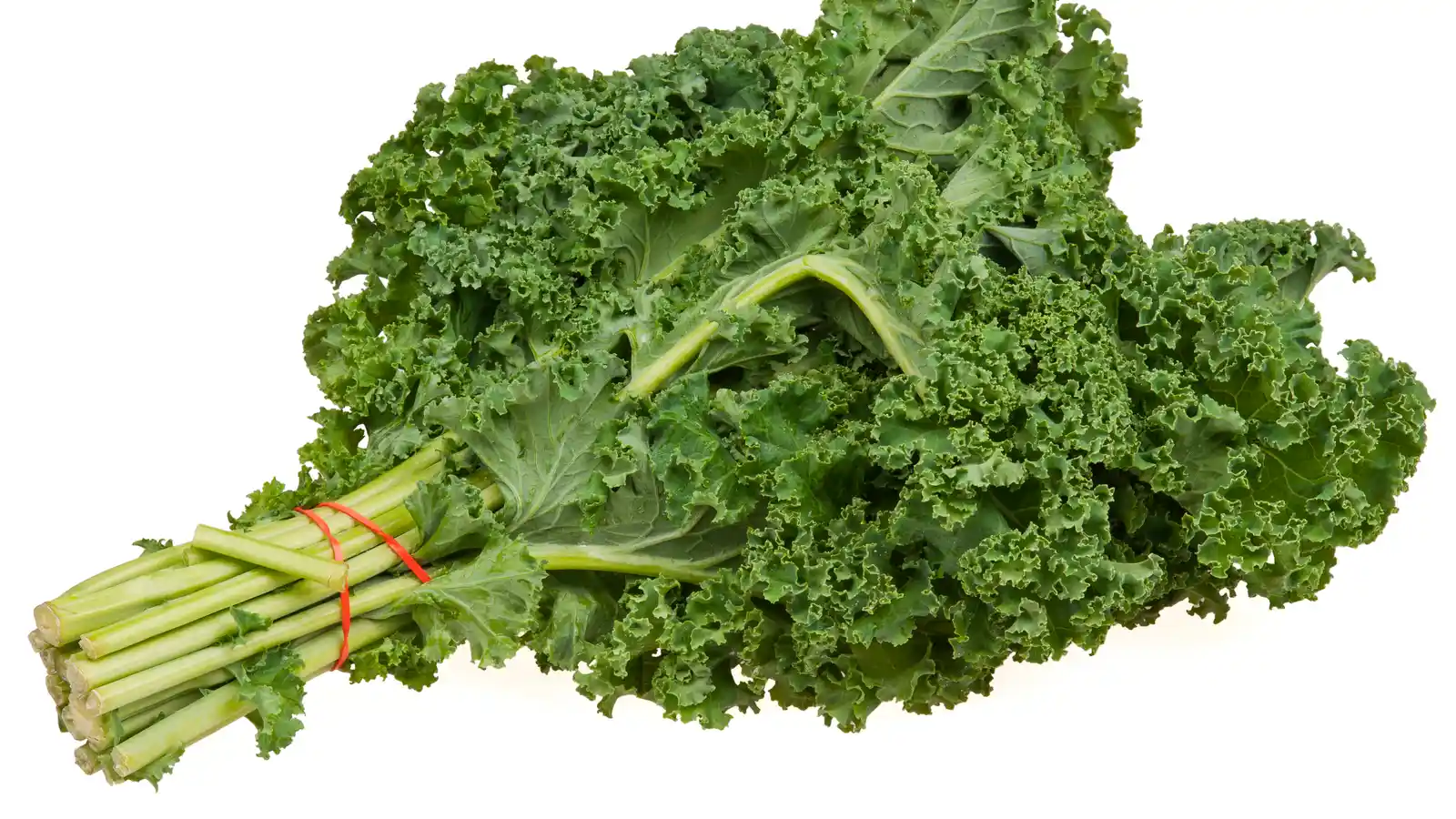
Where the sources disagree
Most feeding questions have a settled answer. Kale does not, and pretending otherwise would be dishonest.
On one side, VCA groups kale with greens that carry a thyroid caution: Cabbage, kale, and mustard greens contain goitrogens that can interfere with iodine uptake and suppress thyroid function if fed in excess.
On the other, kale appears in feeding examples from a university veterinary programme. NC State's own recommended lists and the ration used by the University of Illinois Wildlife Epidemiology Laboratory both include it: Example adult daily ration used by University of Illinois WEL: 1/2 cup leafy greens (kale, mustard, collard, or turnip greens) + 1 tablespoon chopped veggies + 1/8 teaspoon calcium powder sprinkle, with 2 kingworms twice weekly (~5% protein)
Both sources are authoritative. They are also not really contradicting each other, once you read the caution carefully.
Reading the caution properly
The VCA warning ends with three important words: if fed in excess.
Goitrogens interfere with iodine uptake and can suppress thyroid function when they dominate a diet. That is a dose-dependent effect, not a switch that flips on first contact. A green eaten daily as the base of every salad delivers a very different exposure than the same green appearing once or twice a week in a rotation.
Notice also that the same caution names mustard greens, which sit on the staple list: Calcium-rich staple greens include collard greens, mustard greens, turnip greens, and dandelion greens.
If the caution meant never feed, mustard greens could not be a staple. It does not mean that. It means do not let any one of these greens dominate.
The resolution: rotate
Rotation resolves the disagreement completely, and it is good practice regardless of kale.
A dragon eating collard greens as a frequent base, with mustard, turnip, dandelion greens, and kale cycling through across the week, is never taking a heavy dose of any single compound. The same dragon gets a wider nutrient spread than one eating a single green daily, however excellent that green is.
A workable pattern for an adult:
- Most days: collard, turnip, or dandelion greens as the base
- One or two days a week: kale or mustard greens in the mix
- Supporting role: grated squash, carrot, or bell pepper turned through
- One day a week: a small fruit item
That structure respects the sourced plant ratio: 80-90% of the plant material fed should be leafy green vegetables; fruit plus yellow/red/orange vegetables should be only 10-20% of the plant portion.
Kale is genuinely useful, which is why this matters
The reason the question comes up at all is that kale is a good green in the ways that count for this species. It is sturdy, most dragons eat it readily, and it belongs to the category the diet is built on.
The standard the whole diet is judged against: The calcium:phosphorus ratio of the diet should be at least 1:1, with 2:1 preferred (Merck); WSU and Illinois WEL state the ideal Ca:P ratio is 2:1.
And the reason greens have to work so hard: Feeder insects naturally contain extremely low calcium (about 0.03-0.3%) with 0.8-0.9% phosphorus; a 3-day 12% calcium gut-load raises insect calcium to roughly 0.8-0.9%, giving a Ca:P ratio of approximately 1.2:1.
Against that background, discarding a usable green over a dose-dependent caution would be an overcorrection. Rotation is the proportionate response.
Preparation
Wash it well. Curly kale traps grit in its folds more than flat greens do.
Strip the tough stems. The thick central rib is fibrous and hard for a dragon to manage. Use the leaf.
Chop small. Follow the size principle veterinary sources set for prey items: Never feed an insect whose length is greater/wider than the width of the dragon's head; RSPCA: live food greater than the width of the dragon's head should not be offered.
Serve raw, in a dish. Offer food in a separate dish or feeding container rather than on the substrate to reduce accidental substrate ingestion. Raw is correct; there is no reason to cook greens for a bearded dragon.
Clear leftovers the same day. Wilted greens raise moisture in a habitat that should hold 30 to 40 percent.
Where kale sits against the other cautioned greens
Two different mechanisms produce two different lists, and owners frequently confuse them.
| Green | Caution | Mechanism |
|---|---|---|
| Kale, cabbage, mustard greens | Limit, do not eliminate | Goitrogens, iodine and thyroid |
| Spinach, Swiss chard, beet greens | Feed sparingly | Oxalates, calcium binding |
| Collard, turnip, dandelion greens | Staples | Calcium-rich, no comparable caution |
Source note: goitrogen and oxalate guidance from VCA, with the low-oxalate principle from the Merck Veterinary Manual, cited below.
The oxalate group is the stricter one, because calcium binding works directly against the diet's main objective. Our spinach guide covers that mechanism in detail.
What too much kale would actually look like
We are not going to describe thyroid symptoms in detail, because none of our cited sources documents a clinical picture of goitrogen excess specifically in bearded dragons, and inventing one would be exactly the kind of thing this site exists not to do.
What we can say is that the general markers of a dragon doing poorly are well documented: Signs of an unhealthy dragon include a skinny appearance or loose skin, sunken eyes, lethargy or inactivity, a sunken bony tail, wet or soiled vent, cloudy mucus or cottage-cheese-like material in the mouth, and gum redness or pinpoint hemorrhages.
Any of those calls for a reptile vet rather than guesswork: Contact a veterinarian if a bearded dragon is lethargic, isn't eating well, or isn't growing normally (WSU); RSPCA advises watching weight and contacting a vet if a dragon loses weight during seasonal slowdown. The warning signs guide ranks them by urgency.
Age notes
Juveniles eat a smaller plant portion: Live insects should make up about 70% of a juvenile bearded dragon's diet, with vegetables about 20-30% and only small amounts of fruit.
With less room to work with, that portion should lean on the uncontested staples rather than the cautioned greens. Kale can join the rotation as the dragon matures and the plant share grows. The feeding schedule guide covers the ratios by age.
The honest summary
Kale is a good green with a dose-dependent caution attached, and two reputable sources emphasise different halves of that sentence. Rotate it, do not build a diet on it, and you are in the clear under either reading. The vegetable guide covers the full list worth rotating through.