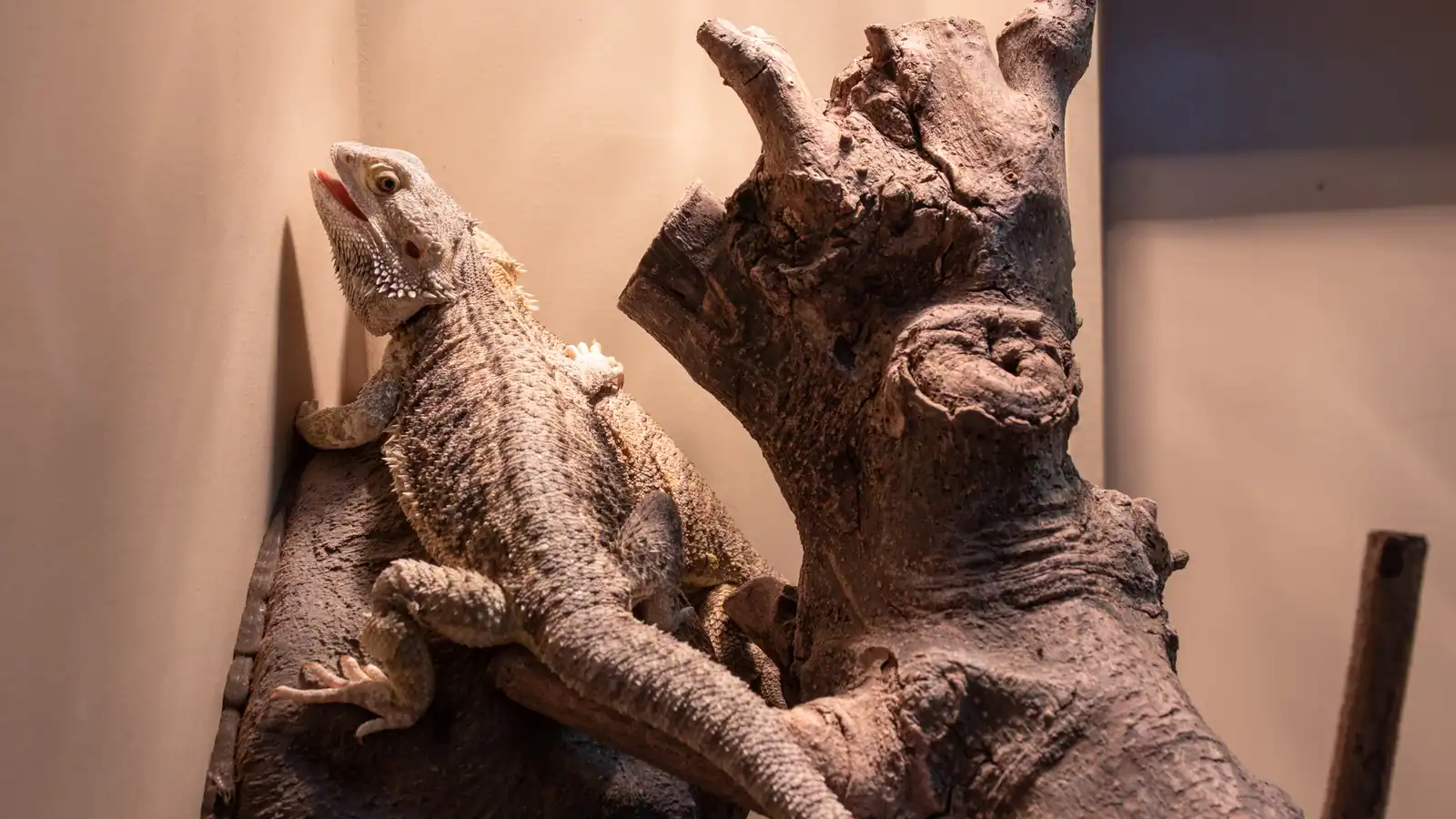
The short answer and the reason it is firm
Plenty of care questions have a range of defensible answers. This one does not. House bearded dragons individually: RSPCA SA states they 'can inflict severe damage to each other, resulting in loss of limbs and even death' and that keeping multiple females together 'is not a safe practice and is best to avoid'; RSPCA UK: 'it's best to house bearded dragons separately'.
Read the RSPCA South Australia language again: severe damage, loss of limbs, death. Welfare organizations do not reach for phrasing like that when the risk is hypothetical. Cohabitation sits in a different category from most husbandry mistakes because it can go from quiet to bloody in a single afternoon, with no bad readings on any thermometer to warn you.
Solitary is the species design, not a preference
A lonely dragon is a human projection. Not social - solitary animals; should be housed individually, and males must be kept separately (territorial)
Wild behavior backs this up. Adults meet to compete or to mate, and even the mildest encounters run on a dominance protocol rather than companionship: Males head-bob with an inflated, blackened beard to signal dominance; smaller/subordinate dragons respond with arm waving as a submission signal.
None of this means your dragon dislikes all interaction. Described as highly social with keepers, friendly, animated, curious, docile and gentle; docile and interactive when handled often. The sociability keepers fall in love with is aimed at people, and it coexists with zero need for a lizard roommate.
What actually happens in a shared tank
Pairings fail along predictable lines:
| Pairing | What the sources document |
|---|---|
| Two males | Never keep more than one adult male per enclosure - males are territorial and will fight; adult females kept together also require monitoring for aggression. |
| Two females | House bearded dragons individually: RSPCA SA states they 'can inflict severe damage to each other, resulting in loss of limbs and even death' and that keeping multiple females together 'is not a safe practice and is best to avoid'; RSPCA UK: 'it's best to house bearded dragons separately'. |
| Different reptile species | Never house different reptile species together. |
Source note: guidance from RSPCA South Australia, RSPCA (UK), VCA Animal Hospitals and PetMD; full citations in the Sources section.
The male rule is absolute and every source repeats it. The female pairing is the one keepers talk themselves into, and it is exactly the arrangement RSPCA South Australia singles out as unsafe. Quiet coexistence for months proves nothing; hierarchies are stable right up until they are contested.
The subtler cost arrives before any bite. In a shared enclosure there is one best basking spot, one warmest hide, one feeding station, and the dominant animal claims them. The subordinate lives on the thermal and nutritional margins, chronically stressed, in exactly the conditions that suppress appetite and immunity. One dragon thriving next to one dragon slowly fading is the classic cohabitation picture, and it looks peaceful on camera.
The warning displays, decoded
Dragons announce dominance disputes before they escalate, in a vocabulary worth learning even for single-dragon households.
Head bobbing carries rank. A fast head bob combined with an inflated, blackened beard signals male dominance (also used in mating displays); a slow bowing bob is used by adult females to signal submission to a male. The beard is the billboard: The beard turns dark to jet black and inflates during displays; used in both threat/aggression and courtship. When threatened, the dragon faces the intruder with mouth wide open and beard puffed out; darkening also occurs with stress, fear or mating arousal. Submission has its own signal: Slow circular wave of one forelimb while standing on three legs; used for species recognition and to show submission/appeasement - most often seen in younger or subordinate animals signalling they are not a threat.
The threat repertoire extends beyond the beard. When threatened they flatten the body and enlarge the throat, which can turn black. An exotics veterinary clinic's behavior list adds the rest of the vocabulary: Other defensive/communication behaviors documented by an exotics vet clinic: hissing (warning), body puffing (appear larger), tail twitching (agitation/excitement), tongue flicking (environmental exploration) Displays like these aimed at a tankmate day after day are chronic stress in progress for both animals.
A tank where one dragon bobs fast and darkens while the other waves and retreats is not working things out. That is an eviction notice being served daily, and separation is overdue. The full signal dictionary lives in our guides to head bobbing and arm waving.
But the pet store kept ten babies in one tank
Retail displays house hatchlings together briefly for logistics, and juveniles have not yet developed adult territorial behavior. That temporary tolerance is the loophole that convinces buyers cohabitation works. It closes on its own schedule: Sexual maturity at 1-2 years of age; some individuals mature as early as 6 months.
Maturity brings the territorial toolkit with it, and none of the sources we cite publishes a safe cohabitation age or a safe size gap between tankmates. Individual housing from the first day skips the guessing entirely, along with the scramble for a second tank the week two "friends" stop being friendly.
What to do instead: the two-tank reality
Budget honestly: a second dragon costs a second complete habitat. Each animal needs its own enclosure at least 120 cm long by 60 cm wide by 60 cm high, its own heat gradient of 95 to 110 F (35 to 43 C) down to 75 to 80 F (24 to 27 C), and its own UVB running 12 hours of light a day. The tank size guide and setup walkthrough both scale to a multi-tank household, and the full parts list is in the supplies list.
Side-by-side tanks need one extra thought: a visual barrier between them if either dragon spends its day displaying at the neighbor. Glass stops teeth, not stress.
The one legitimate exception, and its price
Breeders introduce a male and female deliberately, for supervised mating windows rather than shared living. That context is the technical footnote to the housing rule, and it comes with obligations most owners have not priced in.
Females can carry the cost alone either way: Females can lay unfertilized eggs regardless of whether a male is present. Introduce a male and fertile clutches follow: Females lay up to 24 eggs per clutch and up to 9 clutches per year (ADW); Australian Museum gives clutch sizes of 11-30 eggs; PetMD gives clutches of up to 20 eggs, multiple per year. Egg production is physically demanding and carries a genuine emergency risk: Egg binding (dystocia) is life-threatening: gravid females stop eating and become sick, lethargic, or unresponsive; causes include inadequate UV lighting, temperature, humidity, malnutrition, obstruction, or reproductive tract abnormality - see a vet immediately.
That is the full picture behind a casual "they can keep each other company": no welfare upside documented by any source we cite, a documented risk of severe injury, and a reproductive cascade if the pair turns out to be mixed sex. House them apart, and let them be the sociable-with-humans, solitary-with-lizards species they actually are.