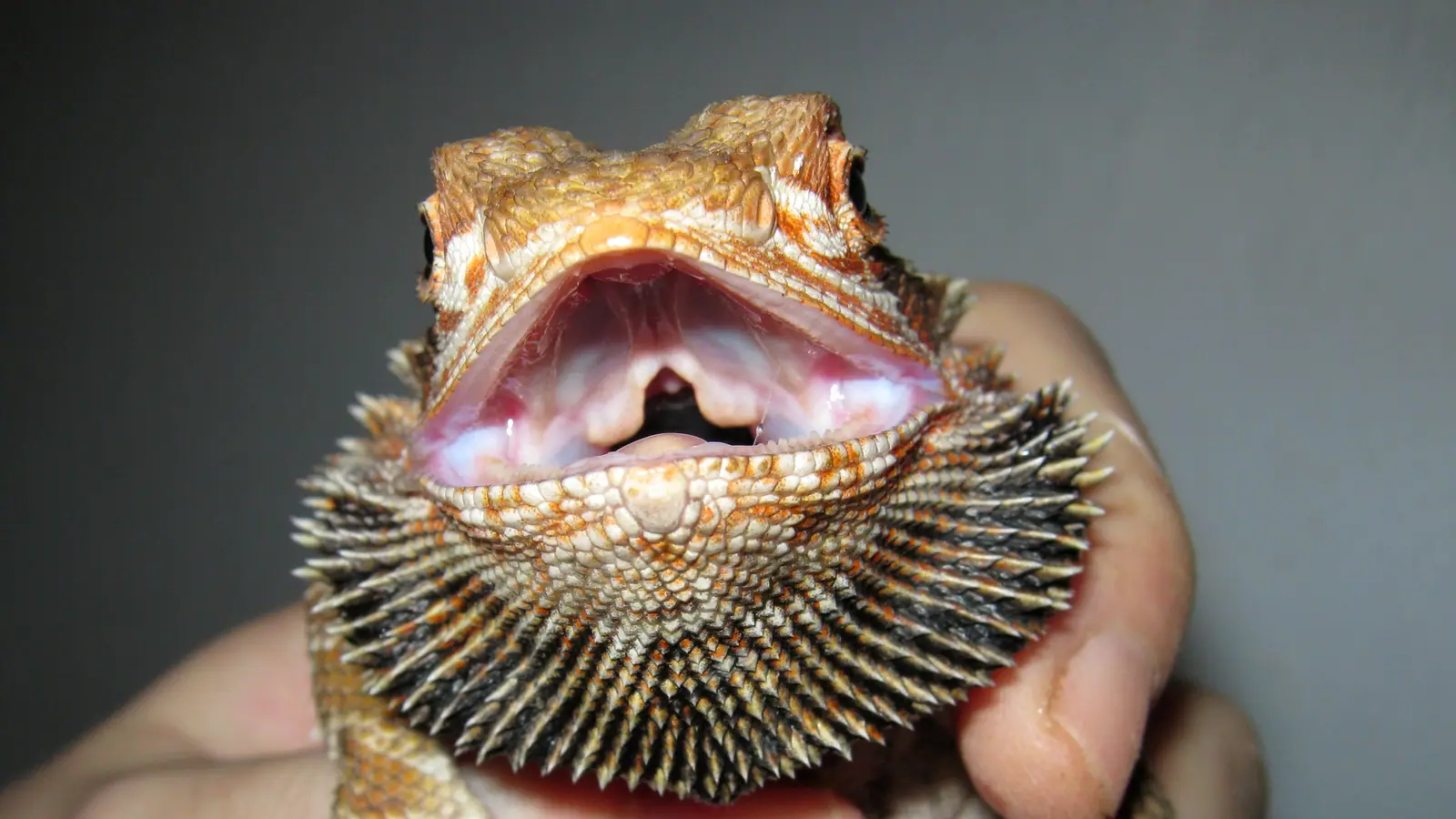
When closed eyes are completely normal
Start with the clock. Diurnal - active during the day The sources build a full dark period into the day: Provide a regular day-night light cycle: RSPCA UK and RSPCA SA recommend 12 hours light / 12 hours dark; NCSU: 12-14 hours light in spring/summer and 8 hours in fall/winter; PetMD: 10-12 hours UVB daily; Merck: 12 hours/day suitable for general maintenance. A dragon with its eyes shut after the lights go off, or dozing in the last hour before they do, is asleep, and reptile sleep is real sleep. Bearded dragons show both REM and slow-wave sleep (first demonstrated in a reptile; Shein-Idelson et al., Science 352:590, 2016). Sleep cycle is ~80 seconds at 27 C (vs ~30 min in cats, 60-90 min in humans), with the two phases of roughly equal duration. Our guide on how bearded dragons sleep covers positions and habits.
The second normal moment is the basking spot. Ectothermic; bask under heat sources to raise body temperature before activity and to maintain preferred body temperature, often perching on elevated sites for extended periods. A dragon flattened under the lamp with its eyes half shut is absorbing heat, and it opens them the instant something moves.
The third is seasonal. Brumating dragons become lethargic, refuse food, stop defecating, and their scales may appear darker; slowing down, sleeping more, and eating less in cooler seasons is normal. Closed eyes for long stretches in the cooler months, with stable weight and no other signs, belong to that pattern rather than to illness, and our brumation guide covers how to confirm it.
The test that separates all three from a problem is simple: do the eyes open wide, clear, and bright when you approach, when food appears, or when the dragon moves? A healthy bearded dragon is alert, active, and aware, with clear bright eyes, a thick round tail base, hips that do not protrude, a clean dry vent, bright pink mouth tissue, and clear saliva.
When closed eyes mean something is wrong
PetMD sets the healthy baseline in one line: Healthy reptiles have wide-open eyes, moist gums, and supple skin. Eyes that stay closed while the dragon is awake and active fail that baseline, and the same source gives the threshold: Swollen, sunken, closed, or draining eyes are a reason to contact a veterinarian; eye infections are among the common conditions seen in bearded dragons.
Eye trouble is not rare in this species. PetMD lists eye infections and corneal ulcers among the most common medical conditions seen in bearded dragons. And because reptiles hide illness, a closed eye is often the first visible sign of something wider: Reptiles typically do not show signs of illness until disease has significantly progressed, so subtle changes matter and owners should not wait to see if the lizard recovers on its own.
Cause by cause: what else you see
The closed eye rarely arrives alone. The second sign tells you which direction to look.
| Alongside the closed eye | Likely cause per the sources | Next step |
|---|---|---|
| Dull, grayish skin, loose patches, cloudy-looking eyes | Shed cycle | Support the shed; vet if it persists after the shed ends |
| Sunken eyes, sticky mucus in the mouth, skin that will not shed | Dehydration | Water, soak, and a vet visit for the cause |
| Discharge from the eye or nose, bubbles, open-mouth breathing at rest | Respiratory infection | Reptile vet |
| Swollen tissue around the eye, red gums, thick mucus in the mouth | Conjunctivitis spreading from mouth rot | Reptile vet |
| Yellow to brown crusted plaques on the face | Yellow fungus disease | Reptile vet promptly; isolate from other reptiles |
| Swelling or squinting after a fall or a feeder insect left overnight | Injury or corneal ulcer | Reptile vet |
Source note: causes compiled from PetMD, VCA Animal Hospitals, Merck Veterinary Manual, and WSU veterinary hospital pages listed in Sources.
Shedding. Cloudy-looking eyes (like dirty glasses) and dull coloration can occur as part of the shed cycle; retained shed around the eyes is a form of dysecdysis. The eyelids shed too, and a dragon mid-shed often keeps them shut against the tightness. Never pull off old skin that seems stuck - it can tear the new skin underneath. The support that helps, humidity at 30 to 40 percent and a shallow soak, is in our shedding guide.
Dehydration. Sunken eyes, sticky mucus in the mouth, and retained non-shedding skin can all be signs of dehydration; sunken eyes also suggest weight loss. The eye sinks because tissue behind it loses fluid, which is why sunken and closed so often arrive together. Soaking/bathing in shallow warm water helps hydration: VCA suggests soaking in warm water for several minutes a few times a week; NCSU says bearded dragons enjoy a shallow soak weekly in warm water along with misting.
Respiratory infection. Discharge from the eyes or nose can accompany respiratory infection in bearded dragons. The full symptom set is wider: Signs include sneezing, discharge from the eyes or nose, bubbles from the mouth or nose, rapid or shallow breathing, open-mouth breathing, difficulty breathing, decreased appetite, and lethargy. If any of those accompany the closed eye, our respiratory infection guide is the next read.
Mouth rot. This is the connection most owners miss. Conjunctivitis is inflammation of the membranes around the eye; severity ranges from mild to severe, involving all the tissues around the eye and the eyeball itself, and it can result from the spread of infectious stomatitis from the mouth. A dragon with a swollen eye and a mouth it will not close has a single infection with two addresses, and the mouth is where it started. Check the gums, then read our mouth rot guide.
Yellow fungus. Signs include yellow to brown crusted, thickened skin plaques on the face, back, sides, or legs that crack, peel, and can bleed; discoloration that won't wash away and progressively expanding sensitive areas; weight loss and weakness in advanced cases. Plaques near the eye can hold it shut. Prognosis is guarded: the condition frequently recurs and advanced infections may resist treatment; early veterinary intervention offers the best chance.
Injury. Corneal ulcers sit on PetMD's common-conditions list, and the enclosure supplies the causes: falls, sharp decor, and feeder insects that were never eaten. Spot-clean waste daily (or immediately when seen); remove uneaten insects from the enclosure.
One eye closed or both
Use the pattern as a pointer, not a diagnosis. A single closed eye with the other one wide and clear sends you to that eye: look for a ring of retained shed on the lid, swelling, discharge, or a scratch. Both eyes closed while the dragon is awake, especially with lethargy or a skipped meal, sends you to the whole-body list, because the systemic causes above, dehydration, respiratory infection, and stomatitis, affect both sides.
Either way the threshold is the same. Contact a veterinarian if a bearded dragon is lethargic, isn't eating well, or isn't growing normally (WSU); RSPCA advises watching weight and contacting a vet if a dragon loses weight during seasonal slowdown.
Lighting, the third eye, and eyes closed under the lamp
Bearded dragons read light with more than two eyes. Lizards have a parietal 'third eye' atop the head with a primitive retina and photoreceptor cells; it detects changes in light and dark and helps regulate hormone production (circadian/thermoregulatory function) That organ is why a dragon responds to a shadow passing overhead before its eyes have registered it, and why the day-night cycle matters for more than sleep. The sources ask for a timer for that reason: Lighting should run on a consistent schedule (timer-controlled day-night cycle)
A dragon that squints or shuts its eyes only when directly under the lamp deserves a check of the fixture height and the bulb's age. The sources put UVB at a set distance: VCA: UVB bulb within 6-18 inches of the pet; WSU: position bulb 30-45 cm above the basking area; Merck: fluorescent UVB strips must be within about 30 cm (12 in) Our UVB lighting guide covers placement, and any eye that stays shut once the dragon moves off the basking spot goes back to the table above.
When to see the vet
PetMD's line is the one to keep: Swollen, sunken, closed, or draining eyes are a reason to contact a veterinarian; eye infections are among the common conditions seen in bearded dragons. Add the emergencies, which arrive with a closed eye more often than owners expect: Emergency-level signs include seizures, suspected egg binding in a lethargic female, a blackening mushy tail, not eating at all, no droppings with lethargy, constriction injuries from retained shed, and any trouble breathing.
Do not put human eye drops, ointments, or wipes on the eye while you wait. The vet needs to see the eye as it is, and the cause decides the treatment. The one safe step at home is hydration, since dehydration is on the list and water never hurts.
Sleep architecture, and why a dozing dragon still opens its eyes
Experienced keepers know their dragon sleeps; fewer know how oddly. Bearded dragons show both REM and slow-wave sleep (first demonstrated in a reptile; Shein-Idelson et al., Science 352:590, 2016). Sleep cycle is ~80 seconds at 27 C (vs ~30 min in cats, 60-90 min in humans), with the two phases of roughly equal duration. That 80-second cycle means a sleeping dragon passes through dozens of light and deep phases every hour, and the light phases are why a resting dragon flicks its eyes open at a footstep and closes them again. A dragon that stays shut through the footstep, the light change, and the cricket is not cycling; it is unwell or exhausted.
The finding also places bearded dragons in a wider story. The bearded dragon sleep findings suggest brain sleep (REM + slow-wave) originated at least 320 million years ago in the common ancestor of amniotes (reptiles, birds, mammals)
The eyes themselves are a diagnostic window because of what sits behind them. Sunken eyes, sticky mucus in the mouth, and retained non-shedding skin can all be signs of dehydration; sunken eyes also suggest weight loss. Sunken eyes are the same finding a vet reads as fluid loss, and they lag the actual deficit, which is why a dragon with sunken eyes has been under-hydrated for a while, not since this morning. Pair the eye check with a weekly weight and the vent check from our sick bearded dragon symptoms guide, and you have the three cheapest instruments in reptile care.
Closed eyes are a question, not an answer. Sleep, basking, and shedding cover most of the answers; swelling, sinking, discharge, and a mouth that will not close cover the rest, and those get a reptile vet. Our health section has the deeper guide for each.