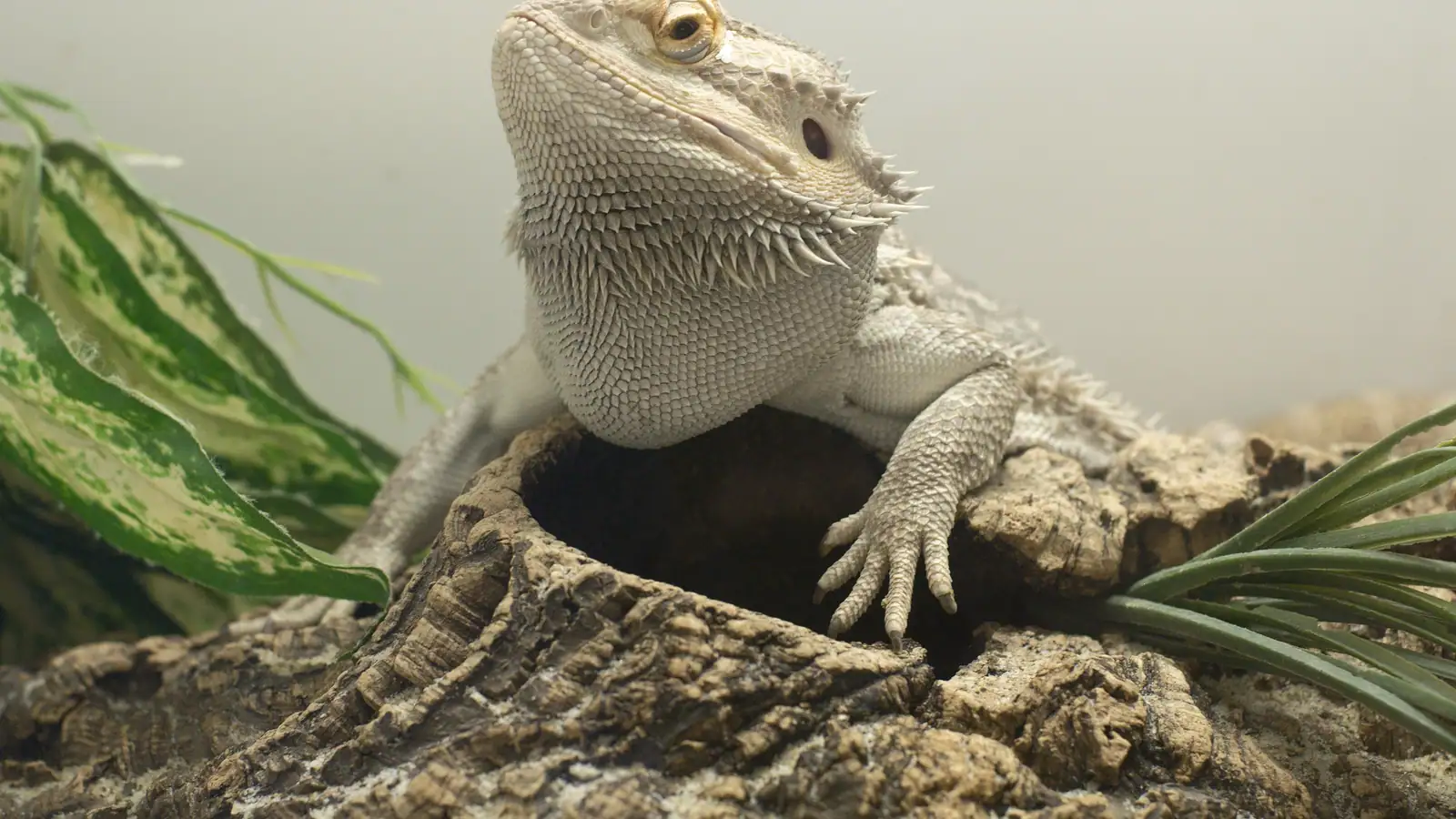
What tail rot is
Tail rot is the owner's name. The veterinary names are tail necrosis and avascular necrosis, and the second one explains the mechanism. Avascular necrosis of toes and tail tips - discoloration/darkening, swelling, infection, then hardened dead tissue - results from blood vessel obstruction due to low humidity, retained shed rings, trauma, infection, blood clots, or tumors.
Two routes lead there. The first is infection after injury: Tail rot occurs when an injury to the tail and its tissues becomes infected. The second is constriction with no wound at all. Retained skin layers form constricting rings that restrict blood supply; the area beyond the ring becomes discolored and darkens before the tissue dies, and veterinary treatment involves removing the dead skin or amputating affected areas to stop the spread. Either way, the tissue beyond the blockage runs out of blood, dies, and becomes a foothold for bacteria that then spread toward the body.
Black tail tip or tail rot? How to tell them apart
Plenty of healthy dragons have dark tail tips, dark tail bands, or a beard that goes black on a stressful afternoon. VCA Animal Hospitals gives the distinguishing test: Normal dark coloration at the tail tip is not tail rot; in tail rot the whole circumference of the tail is affected and the tissue turns black, shrivels, and feels mushy.
| Sign | Normal dark tail tip | Tail rot |
|---|---|---|
| Color pattern | Dark on top, often banded, the same pattern for months | New darkening that spreads up the tail over days |
| Which surfaces | Often only the upper surface or the bands | The whole circumference, underside included |
| Texture | Firm, smooth scales that match the rest of the tail | Dry, shriveled, brittle, or mushy |
| The shed | Comes off cleanly with the rest of the tail | Old skin stays stuck in a tight ring |
| Direction over time | Stays the same size | The dead section grows toward the body |
Source note: distinguishing features per VCA Animal Hospitals' bearded dragon problems page and PetMD's dysecdysis reference, listed in Sources.
Feel counts as much as color. Run a finger from the base to the tip. A healthy tail feels like the rest of the animal all the way down. A tip that feels papery, hollow, or soft is the finding, even before the color changes.
What causes tail rot
| Cause | How it cuts off circulation | The prevention |
|---|---|---|
| Retained shed | A ring of dried skin tightens like a tourniquet as it shrinks | For stuck patches after a shed, bathe the dragon in shallow, tepid water for about five minutes to soften the skin; PetMD similarly advises soaking in a large, shallow container of warm water. |
| Low humidity | Dry air dries old skin faster, so more of it sticks | Hold humidity at 30 to 40 percent |
| Injury | Doors, falls, rough decor, or a bite crush vessels and open the skin to infection | Supervise handling and check decor for sharp edges |
| Cage mate bites | House bearded dragons individually: RSPCA SA states they 'can inflict severe damage to each other, resulting in loss of limbs and even death' and that keeping multiple females together 'is not a safe practice and is best to avoid'; RSPCA UK: 'it's best to house bearded dragons separately'. | One dragon per enclosure |
| Dehydration | Dry skin releases poorly, so sheds stick | Soaking/bathing in shallow warm water helps hydration: VCA suggests soaking in warm water for several minutes a few times a week; NCSU says bearded dragons enjoy a shallow soak weekly in warm water along with misting. |
Source note: causes per VCA Animal Hospitals; humidity and hydration guidance per RSPCA UK, WSU, and NC State as listed in Sources.
The RSPCA's warning covers toes as well as tails: Retained shed shrinks as it dries and can constrict circulation, especially on toes and tail tips; poor shedding on the feet can cut off blood supply and lead to loss of toes or tissue death requiring amputation. Dysecdysis, the veterinary term for a bad shed, has a cause list that reads like an enclosure audit: Shedding problems (dysecdysis) are caused by low humidity, temperatures that are too cool, lack of abrasive surfaces to rub against, nutritional deficiencies, skin parasites, infections, dehydration, and rarely thyroid dysfunction.
Our bearded dragon shedding guide explains how to support a shed without pulling skin, and the humidity guide covers getting the number right. If two dragons share a tank, the bite risk alone settles the question, and our page on housing bearded dragons together explains why.
How fast it spreads and why it is an emergency
Dead tissue does not stay put. Bacteria colonize it, and the infection moves along the tail toward the body. PetMD and VCA both put a blackening tail on the emergency list: Emergency-level signs include seizures, suspected egg binding in a lethargic female, a blackening mushy tail, not eating at all, no droppings with lethargy, constriction injuries from retained shed, and any trouble breathing. The word to take seriously in VCA's description is aggressive: In tail rot, the end of the tail turns black, appears shriveled, and feels mushy, with infection through the tail's circumference; it requires aggressive veterinary intervention and may need surgical amputation.
Do not cut, squeeze, or apply human ointments while you wait for the appointment. Plain water soaks are the only thing that belongs on the tail before the vet sees it. The clinic needs to see the tissue as it is, and a dead section needs professional removal regardless of what you put on it.
What the vet visit involves
The vet's first question is where living tissue ends. That line decides everything. VCA describes the two outcomes: Retained skin layers form constricting rings that restrict blood supply; the area beyond the ring becomes discolored and darkens before the tissue dies, and veterinary treatment involves removing the dead skin or amputating affected areas to stop the spread. In an early constriction case, freeing the ring can save what is still alive below it. Once tissue has died, removal above the dead section is the route, because there is no way to grow it back.
The reason amputation is offered rather than avoided is anatomical: Bearded dragons (Pogona) lack tail autotomy: in a peer-reviewed review of agamid autotomy, all examined specimens of P. barbata and P. vitticeps had intact tails and no literature documents pseudoautotomy in these species; a lost or amputated tail is permanent. What a dragon cannot survive is an infection that reaches the body, and a shorter tail costs it nothing it needs.
Prevention: the after-shed check
Most tail rot is a shed that went wrong and nobody checked. Build a one-minute inspection into the end of every shed:
- Look at each toe and the last inch of tail for rings of dull, whitish skin.
- Compare the color on top and underneath; rot involves both.
- Feel the tip for softness or dryness.
- If a ring is stuck: For stuck patches after a shed, bathe the dragon in shallow, tepid water for about five minutes to soften the skin; PetMD similarly advises soaking in a large, shallow container of warm water.
- Never pull off old skin that seems stuck - it can tear the new skin underneath.
Beyond the shed, protect the tail during handling. Support the whole body from underneath including fore and hind limbs; do not squeeze; RSPCA UK suggests about 10-15 minutes at a time as a safe handling period; over-handling is stressful. Our handling guide shows the grip that keeps the tail supported. Keep the soak routine going too, because hydrated skin lets go: Soaking/bathing in shallow warm water helps hydration: VCA suggests soaking in warm water for several minutes a few times a week; NCSU says bearded dragons enjoy a shallow soak weekly in warm water along with misting.
The biology: why a dead tail cannot come back
Many lizards drop and regrow tails. Bearded dragons are not among them, and the science is specific. Bearded dragons (Pogona) lack tail autotomy: in a peer-reviewed review of agamid autotomy, all examined specimens of P. barbata and P. vitticeps had intact tails and no literature documents pseudoautotomy in these species; a lost or amputated tail is permanent. Without autotomy there is no fracture plane in the vertebrae and no regenerative cartilage rod waiting behind it. Tissue lost to necrosis or surgery is gone, and the stump heals as scar and skin.
The tail also matters for reading body condition, which is a different problem that owners sometimes confuse with rot. Observable weight-loss signs in lizards include tail thinning (fat is stored in the tail), prominent ribs, and defined skull bones. A tail thinning from the base is a whole-body finding, while a tail dying from the tip is a circulation finding. Both are vet reasons; only the second is an emergency.
The blood supply explains the toe connection. Toes and tail tips share one vulnerability: they sit far from the heart, run on small vessels, and are wrapped in skin that dries first. Avascular necrosis of toes and tail tips - discoloration/darkening, swelling, infection, then hardened dead tissue - results from blood vessel obstruction due to low humidity, retained shed rings, trauma, infection, blood clots, or tumors. That is why VCA groups avascular necrosis of toes and tails together, and why the after-shed check covers both.
A dark tip caught on day one is a short vet visit. The same tip a month later is a surgery. Keep humidity in range, check toes and tail after every shed, and browse our health guides for the other early-warning signs worth knowing.