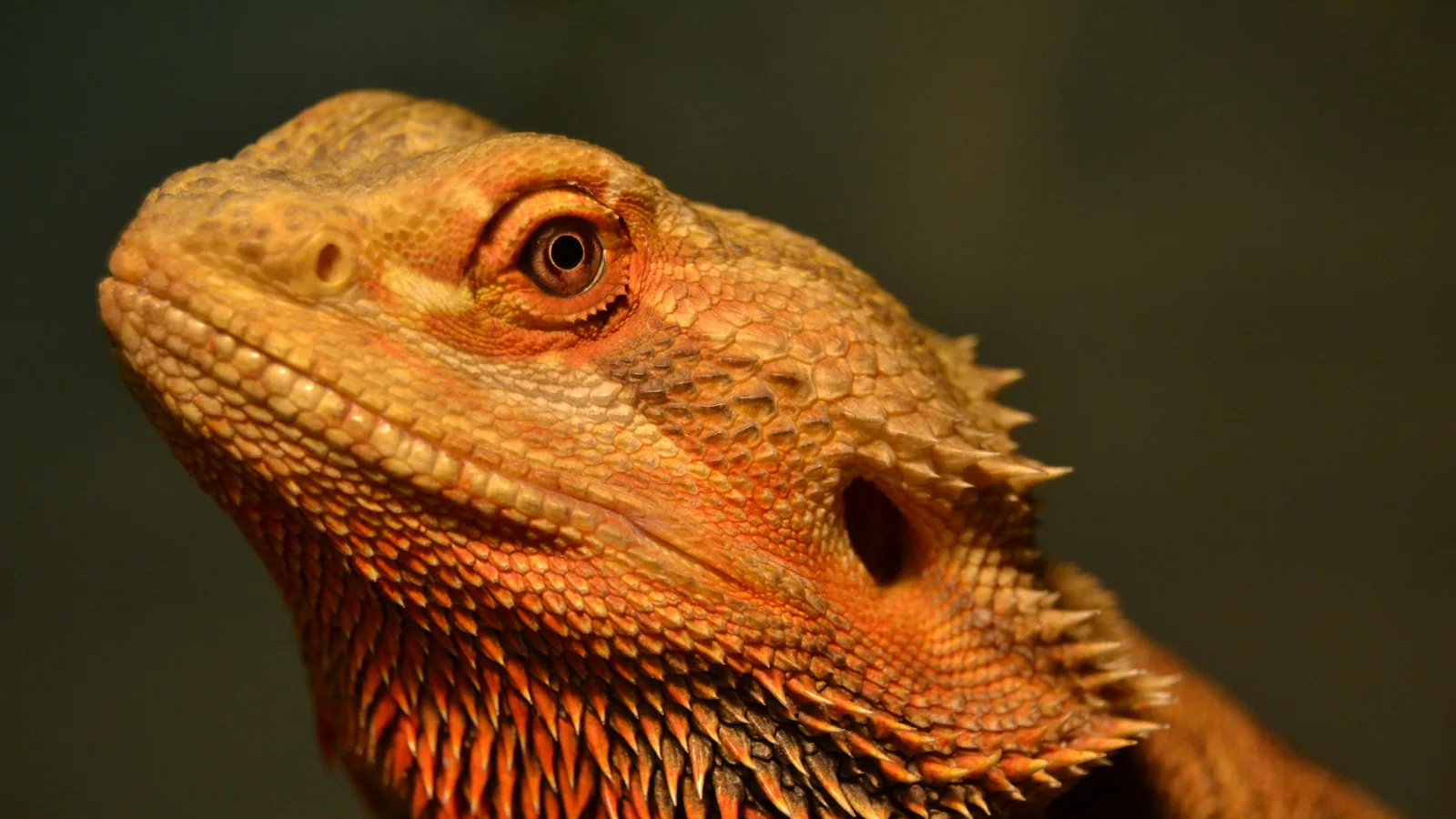
The decoder at a glance
| Signal | What it looks like | Documented meaning |
|---|---|---|
| Arm wave | Slow circular wave of one forelimb, standing on three legs | Submission, appeasement, species recognition |
| Fast head bob | Rapid bobbing, often with inflated black beard | Male dominance or courtship display |
| Slow bowing bob | Deep, unhurried head lowering | Female submission toward a male |
| Black beard | Beard darkens, often inflates | Threat, stress, fear, courtship, or cold |
| Gaping | Mouth held part open while basking | Releasing excess heat |
| Flattened body | Body pressed low and widened, throat enlarged | Threat response to feeling endangered |
| Hissing and puffing | Audible hiss, body inflated | Warning to back off |
| Tail twitch | Quick tail flicking | Agitation or excitement |
| Tongue flick | Repeated tongue taps on objects | Environmental exploration |
| Glass surfing | Pacing and paddling against enclosure walls | Stress, boredom, or drive to explore |
Source note: meanings compiled from Animal Diversity Web, the Australian Museum, VCA Animal Hospitals, RSPCA Australia, and Long Island Bird and Exotics Veterinary Clinic material listed in the Sources section.
The sections below group those signals by conversation, because dragons rarely send one in isolation.
Rank talk: waves and bobs
The wave and the bob are two halves of one exchange, the species' system for settling status without bloodshed. Males head-bob with an inflated, blackened beard to signal dominance; smaller/subordinate dragons respond with arm waving as a submission signal.
Speed carries the grammar. A fast, emphatic bob asserts; a slow bowing bob concedes; a wave concedes harder. Your dragon uses the same grammar on you, which is why a wave at your approach means "I see you and I am no threat" rather than hello, and a fast bob at your hand means you moved too fast. The deep reads are in the dedicated guides to arm waving and head bobbing.
Between two housed dragons, rank talk is a fire alarm. House bearded dragons individually: RSPCA SA states they 'can inflict severe damage to each other, resulting in loss of limbs and even death' and that keeping multiple females together 'is not a safe practice and is best to avoid'; RSPCA UK: 'it's best to house bearded dragons separately'. A wave-and-bob loop inside one tank means separate enclosures, promptly.
The beard: a four-channel gauge
No single signal gets misread more, because the beard multiplexes. Threat, stress, courtship arousal, and plain cold all darken it, and only context separates them.
The full threat configuration is unmistakable: When threatened they flatten the body and enlarge the throat, which can turn black. Add the open mouth and inflated beard and you are looking at the species' maximum warning. Courtship darkening comes with fast bobbing from a mature male, on a seasonal schedule. And thermal darkening is the quiet one: Bearded dragons regulate body temperature partly by changing shades of skin colour. A dark beard on a cool morning that fades after basking was never a mood at all.
Both sexes own the equipment: Both sexes have a beard and can display it, but males display more frequently, especially in courtship. The pattern-by-pattern walkthrough, including the illness combinations, is in the black beard guide.
Heat behaviors: basking, gaping, and color
A big share of what looks like personality is thermostat work. Ectothermic; bask under heat sources to raise body temperature before activity and to maintain preferred body temperature, often perching on elevated sites for extended periods.
The gape is the fine adjustment at the top of the cycle: Bearded dragons bask to raise body temperature and gape (open the mouth) to cool by evaporative cooling when overheated. A dragon that basks flat and dark, lightens as it warms, then gapes contentedly under the lamp is cycling exactly as designed, and that sequence is one of the best daily wellness indicators you have. A gape in the wrong place flips the meaning, covered in the mouth open guide.
Everyday signals: digging, tongue flicks, tail twitches
Some vocabulary is neither rank nor thermostat. Digging is a natural behavior; captive enclosures should provide substrate that allows it. A digging dragon wants an outlet, and a frantically digging female often wants a nest, a distinction with real stakes explained in the digging guide.
Tongue flicking is data collection, documented as environmental exploration, and a dragon tasting its way around a new branch is curious, not hungry for the branch. Tail twitching marks arousal, agitation or excitement, and often shows up during hunting or when another animal is visible. Treat it as a rising-tension meter: fine during cricket pursuit, worth investigating when aimed at a window or cage mate.
Stress signals: surfing, hiding, constant appeasement
Three patterns say the environment is failing the animal. Glass surfing leads: Repeatedly running along the enclosure walls ('glass surfing') can indicate stress, boredom, or a desire to explore. Persistent hiding is its quieter sibling, a dragon that spends whole days in cover instead of cycling through bask, patrol, and rest. And constant appeasement, a dragon that waves at everything repeatedly, means it keeps perceiving social pressure worth appeasing.
All three trigger the same audit: enclosure size against the at least 120 cm long by 60 cm wide by 60 cm high standard, hides at both ends, verified temperatures, and no other animals with a sight line into the tank. The glass surfing guide walks the checklist in order.
When body language becomes a symptom list
Seasonal quiet has a documented shape: During cooler seasons bearded dragons slow down, sleep more and eat less (brumation) Outside that shape, sustained behavior change is medical until proven otherwise, because this taxon is built to hide weakness: Reptiles typically do not show signs of illness until disease has significantly progressed, so subtle changes matter and owners should not wait to see if the lizard recovers on its own.
The healthy baseline reads like this: A healthy bearded dragon is alert, active, and aware, with clear bright eyes, a thick round tail base, hips that do not protrude, a clean dry vent, bright pink mouth tissue, and clear saliva. Against it, watch for the documented departures: Signs of an unhealthy dragon include a skinny appearance or loose skin, sunken eyes, lethargy or inactivity, a sunken bony tail, wet or soiled vent, cloudy mucus or cottage-cheese-like material in the mouth, and gum redness or pinpoint hemorrhages. The rule that converts observation into action: Contact a veterinarian if a bearded dragon is lethargic, isn't eating well, or isn't growing normally (WSU); RSPCA advises watching weight and contacting a vet if a dragon loses weight during seasonal slowdown. Our sick dragon symptom guide turns this into a full checklist.
The grammar underneath, for experienced keepers
Read long enough and the repertoire resolves into a graded escalation system, cheap signals first, expensive ones last. Tongue flick and watch. Bob. Darken and inflate the beard. Flatten and enlarge the throat. Hiss. Gape wide. Only then, bite. Each rung exists because it costs less than the rung above, for both parties, and a keeper who answers rung two never meets rung six. That is the practical craft: identify the rung, respond one rung early, and never teach a dragon that its warnings do not work, a lesson that ends in the territory covered by our biting guide.
The other half of the grammar is baseline. Signals only mean things against an individual's normal: a docile, curious animal, which is exactly what the species record predicts. Described as highly social with keepers, friendly, animated, curious, docile and gentle; docile and interactive when handled often. Spend ten minutes a day just watching, learn your dragon's ordinary rhythm of bask, gape, patrol, dig, and rest, and deviations will announce themselves years before you could have memorized any chart.