The lettuce myth, corrected
Search this question and you will be told, confidently and repeatedly, that lettuce is bad for bearded dragons. That claim is too broad, and the veterinary sources say so plainly.
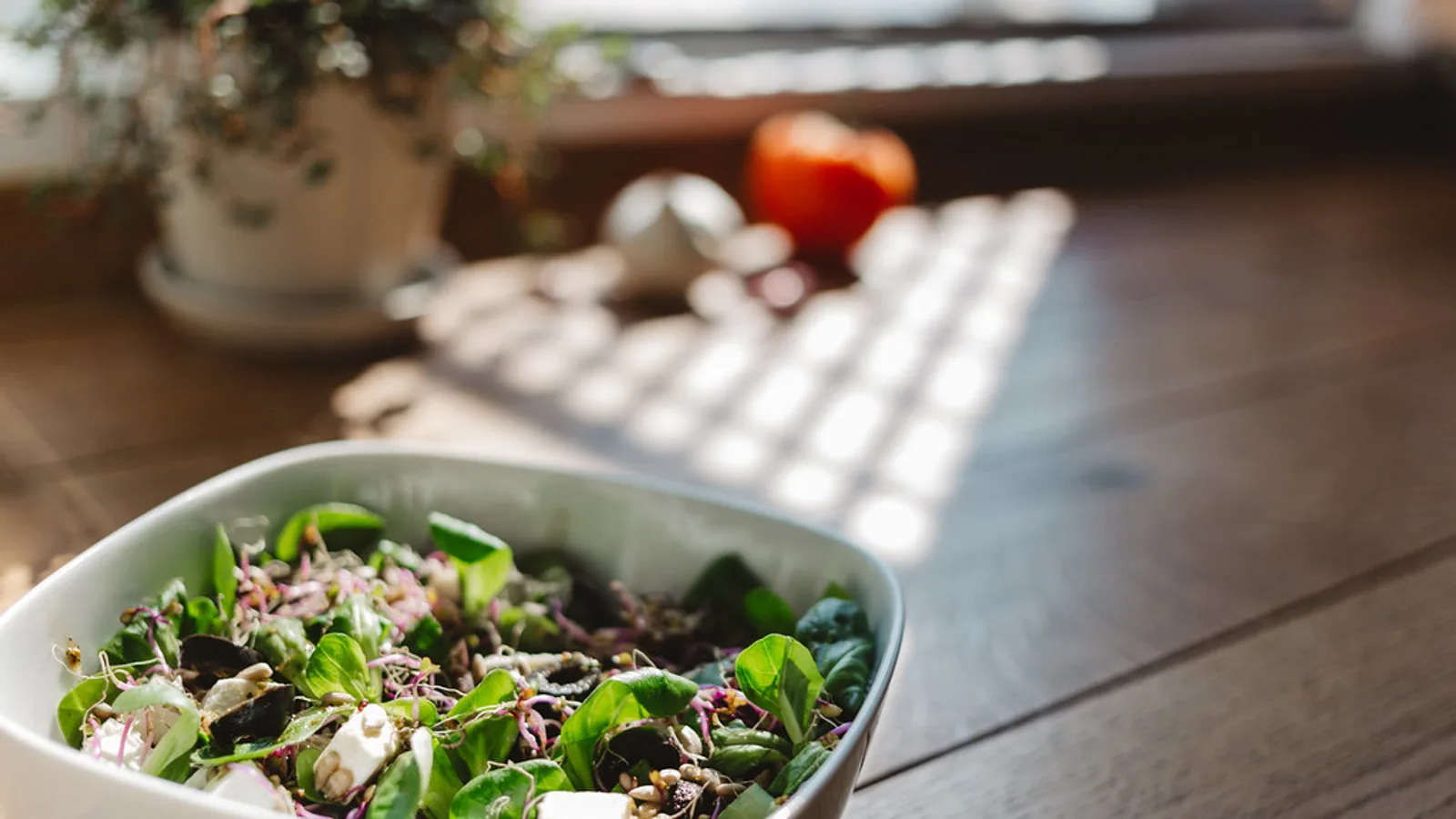
NC State's veterinary hospital lists romaine among recommended leafy greens and green or red leaf lettuce among recommended vegetables.
And from a second source: PetMD lists romaine, green leaf, and red leaf lettuce among nutritious vegetables for bearded dragons, while noting that nutrient-rich greens such as collard, mustard, and dandelion greens are generally better staples than lettuce varieties with lower nutritional value.
So romaine and the leaf lettuces are recommended foods, not banned ones. What earned lettuce its bad reputation is iceberg, and the reputation transferred to the whole category the way these things do.
Iceberg is the actual problem
Our fact base records the verdict on iceberg specifically: rarely / not recommended
The reason is not toxicity. Iceberg is water and crunch with very little else. Fed as a treat, it does no harm. Fed as a salad base, it fills a dragon up while delivering close to nothing, and the plant portion of this diet exists precisely to deliver something.
We are careful about the strength of this claim, because the sourcing is thinner than for most items on this site. PetMD notes that some lettuce varieties carry lower nutritional value than nutrient-rich greens; it does not describe iceberg as dangerous, and neither do we.
What the salad is actually supposed to do
The plant portion has a defined internal structure: 80-90% of the plant material fed should be leafy green vegetables; fruit plus yellow/red/orange vegetables should be only 10-20% of the plant portion.
And the greens that carry the load are named specifically: Calcium-rich staple greens include collard greens, mustard greens, turnip greens, and dandelion greens.
Collard, mustard, turnip, and dandelion greens are on that list because of their calcium content. Lettuce, of any variety, is not on it. Romaine is a perfectly respectable addition to a mixed salad; it is not a substitute for the staples.
A useful way to hold this: staples build the diet, and lettuce adds bulk and variety to it.
Ranking the common lettuces
| Lettuce | Assessment |
|---|---|
| Romaine | Named on NC State and PetMD recommended lists, the best lettuce choice |
| Green leaf, red leaf | Both named on recommended lists, good rotation options |
| Butterhead, little gem | Not specifically named by our sources, similar profile to leaf lettuce |
| Iceberg | Lowest value; occasional filler at most |
Source note: lettuce variety guidance from NC State's veterinary hospital and PetMD, cited below.
Serving lettuce properly
Wash it thoroughly. Leafy greens carry soil and residue in their folds, and bagged salad is no exception.
Tear or chop to size. A whole leaf is awkward for a dragon to manage. Follow the general size principle: Never feed an insect whose length is greater/wider than the width of the dragon's head; RSPCA: live food greater than the width of the dragon's head should not be offered.
Mix it into staple greens, never serve it alone. This is the entire practical point. Romaine turned through collard greens is a good salad. Romaine on its own is a missed opportunity.
Serve in a dish. Offer food in a separate dish or feeding container rather than on the substrate to reduce accidental substrate ingestion.
Remove leftovers the same day. Wilted greens attract insects and add moisture, and the enclosure should hold 30 to 40 percent.
Why leafy greens matter so much here
The reason the base of the salad is non-negotiable comes down to a ratio the whole diet is measured against: The calcium:phosphorus ratio of the diet should be at least 1:1, with 2:1 preferred (Merck); WSU and Illinois WEL state the ideal Ca:P ratio is 2:1.
That target is harder to meet than it sounds, because the other half of the diet fights it. Feeder insects are strikingly poor on this measure: Feeder insects naturally contain extremely low calcium (about 0.03-0.3%) with 0.8-0.9% phosphorus; a 3-day 12% calcium gut-load raises insect calcium to roughly 0.8-0.9%, giving a Ca:P ratio of approximately 1.2:1.
That gap is why gut loading and calcium dusting exist at all: Feeder insects should be gut-loaded (fed a high-calcium, nutrient-fortified diet) before feeding: NCSU recommends 24-72 hours prior; PetMD says 6-12 hours before; Merck describes a 3-day gut-load with a 12% calcium (calcium carbonate) diet.
So the arithmetic is this. Insects run calcium-poor, supplements correct part of the gap, and calcium-rich greens are meant to carry the rest. Swap those greens for lettuce and one leg of a three-legged stool disappears. What follows, over months rather than days, is metabolic bone disease, the condition reptile vets see more than any other in this species.
Not all greens are equal either
While we are on the subject, two sourced cautions apply to greens that owners often assume are safe by default.
Swiss chard, spinach, and beet greens should be fed sparingly because they contain oxalates, which can bind calcium and other trace minerals and prevent their absorption.
And separately: Cabbage, kale, and mustard greens contain goitrogens that can interfere with iodine uptake and suppress thyroid function if fed in excess.
Those two lines are the reason our spinach guide and kale guide exist as separate pages. Lettuce carries neither of those specific problems, which is a genuine point in its favour. Its limitation is simply that it brings little to the bowl.
A practical week of salads
An adult dragon eats a salad most days. A workable rotation: collard greens as the frequent base, with mustard, turnip, or dandelion greens rotating through, romaine or leaf lettuce adding bulk on some days, and a supporting vegetable such as grated squash or carrot turned through. Fruit appears on one day of the week, not several.
Juveniles work differently, since their intake is weighted toward growth: Live insects should make up about 70% of a juvenile bearded dragon's diet, with vegetables about 20-30% and only small amounts of fruit. With a small plant portion, every leaf should be a staple green rather than lettuce. The feeding schedule guide covers the age structure, and the vegetable guide has the full recommended list.
If your dragon eats only lettuce
Some dragons develop a preference for mild, watery greens and refuse the stronger-tasting staples. The fix is patience rather than capitulation: keep offering mixed salads with staples chopped to the same size as the lettuce, and resist adding fruit as an incentive.
If refusal comes with weight loss, lethargy, or a change in droppings, the problem is not preference: Contact a veterinarian if a bearded dragon is lethargic, isn't eating well, or isn't growing normally (WSU); RSPCA advises watching weight and contacting a vet if a dragon loses weight during seasonal slowdown. The not eating guide works through the causes properly.